Search across the BevNET CPG Media network including BevNET, Nosh, Brewbound, Taste Radio, Nombase and CPG Jobs.
Category Close-Up: Confection - Product Showcase
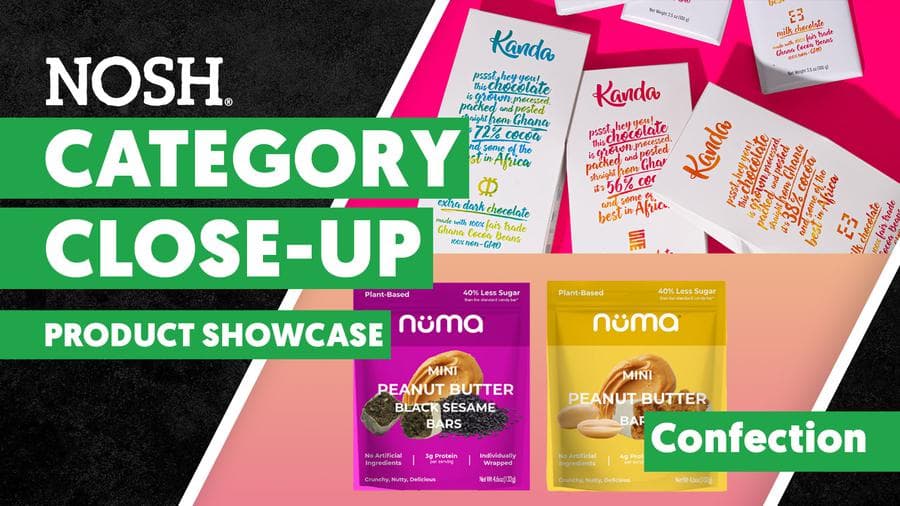
During yesterday’s Expert Analysis, our panel of industry authorities discussed the consumer behaviors, investment activity and retailer attitudes that are impacting the set. Now, we’re hearing from the brands. In this episode, NOSH editor Carol Ortenberg and reporter Erin Cabrey will interview executives and brand leaders from emerging confection companies to discuss individual company strategy, and how changes within the category affect new product development and marketing.
During the Product Showcase you’ll hear about the latest innovations and updates from brands including:
Kanda Chocolates
Numa
NibMor
SkinnyDipped
Project7
Chuao Chocolatier
Retailers, investors and other industry executives can learn more about a wide range of brands and products by accessing our Category Closeup: Digital Download -- a collection of digital images and sales sheets from confection producers.
If you’d like to find out how to profitably dive into the confection category, as well as access all of our two-part Category Close-Ups, subscribe today.
Transcript
Note: Transcripts are automatically generated and may contain inaccuracies and spelling errors.
Carol Ortenberg [00:09] Hi everyone, I'm Carol, the editor of Nosh. You're tuning in to the latest episode of Nosh's category close-up series. This episode continues upon our exploration of the confection category. Yesterday in the expert analysis part of this series, we spoke with a group of industry experts to examine the trends, consumer behaviors, investment activity, and changing merchandizing strategies in the confection category, which includes candy, gum, and chocolate. As we discussed with them, getting space on shelf or capturing a consumer's eye can be tricky in this candy wonderland, and brands are also balancing increased consumer interest in sustainability practices, as well as healthier confection options. But today, we're shifting to the other side of the equation, chatting with executives from candy and chocolate brands about both their products, as well as their business strategy. Joining us today is Nosh reporter Erin Cabry. Aaron, how are you doing today? Are you excited for all the, uh, sweet conversations we're about to have? I'm doing well, yes. Um, I mean, I personally have a serious sweet tooth, so I'm very excited to check in with all these great brands. Um, they all have so many different interesting offerings that, um, key into trends like low sugar and keto, um, there's snackable chocolate, innovative flavors, so it'll be great to see, um, their new products and kind of what they've been up to and trends that they've seen in the category. Erin, those are some great points, and I'm excited to hear all about them, uh, from our group of founders and executives today. And with that, let's get to our first guest, which is Karen Blackwell, the CEO of Candida Chocolates. Karen, thank you so much for joining us today. Thank
Speaker 2 [01:55] you so much for having me.
Carol Ortenberg [01:57] So tell us a little bit about uh the brand. What is Kanda Chocolates?
Speaker 2 [02:04] Candied chocolates is a fair trade non-GMO chocolate that is grown, processed, and packaged in Ghana. So the biggest point there is that we're made in Ghana. So I created candied chocolates to do two things. One is to bring awareness to the Ghana be different, and the other is to make a difference in the lives of those living in Ghana. So those two things are what are chartering this, but the first thing is for the customer to have a great taste when they taste chocolate. And so we actually, you know, we went to Ghana, we tasted it, we fell in love with it, and we said, well, where is all this cocoa going? Why aren't we exporting chocolate, like finished bars, and learned that it was going to the number one capital of chocolate eating in the world, which is Belgium. So I was like, oh, I, I want to secure some of that. This chocolate is amazing. So when people taste candied chocolates, they're going to have nostalgia. But they're also gonna make a difference, and they're gonna make a difference in these ways. One is they're actually gonna be able to contribute to the export of chocolate versus just cocoa. I think many of us have heard about the different conversations around pricing and fair trade for cocoa. So chocolate helps more of the funding go back to Ghana, so they can continue to buy themselves out of the debt that they had during colonialism. And so those are the things that we focus on. We do the Fair trade, we export it, we have jobs, and then we give 10% of our proceeds back to a charitable organization. So, launching now is our minis. We've been using these and so we've been focused on candied chocolates bars, but now we're focused on candied chocolates minis, which come in a bag, a pouch, and you get to actually buy it and taste it a bite at a time, the Ghana bean difference.
Carol Ortenberg [03:41] That sounds delicious, and I love the mission-driven focus of the company as well. We certainly see a lot of low sugar products, uh, in the confection category. Um, I'm wondering if the launch of the minis was also sort of health motivated and that it gives consumers that, you know, smaller, uh, indulgent bite, uh, without, you know, having that whole chocolate bar tempting you.
Speaker 2 [04:07] So that is precisely one of the reasons that drove us to the mini. Uh you're hitting it right on the head. So it's the consumer, the consumer experience to have a small bite, have the portion control, but it also is, you know, it's, it's just something that can be shared, right? You're not like committed to, when you open a bar and you, and you unwrap it, you're, I mean, what are you doing with the rest of the bar, it's sitting there open. So you're kind of more committed. So when you just have like a bite, it's just more palatable and it just makes it easier for the customer. So being customer-focused, we got that feedback and we definitely, you know, with COVID made that pivot.
Carol Ortenberg [04:41] And, you know, I think confection is a category where taste is really important, and we heard from our experts how um emphasis on um Elements such as sustainability or fair trade or sourcing are also really becoming important. How do you balance both of those messages to consumers, and have you seen, you know, these other messages rise in importance, um, among consumers?
Speaker 2 [05:10] You know, that's really tough. I mean, looking at the market, so with COVID, people were looking for comfort. So chocolate was flying off the shelf regardless of the sugar content, right? So we found that when we tell people what our story is, they connect to the story, but first and foremost, they want that comfort flavor upfront, right? When they taste candied chocolates, they want to taste the Chocolate, and they want to, you know, it's gonna have sugar in it, right? So they just don't want to feel guilty about it. So it's a really interesting balance. I mean, the fair trade is important to them, but it's more the, the flavor first, and then I'm starting to see the other things be important, like at least they can say, I'm eating this that tastes good, and this goes along with it, but it certainly isn't the leader, which is really quite interesting.
Carol Ortenberg [05:55] You have really um unique packaging in terms of the um hey you messaging on the front, which I thought was really um interesting. So how important is that um in communicating the message of the brand to consumers and also just catching their eye.
Speaker 2 [06:10] So here's the crazy thing, like, I have friends, my best friends who have known me for years, who've listened to me talk on podcasts and other things. When I wrote an article recently about fair trade, they're like, 00, I'm learning something. So what we found is that by writing what fair trade is on the bar, like exactly like what's happening with the bar, that actually just, just removes all the fancy terminology. People don't always understand what it means. So I'm just telling them, here's where your bar came from, here's what the process it went through. And it's fair trade, right? So giving them that communication, it also allowed me to give customers something that they think is a gift. So what I found is the reaction to the bars that it's not just chocolate anymore. Now it's a gift. And so many people comment, they love the labeling. Like I have to give so many kudos to those who work with me on the labeling cause the labeling has again gotten me through the pandemic. It was because it could be given as a gift anywhere, anytime. So it was definitely something that people gravitated towards a different look, even the white, not versus brown.
Carol Ortenberg [07:08] When you were developing that packaging, you know, were you thinking about e-commerce and brick and mortar? What does that retail strategy look like for the brand?
Speaker 2 [07:17] Oh gosh, I wish we were, if we were having this conversation pre-COVID, it'd be a different answer, but when I did it, it was with a retail strategy. Interestingly enough, that actually converted, which perfectly over to e-commerce and Amazon and other places like that. So, you know, beautifully for me, I, this packaging works in both, but it really was so that it would stand out on the shelf because a lot of chocolate makers put their chocolate in a brown packaging.
Carol Ortenberg [07:43] What have you learned about e-commerce, uh, as a confection business? Is there anything you've had to adjust in, uh, your messaging or how you think about product or shipping? I know it's a, it's a whole new world,
Speaker 2 [07:57] a whole new world. Um, learned a lot. Uh, let's see. So one is, you know, playing around with what levels of, what, how many bars a customer will buy, right? It's, it's not advantageous to ship one bar, it's advantageous to ship 3 bars. So giving them a price point where, hey, I can offer you some free shipping if you order at this amount, that really drives customer engagement. I would also say, you know, the shipping piece and learning when you need to add an ice pack to your shipping was important, um, especially with chocolate. Chocolate is seasonal, but a big surprise learning is that people do eat chocolate all year round. And so you just have to find those outlets and ways to drive people to your brand. So those are just some of the learnings that I've gotten, but there's been, with the pandemic, they're, they're innumerable, so it's a lot.
Carol Ortenberg [08:42] I think one thing we talked a lot about with our experts was the sort of impulse aspect of the category, and how that sometimes can be tricky to convert online. Um, when you're in a store and you see that chocolate bar and it grabs your attention, you're like, I have to have it, I can just buy one. How have you brought that sort of impulse, uh, purchasing aspect, uh, to e-commerce?
Speaker 2 [09:06] I really have insert, I've bootstrapped it and I've really inserted myself as a part of the brand. So I am, you know, speaking, I am showing up on podcasts. I'm literally, so it's not just the brand sitting on social media waiting for someone to come find me. I'm engaging with people, I'm reaching out. Um, there's also the email marketing, which there's a follow-up email just telling somebody how grateful I am for their purchase. So in addition to the shipment, they get another email and people respond to that. So it's really just those personal Touches people. And again, we were in this pandemic where everybody felt isolated. So anything you could do for a touch point to your customer really translated and helped to convert. So definitely, and, and the, and the imaging, I would also say that having imaging that and if you're on Instagram, right, that sparks joy, um, right? Instagram is to inspire. I found that when people look at the packaging on an image, they actually felt inspired and then wanted to purchase it for somebody because it looked like something they wanted to give as a gift. So all those things.
Carol Ortenberg [10:08] Well, there are some great tips there for confection brands, and thank you so much for sharing your story with us today. Thank
Speaker 2 [10:14] you. Thank you so much for having me.
Carol Ortenberg [10:16] Joining us next to talk sweet treats is Joyce Zu, who is the founder and CEO of Numa Foods. Joyce, tell us a little bit about the brand and the company.
Speaker 3 [10:27] Yeah, thanks so much, Carol. Great to be here. Um, so, Numa makes, uh, we, we reimagine actually Asian inspired candies, uh, but with all natural ingredients, 40% less sugar and 200% more protein than typical candy. Um, and so Numa means daughter, mother in Chinese, uh, because we, my mom and I started the company from our own home kitchen. Um, and so I have an autoimmune disease for which I have to eat pretty, pretty whole foods, pretty clean, but I also have a really big sweet tooth, and so I was looking for a healthier alternative. And my mom whipped up these healthier versions of her favorite childhood candies from China. And so that was the genesis of the brand, and we've since expanded, um, from our kitchen to a dedicated facility in Pennsylvania. Uh, we've garnered over 1000 positive reviews on Amazon, and we were recently picked as, uh, Mindy Kaling's, one of Mindy Kaling's top product picks for International Women's Day. And I'm really excited to, um, announced that we, we've just launched a new flavor of our taffy wine. So this is inspired by, um, Asian nougat, which is traditionally creamy and chewy, sort of like taffy. Um, and we've got banana cream here, which also has 4 g of protein per serving, and 40% less sugar than typical candy. And we also are about to launch a new line of Plant-based mini peanut butter bars. And so these are inspired by popular crispy Asian peanut candy. They also have 40% less sugar and 200% more protein. Only 5 to 7 ingredients each one. Super nutty, very clean, very crispy, very delicious, um, and they're plant-based. So we really are trying to create a brand that captures the whole family.
Carol Ortenberg [12:15] Wow, that is really exciting. Um, you know, you mentioned that these are all, uh, your sort of cleaned up versions of classic Asian candies. Um, what consumer are you appealing to? And if you're appealing to sort of, you know, maybe the consumer who's not as familiar with the traditional candies, are you doing that explanation into their origins and background, or is it just about, hey, here's a great tasting candy?
Speaker 3 [12:41] Yeah, that's a great question. So, um, we've sort of pivoted our brand strategy over the few years since we've launched, and we're really leaning into, uh, embracing more of that consumer who's not aware of the Asian candy, um, portfolio. And I think that also came with the consumer wanting to learn more about Asian candies, um, and really being intrigued by the possibility of having a healthier alternative from a different culture. Culture. Um, and so we've really leaned into bringing a piece of our heritage, our story, our culture, um, to hopefully mass America. And so the majority of our consumers are actually Caucasian, and they, they lean, they sort of, um, gravitate towards the, the health, the cleaner label, the healthier benefits. And then they really stick to us because of the story and sort of that heritage, and they get to learn something cool and try something different.
Carol Ortenberg [13:33] I think that's a really interesting strategy. I noticed you use some flavors that maybe aren't always seen in the confection aisle, like black sesame. So how, you know, in a category that's so taste-driven, how are you still capturing that flavor and taste when it might be an ingredient that the consumer is not, uh, super familiar with or hasn't eaten a lot of candy that utilizes it?
Speaker 3 [13:56] Absolutely, that's a great question. So we try to, when we choose our flavors, and we sort of thought about this, this new line, um, we really tried to create a set that could appeal to a diverse consumer base. And so I think the idea is, so our peanut butter line, for example, we've launched with the tra, like the plain mini peanut butter bars, and I think Um, a, a typical American consumer would be able to understand this and not be confused by the ingredients in here. It's pretty much mostly peanuts, um, and use, you know, some real sugars. And then, you know, on the side, hopefully they, they like that, they might come back to it and they realize, oh, cool. There's this one with black sesame in it, that's something really different. And maybe I have a friend who could like this. Um, I think, you know, they would, they would be inspired to sort of come back and try that. Um, and so that way we, we have a variety to appeal to sort of that, um, the more the consumer who likes to eat more at home, and, you know, familiar ingredients and the one who's more adventurous, uh, and wants to try something like black sesame.
Carol Ortenberg [15:03] Uh, how important is it when you're launching, um, new products to have, you know, the mini snackable, um, like, individually portioned, um, Multi-serve bags of products.
Speaker 3 [15:15] Yeah, this, this is actually, um, the traditional format. If you go to like an Asian supermarket, you go to Asia and you shop, shop these candies over there, they just come like this, and we have to be individually wrapped or they stick together. Um, it's, and it's actually been, I, I think it's been a super advantage for us because I think people really gravitate towards being able to toss these on the go, um, bring them to wherever they need to go, or bring them on their travels, um, and they can have it as, as sort of a bite sized snack.
Carol Ortenberg [15:45] You've mentioned protein a couple times, and with our experts we talked about functionality entering the confection space and that balance between, you know, health benefits like protein or immunity, or even, you know, CBD calm, um, and how that's new for this space and consumers again are still focused on taste. And I'm just wondering how you sort of straddle that line between being indulgent, but also emphasizing the protein.
Speaker 3 [16:14] Yeah, absolutely. So, I think, so Numa as a brand is really focused on bringing these traditional recipes in a better for you format, and we're just really lucky that I think our ancestors got it right, that they were eating cleaner and better for you. So the protein that I talk about a lot actually comes completely. Naturally. We don't add any protein powders of that sort. Um, in our taffy candies, it comes from real egg whites. It comes from, you know, dairy powders that we put in, and then nuts if it applies. And then the peanut butter bars are mostly nuts. And so it all comes from that, that nut protein. Um, and so I think the, the, again, the consumers gravitate towards it, and that's why we pull it out and we sort of emphasize, emphasize it as a differentiated point. But at the end of the day, I think it's going to be that taste, um, the, you know, the adherence to that traditional recipe that always, always, you know, um, made taste sort of the, the number one most important factor.
Carol Ortenberg [17:15] Great. Well, I'm excited to see these new products roll out on store shelves, and thank you so much for joining us. Thank you, Carol. All right, everyone, well, our next guest is Prabha Chimalapati, the CEO of Nimmore. Thank you so much for joining us today. Tell us a little bit about Nimmore. Hi, Carol. Hi, Erin. Thank you so much for having us. Um, it's a, it's a real pleasure to talk to you right now, actually. We've just, uh, rebranded NBM and it's, uh, just hitting the market. Um, and we've taken what is, you know, a phenomenal organic, uh, dark chocolate, um, and re-envisioned that as a brand, um, and kind of solidified ourselves behind it. Mission to make organic, uh, you know, snacking chocolate that the whole family can enjoy. Um, so what you'll see in the new packaging is, um, is a really playful take on the phenomenal certifications that, um, that, you know, back up NB more. So we're organic, uh, we're non-GMO project verified, we're gluten-free, um, and we're, you know, first and foremost, uh, delicious. Um, we have Rainforest Alliance certification, that's a real pillar of, um, of our sustainability story as well. So we use their cocoa, um, as part of our products and, um, and it's an exciting moment to, uh, to be talking to you because as I said, we're just, um, we're just rolling that out and so consumers can start to see that on shelves in the coming month or so. So with that rebrand, um, you know, what did you learn from your old packaging that you wanted to improve upon, and where did you think you could really see gains by rebranding? I think really um focusing on highlighting the snackability of our chocolate. So we have, uh, you know, these phenomenal chocolate squares that um have just 3 g of sugar. Um, each square has around, you know, 40 calories per square. Those are attributes that consumers were really clearly telling us were compelling in the category. Uh, and we're levels that, um, that are lower than a lot of other brands, and our certifications were something that, you know, we feel really proud to, uh, to lead the way in the number of certifications that we have. Um, and so, bringing that playfulness, so taking what was, um, you know, what was a little bit more of a, a serious presentation of an organic, uh, dark chocolate, and really bring some, uh, bringing some playfulness and appetite appeal was what we, uh, what we focused on in the rebrand. Well, it certainly is very snackable. I'll tell you that from personal experience. I'm a little worried about having access to a multi-serve bag though now. And what has your retail strategy been, uh, for the brand? So we're really proud to be carried in Sprouts stores nationwide. We're in, uh, at the Southeast division of, um, of Whole Foods, and we have a great relationship with Costco. So our focus from a retail perspective is to continue to grow and expand that distribution while, um, while growing Velocity where, um, where we currently have distribution, and we think the rebrand will do. Uh, you know, a great job of, of really drawing consumers to shelf and, um, and, uh, and driving up those velocities. On the other side of that, um, how much focus has there been on ecom, especially, um, since COVID hit? Yeah, that's a really great question. We've seen our ecom business do extremely well in COVID. So first of all, we were lucky as a business, we didn't see a lot of supply chain disruptions as a result of COVID. Um, and a lot of the work, really, most of the work that we did to, um, to pull together the Actually happened in conversations like this over Zoom. Um, so just this week, actually, we had our first, um, in-person meeting across the full team, uh, and it was amazing to actually get to, you know, kind of share the, um, the celebration and, um, and, uh, and kind of focus on How excited we are to, um, to finally get to be together. So, um, over the course of COVID, what we saw from a, um, from a snacking perspective is that consumers were seeking out, um, comfort foods. So the chocolate category overall did incredibly well. Um, and our brand specifically, we saw our business, uh, across Amazon and, uh, e-commerce, uh, our own, uh, our own e-commerce combined grow more than 50%. So we've really seen that. Um, be a key area of strength for us and we'll continue to, um, we'll continue to grow that. So what you should have seen, uh, over the last day or so actually is our Amazon store is refreshed with, um, with our new branding as well. So, um, so it continues to be a key area of focus for us and something that, um, you know, we love that direct to consumer, um, relationship that, um, that we get to build by, uh, by having that, um, that strong, uh, online presence. Something we've seen from a lot of confection brands is this intentional effort to move from the concept of, you know, an occasional indulgence or treat to the idea of being more of a snack. So, tell us a little bit about how you think about that from Nimbor. Sure. So snacking is really uh one of the sort of core components of, um, of the rebrand. You're exactly right. So you see the, you know, you see the uh sort of piece of chocolate with a bite out of it and a couple of little crumbs falling down. That's, um, that's really to signal that, um, that snack ability. Uh, what we We kind of see a couple of things. Um, so from a product form perspective, the, you know, the individual squares are really a great, um, product form for snacking. They really are made for that kind of an occasion where you can have one, or you can, you know, as we talked about earlier, you can, you can find yourself finishing off a full bag and, uh, and maybe not, not noticing. Um, but, uh, but really that product form is something that's really, um, that's really kind of, uh, tuned in for that occasion. Um, the second thing is, um, is sort of this, uh, you know, the guilty feelings we can sometimes get when we're eating foods that are indulgent, right? So, um, so Nimo, uh, each square has, um, has a really, uh, you know, just 3 g of, um, 3 g of sugar across most of the portfolio. Some have less, some have, um, just a, just a touch more. Um, and the, and kind of the low calorie count of 40 calories, that's something that really is a permissible snack where you don't have to feel guilty about, um, about, you know, snacking on a square or two, or, you know, the serving of 3. and, uh, and kind of the last component that we kind of tapped into just in the spirit of, uh, and in the context of COVID was this idea of bringing people together, right? So having something that you can share, um, and, you know, nothing kind of is more, um, is more fun than, um, than, you know, Kind of eating a, a snack, and then kind of holding the bag over for someone else to, um, to grab a square as well. So it's really that, um, kind of those three components that, um, that we really wanted to, um, uh, touch on and, and that kind of came together to, uh, to make this a snacking, um, a snacking proposition. Sorry. Well, that does sound like a lot of fun, and um thank you so much for sharing a little bit about what Nim Moore has been up to the past year. Thank you so much. Well, joining us next is Breezy Griffith, the founder and CEO of Skinny Dipped. Thank you so much for joining us today.
Speaker 4 [24:07] Thank you, Carol, really happy to be here.
Carol Ortenberg [24:09] It's an exciting time for skinny Dip. Tell us a little bit about what's going on with the brand.
Speaker 4 [24:15] Yeah, this is um a really exciting month for us. So after several years of um a lot of success with our original coated nuts line, we've, um, we're moving into kind of an adjacent category in confection, so we've released, um, 2 peanut butter cups and 2 chocolate bars. We really felt like when you look at the candy category, um, in the chocolate category, that you have kind of the high sugar traditional options, and then you have low sugar options that rely on things like stevia and sugar alcohols. And we really wanted to create a line of products that were, um, What that led with taste that were as delicious as the traditional options, um, but were much lower in sugar and without the use of stevia or sugar alcohol, so a really clean ingredient deck.
Carol Ortenberg [25:08] One of the things that I think is really interesting is that you didn't go full no sugar, you did low sugar instead. Can you walk us through, um, the thought process behind that, and then how you're conveying that to consumers?
Speaker 4 [25:23] Yeah, um, so that was really important to us and that was a very conscientious move that we made. So, you know, I think we all know it's something like upwards of 75% of Americans are trying to reduce their sugar in their everyday diets. Um, but we felt as though you didn't need to be at zero sugar and that, um, there's a lot of, you know, a lot to be said for moderation. And so we aimed for, most of our products are 3 g of sugar, which is, you know, against the leading brands up to close to 80% of a reduction in sugar. Um, and we felt by just having a couple grams, we really could deliver on a full sugar experience without sacrificing anything, including not leaning. On sugar alcohols, which I think that there's a growing consumer awareness about the connection between sugar alcohols and gut health, and we really, um, we really didn't want those things in our ingredient deck. And we wanted to create products like our coated nuts, um, that people could feel good about putting, you know, giving to their families, friends, partners, and we felt like, you know, just a couple grams of sugar was a great way for people to feel good about what they were eating without, again, without sacrificing anything on flavor.
Carol Ortenberg [26:35] As these are your kind of um first steps beyond the coated nuts lines, um, what kind of made you confident that consumers would um follow you into this different segment within confection?
Speaker 4 [26:46] Uh, yeah, so I think we felt that over the last few years, we've really built a lot of kind of brand equity in our name. Um, I think people have come to know us for the amazing taste and then also kind of the healthy, the, the health halo that comes with our products. Um, as always, we listen to our Consumers, they were asking us to branch out. We really felt as though consumers were looking for something that was both kind of healthy and indulgent, um, and so we felt like it was a natural, uh, evolution of the brand to move into those categories. And I think also important, um, You know, we really work hard to bring our brand promise with us as we expand. So like, for example, on our dark chocolate almond sea salt bar that has like close to 3 times as many almonds as the leading dark chocolate almond bar. In our peanut butter cups, we have, um, you know, almost twice as much peanut butter as you would find in a regular peanut butter cup. So those are things that are really core to the brand that we've pulled through the, um, kind of the new platforms.
Carol Ortenberg [27:49] One thing that I think is really interesting about the company is that although you are, you know, more on the natural end of the spectrum, uh, you still are really placing a lot of emphasis on masks and grocery. Um, and so tell me a little bit about your retail strategy and where you think you can find, you know, the most consumers that really connect with the skinny dipped brand.
Speaker 4 [28:15] Yeah, so I think that that is something that's really important to the brand. Um, you know, we really believe in kind of the democratization of food. We believe that everyone should have access to healthy, nutritious food. It's part of our mission. And so because of that, we really want to make sure that our products are accessible to the, to the mass market, to everyone. Um, we've had great retail partners like Target and Kroger along the way. We continue to grow with them. And we really feel like our products resonate with kind of uh this um kind of broad-reaching demographic, and that's why we've been able to succeed in the mass market.
Carol Ortenberg [28:54] That said, if you're in the mass market, you have very large, uh, confection brands that you're competing against. So how have you gone about, you know, remaining a formidable, uh, brand in the space, considering you have these large players?
Speaker 4 [29:12] Yeah, we do have large players in our space and um I think, you know, we always, we always say at Skinny Dip to, to hold the course and we've really worked to do that. We've been the scrappy, dynamic brand, um, from the start, meaning we do a lot of grassroots marketing, uh, sampling. We put a focus on digital and reaching our consumers that way. Um, I think we have really, um, disruptive packaging that has served us really well on the shelf in a space where I think some of the legacy brands, uh, you know, maybe the disruption's not there like a brand like us. So, um, I think just it's been kind of a, a compilation of all those things.
Carol Ortenberg [29:54] Great. Well, I'm excited to see how Skinny Dip continues to uh innovate within the category, and thank you so much for joining us today.
Speaker 4 [30:03] Thank you so much, Carol. I really appreciate it. Thank you, Erin.
Carol Ortenberg [30:06] Joining us next is Tyler Merrick, the founder and candy wizard of Project 7. Tyler, thanks so much for joining us today.
Speaker 5 [30:16] Thank you very much. I'm glad to be here.
Carol Ortenberg [30:18] It's always fun to chat with you. Uh, as we talked about our market share recently, it's been a busy time for Project 7. So, just in case our audience didn't get to watch that great discussion with you, tell us a little bit about what's going on at Project 7.
Speaker 5 [30:35] Yes, we, we made, we made an intentional decision to go all in as a brand around low sugar, low carb, plant-based confection, and so we phased out all of our old organic candy and went completely into this format and recipe. So it's been a, it's been a pretty big change for us, but we've been really fortunate to have our, our retailers come along for that transition and the market respond in a positive light.
Carol Ortenberg [31:06] On our expert panel, uh, the experts were kind of unanimous that gummy bears are almost their own separate segment of the category, because there's so much, you know, nostalgia and love around that form factor. How hard is it to create a low sugar gummy bear that, you know, meets what the consumer's looking for?
Speaker 5 [31:27] It's really tough and, and you're, you're spot on. When you look at sugar as a category, um, you know, and, and the other category being a lot of the chocolate guests that you had, but sugar, in sugar, gummy bears, you know, that, that candy form is the biggest inside of sugar. And so, um, it's really difficult, um, to do that. And, and then not only from a flavor and sweetness profile, but a texture experience and, um, And the gummy bear was invented um with gelatin, and that's what gave it its bounciness and its toothiness. And so people um really crave that nostalgic type of chew in their, in their gummy bear. And so we really set ourselves up for a really difficult challenge by taking sugar out and then taking gelatin out at the same time. So it's a plant-based gummy bear. But we spent a lot of time, um, a couple of years working on it to intentionally try and Give as best of a mouthfeel as we could. So that process, we feel like we have the most chewy plant-based gummy bear um on the marketplace that would give you a little bit of that nostalgic while at the same time if you're looking for plant-based and low sugar, satisfying that, that craving. Of course, there's purists um that would say, no, I, I still have to have a gelatin type candy, but we're, we're trying to convert one at a time.
Carol Ortenberg [32:57] What's kind of your innovation strategy? Do you look to kind of, what are some of the nostalgic candy favorites like a sour gummy worm and kind of try to make um the better for you version of
Speaker 5 [33:06] that? That's exactly right, um, uh, doing classics, um, but then, you know, trying to come out with some that haven't been, you know, done before, you know, that, that are newer in, in that sense. So, um, but yes, on the classic side, like we just launched, um, a sour gummy worm that, um, would Be comparable to like a trolley, um, bright crawler. But substantially different in the sense that it's only 3 g of sugar, 6 net carbs, and, and But still, I mean, I think that one's probably that, that one became our number one seller online, um. Like overnight, and the neatest thing is the reviews on that one are just people that are like, I don't believe that there's only 3 g of sugar in this. I don't believe that these are real. Um, and I always kind of think back to an old Seinfeld episode where they would go and eat this frozen yogurt stand all the time and then they finally found out that it wasn't frozen yogurt and they were getting, they were getting fat. And so, I laugh about, you know, trying to tell people, no, it's really real. We didn't just like repackage full sugar, you know, gummy worms in there, but it, it, it definitely took a long time to give that kind of an experience because if you're getting people to pay a premium, For a product that costs more to make because your sugar is cheap. So, when you take 90% of the sugar out and you replace it with natural sweeteners, fiber, that kind of a thing, that takes the price point up and then to make it, it's a little more complicated. You want people to go, I didn't really have to sacrifice for this, you know. You don't want them to have to grade it too much on a curve. There's people that are hardcore, particular diet lifestyles that are used to. Not getting the most in certain categories, whether it be an alt dairy item, you know, or, or, um, an alt pasta brand, but in, in, in candy, it, it's like you, you wanna be as close as you can as possible cause you're bringing in people on the periphery as well.
Carol Ortenberg [35:03] So kind of going off of that with the nostalgic factor, what do you feel like is the target consumer for these products? Do you think it's, you know, younger kids, or do you think it's kind of older people that are nostalgic for um the classic candy of the past?
Speaker 5 [35:16] That's a, that's a fair question. I mean, I mean, if, if, if you're really honest and you think back to your kid self, um, and, and you go down the cereal aisle, um, there's probably a pretty good chance that you're not picking out a box of cereal that says less sugar. Um, you know, you're, you want to go all in on Coco Crisps or, you know, Captain Crunch. And so, in that particular scenario, it's more of an adult in the house, you know, mom or dad, that is going, no, we don't, we don't get those types of items. We, we've cut those out, but finding an item like ours and going, hey, here's a really fun candy that I found that I feel good about you having in that sense, and then The kids feeling like, OK, I can have, you know, this is something that I could buy, you know, and request more often, but it's not a kid's brand per se. It's just in that regard. It's, it's, it's traded down as a family sharing experience, but it's, it's more of an adult purchase where And, uh, an adult going, all right, I miss candy. I have that sweet tooth, um, but I don't want to feel as bad about it. Um, we've talked about this before, Carol and I, and, and your prior guests made some really great points about, you know, chocolate has a halo effect around it from still some health benefits to it, even though it's, it's a candy form, you know, you're, you're getting that. Antioxidant, the flavonols and nuts and fruit and that sort of thing, sugar candy, there's not really any redeeming value to it. It's a pure, you know, just I'm, I'm just indulging here. So if you can take an item like that and give them an, an, an experience that mimics all those things that they love about candy, the sour, the tart, the chew, that's sweet, but without all of the sugar. And without all the carbohydrates, um, and, you know, artificial, then you've brought, you've brought an adult into the, into the purchase, um, cycle. And what's cool about that is, and that's why we made this pivot as well, is I really felt like if you're going to be a challenge, the market already has the majors that are making full sugar. If we're going to Make better choices as, as US consumers, there's got to be less sugar in, in the whole cycle of, of purchase. And so, we as a Challenger brand felt like it was important to try and do that and take some sugar out of the chain and make really great products for people. And be that challenger. And so for us, trying to bring people back into a category and see that, look, you can feel better about this, you've cut some sugar out of your diet, that's been the whole play and it becomes, it begins a repeat purchase of kind of that pantry buy. Now, I wanna keep it in my, my, my pantry. I wanna keep it in my backpack because it's something I feel I can, I can have again and not feel guilty about.
Carol Ortenberg [38:09] Well, Tyler, it is always lovely to chat with you, and thank you so much for giving us an update on Project 7.
Speaker 5 [38:17] You're welcome. I appreciate the opportunity and I think it's a great panel and just love all the innovation that everyone's got coming out and really some great brands and I appreciate you guys giving the platform to, uh, spotlight some of those and, and bring more awareness to them.
Carol Ortenberg [38:33] Joining us now to talk chocolate is Michael Antonorsi, the chief joy activator. What a great title, and owner of Chua Chocolatier. Michael, thank you so much for joining us today.
Speaker 6 [38:46] Well, thank you for having me here, and as you just mentioned, you know, as a company, uh, we don't have a mission, we have an intention. And the intention is to share joy with the world through deliciously engaging chocolate experiences. So, in the past 18 years, we have developed sort of a character out there in the market with fun combinations that are familiar. Some, uh, have more unique, uh, uh, ingredients that sometimes are unfamiliar with the chocolate, but like the potato chip bar is a very, very common one. We have a s'mores bar, which is our number one seller, also available now in Costco Midwest. The churro bar also creeping up to the top, you know, won Best New Dark chocolate bar in 2017 at the SFA. And uh you know this year I mean last year we launched the Golden Goodness also won Best new uh white and milk chocolate bar for the Specialty Food Association so it's wonderful to have these great combinations out there that people really uh connect with and then of course they're very shareable and uh this year we actually launched another one which is the carrot cake and uh. This one is actually funny because uh uh this was uh last year's for April Fool's Day we created this combination just to fool people that we're gonna do this carrot cake better for you kind of chocolate bar, and we had such reaction that a lot of people fell for it and uh all of a sudden I'm like, oh my God, what are we gonna do? So, uh, I came across this beautiful caramelized white chocolate that, uh, tastes wonderful, tastes like dulce de leche, and I started thinking, and we created this that tastes just like carrot cake. With the cream cheese frosting and all, so it's actually pretty fun because it is, it's not, it's almost not a chocolate bar. It's more like a dessert. So it's a super fun launch that we just launched in March and uh we were, you know, we're sold out. It's actually quite fun to, to see it react like that in the market.
Carol Ortenberg [40:31] And if I eat it, that counts as one of my servings of vegetables for the day, right?
Speaker 6 [40:35] Like totally, and, and it's it's great for your eye vision too,
Carol Ortenberg [40:38] yeah. Well, I see you in this amazing space, um, which I assume is your manufacturing plant. Yes.
Speaker 6 [40:49] And if you can see in the back side it says crafted with joy so everything here is all about having joy, sharing joy, and chocolate is the most beautiful platform for that, you know, chocolate is the food of the gods and we're blessed that we can play with it and actually share joy with people and during the pandemic it was amazing because. We focused on the possibility of having people share joy with others, so our web business grew dramatically as people were buying multiple packets and send it to the loved ones that they haven't been able to see and that was for us very surprising but actually very much in line with what we want to do in this world. So you know people would be selling 20 packages to people and then they're getting all this feedback and sending us also their notes of how, how great it was for them to make their days. You know, chocolate, the good thing that chocolate is an essential product, as we all know, for our emotional well-being. So we're able to continuously produce and didn't have to shut down, which was wonderful. We could keep, keep everybody employed. So, you know, uh, there's a lot of silver linings, uh, around these very difficult times that we just went through and, you know, as a company that's now turning 19 years old, uh, it is amazing to see all the things that can come your way and how you can react and pivot and some somehow keep, keep sharing joy with the world.
Carol Ortenberg [41:57] Now, during the pandemic or otherwise, has having your own manufacturing space been an advantage because I know this is a category where we do see a lot of co-packing that happens.
Speaker 6 [42:09] Yes, yes, we, we, we, we are a little stubborn for that. We always, as a chef, we want to do everything from scratch and sometimes it's a little more limiting. But, uh, the fact that we have our own factory really gives us that, uh, you know, uh, quiet, uh, peace of mind for sure and the supply chain wasn't really too disrupted as we were all in the food category, so that was really good. Of course, we did fight with COVID a little bit, you know, over Christmas, we had a little bit of an outbreak, everybody went home, did the quarantine and we continue, uh, strong in January, so it was really good. Uh, in that way that we are, as a family too, everybody really came together because we were all going through this, right? So we're, you know, following all the protocols, teaching everybody how to, how to stay safe, and, and it was a super interesting bonding experience because we all kind of had to help each other to go through this.
Carol Ortenberg [42:58] And your products are fairly unique in terms of flavors, you know, from carrot cake to bacon and churro and potato chips, you definitely, um. Have some unique offerings. So what's kind of, what has been your approach and why do you feel like you need to, you want to launch these experiential flavors versus the typical just dark chocolate and sea salt or caramel?
Speaker 6 [43:17] Well, as a chef and, uh, when I went to Paris and became a chef a while ago and I was experiencing all these new sensory type of experiences in the culinary world, I wanted to bring that also into the chocolate world, you know, I understand that the bean to bar can be very interesting as you kinda get the nuances of the chocolates that come from a particular region, but as a chef, chocolate is a base ingredient for us, so we have a proprietary blend that is done for us. It has some Venezuelan cacao as its core. And uh we use that as a platform for on top of which we build on for the experience so we like to say that our experiences are are uh are not really literal but they're suggestive. So when you see the packaging and you see the potato chips like this, you know, it's not really a pile of potato chips with chocolate, but if you really eat it carefully and slowly you will see how. All the flavors built at first you have the chocolate because of course it's mainly chocolate, but then once the chocolate departs from your mouth, you start crunching on your potato chips and it just builds up and at the end you have these beautiful potato chip notes in your nose. So I really like this kind of arousing of your senses so that you can really feel alive, you pay attention to what happens. And with our chocolates, for instance, the firecracker, this is our most iconic bar. So this one has like very strict eating instructions. So when you put this in your mouth, you should bite only once and then kind of play with your tongue and rub it tongue and rub it against the palate and then pay attention and as the popping candy starts crackling. Uh, you really go into this experience that, you know, it really brings the child out of you, right? And, uh, but if you would just eat it quickly, you would ruin it. So most of our chocolate bars, if you just go eat a bite, swallow in 3 bites, and then have another bite, another bite, you stay with the chocolate side of things. You don't really. Get to see the nuances building up, you know, our mango bar has a nice tartness that brings a lot of salivation around your tongue, so brings a fruitiness, the fruitiness of the mango, and it's a little bit like the mangoes in the street corners in Mexico where they put the chamoy on top and, and then you eat this, uh, spiced up, uh, little mango. So it is very experiential and as it is experiential, I think it's a great opportunity for you to share the experiences with other people.
Carol Ortenberg [45:19] I think you have a never ending pile of chocolate bars next to you. I'm, I'm so
Speaker 6 [45:23] 20 flavors. Yeah,
Carol Ortenberg [45:25] you, you, well, with those flavors, you, uh, you know, you do have that gourmet experience, but I know price point wise, you know, you're certainly priced, uh, where you can be sold in mass retailers or groceries. As well, um, so how do you balance sort of being specialty and gourmet with still being accessible and
Speaker 6 [45:47] mass? That's a great question because at the end, as we are here to share joy, we don't want to restrict it, right? Uh, our price point is usually around $5 in the retail markets and we are anywhere from Whole Foods to Costco and Walmart in some, you know, curated Walmarts out there. And uh we are you know like Wegman's in the East Coast and so we like to really uh play into where everybody is uh you know like we have the honeycomb bar at American Airlines so if you get a cheese platter you get access to a nice delicious chocolate so uh it is kinda a dance, you know, we don't wanna be uh too exclusive we wanna be premium, uh, delicious experiences that you can share with anyone and, uh. Uh, I think our price point is right there in the middle where, you know, it's now getting more accessible as things, you know, we haven't raised our prices in, I don't know, 10 years or more. So, uh, what was maybe more premium and prestigious is now more in the middle range and we like that because it really is, has opened a lot of, uh, market for us.
Carol Ortenberg [46:46] Well, thank you for sharing so many of your delicious products with us today, and it's been great to hear your take on the category.
Speaker 6 [46:53] Thank you so much and you guys uh have a wonderful weekend.
Carol Ortenberg [46:57] Well, thank you again to all of our guests, and for those of you watching at home, thank you for tuning in. And please visit nosh.com to see all of our previous product showcases.
Related Videos
Category Closeup - Allergen-Friendly Food and Beverages
In this Category Closeup, our NOSH editor sits down with a panel of CPG founders, executives and experts to take a look at food and beverage trends in the allergen-friendly (or free-from) category.
Category Closeup: Web3 in CPG
In this edition of Category Closeup, a panel of CPG leaders looks at web3, including how brands can use NFTs, why conglomerates are jumping in, and how companies can address sustainability issues.
Category Close-Up: Product Showcase - Baking Mixes & Baking Ingredients
In this episode, you’ll hear about the latest innovations and updates from brands including: Miss Jones Baking Co. Supernatural Meli’s Cookies King Arthur Baking Renewal Mill Hearthy Foods
Category Close-Up: Expert Analysis - Baking Mixes & Baking Ingredients
In this episode, we’ll explore the tactics and trends our experts believe successful baking brands must embrace and hear about what they believe are the opportunities for growth and innovation.