
Search across the BevNET CPG Media network including BevNET, Nosh, Brewbound, Taste Radio, Nombase and CPG Jobs.
Sponsored Workshop: Hitting the Sweet Spot in Beverages
Transcript
Note: Transcripts are automatically generated and may contain inaccuracies and spelling errors.
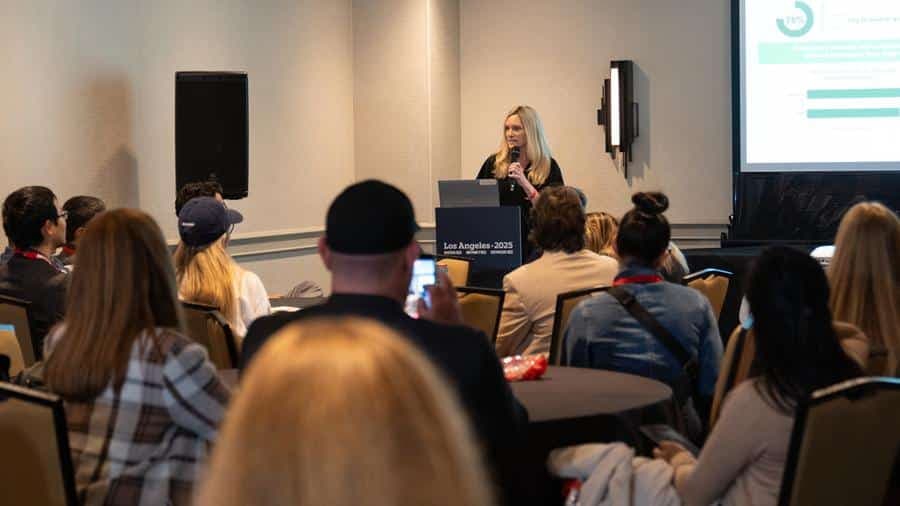
Speaker 1 [00:10] Well, hi everybody. Um, thanks for coming. Um, if you were trying to go to hitting the sweet spot in beverages, you're in the right place. Um, looking forward to spending the next hour with you guys, but then also hopefully being able to connect with you over the next couple of days, um, throughout the Bevnet event. So we will kick things off with some In with some introductions. I'll start. My name is Emily Berg. I am a marketing manager with Cargill, and I focus specifically on the beverage category. So really focusing on, hi everybody, really focusing on our ingredient portfolio and solutions that support beverage manufacturers, and I will go ahead and turn it over to Leanne here. Thanks,
Leanne Pincio [00:51] Emily. My name is Leanne Pincio. I am a senior food scientist at Cargill. I work on beverage specific. with technical depth and sugar reduction. So I will be tackling some of the technical pieces of our presentation today and let you, uh, yeah,
Speaker 1 [01:06] I just, uh, last person on this page, not up here presenting, but I just want to give a shout out to Madison St. Martin, who you see in the audience. She's our account representative and she supports the beverage category too. So any ingredient needs, um, feel free to obviously reach out to her and we have contact information on the last page of this presentation. Um, so I know I said I'm a marketing manager for Cargill. Maybe some of you know who Cargill is, some of you might not. So I figured we would start by, um, first plugging, um, uh, just in giving everybody a little rundown of, of who Cargill is. So, Cargill. is one of the largest privately held companies in the world. We span 70 countries and employ 155,000 people. Our roots are in agriculture, so 155 years ago it started out in grains and Um, capabilities and portfolios in the world of food have just continued to evolve, um, over the years, and now we kind of run the gamut, so we support customers in retail and food manufacturing and food service, and we offer everything from cocoa and chocolate to oils to proteins, um, but for all intents and purposes and more specifically today we wanted to just briefly touch down on. Um, kind of what is in our portfolio that's relevant to the world of, of beverage. So I'll go ahead and turn it over to Leanne.
Leanne Pincio [02:25] Yeah, for sure. So, um, for those unfamiliar with Cargill, we just kind of wanted to give you a snapshot. Of the ingredients that we sell and what we can bring in the beverage category, so everything from our full calorie nutritive sweeteners to no calorie, high intensity sweeteners, polyols, rare sugars. We also have texturizers, bulking agents, functional ingredients, as well as complements. So any of these can work as part of your total formulation package, and we just wanted to give a snapshot so that people know, hey, I can find this at Cargill.
Speaker 1 [03:02] Awesome. So just kind of a quick rundown of what to expect over the next hour. Um, we are gonna be starting with, um, sip signal. So I'll take you through some kind of trends shaping, uh, sweetness and beverages. Um, then I'll turn it over to Leanne to cover. Science. So really diving into kind of the technical know-how to help you make smarter, sweetener decisions when formulating. We will also look at some case studies and do some tasting, which is the fun part, and then we'll kind of wrap it up with summary and next summary and kind of key takeaways. And feel free to ask questions throughout and hopefully we'll have some time for questions at the end as well. Um, so diving into, um, sip signals. Attitudes towards sugar are changing. I think everybody in the room can probably acknowledge that and maybe for some people even their own attitudes towards sugar are changing. There's kind of a variety of different forces that are really contributing to this kind of shift in conversation from an increasingly health conscious consumer, as we all know, to government regulations that are evolving throughout the across the globe, whether you think of front of pack labeling or changes to SNAP programs, etc. as well as just increased kind of chatter in the media. Um, but one thing that isn't changing is that consumers still want, want sweet experiences, but on new terms. So, um, what we're gonna do is kind of unpack some key themes that are shaping the sweet world of beverage. Uh, we're gonna talk a little bit about, we'll, we'll dive into these each in the slides to come, but we're gonna talk about sweetener savviness, how, um, consumers are, are scrutinizing sweeteners more and kind of some of the, um, changes and macro trends that are, that are, um, impacting their shifts and how they're thinking about and choosing food and beverages. Then we're going to dive into a couple of different segments that are seeing success in the world of beverage, notably the zero sugar space, as well as sweet balance, this kind of notion of low sugar that is emerging. We think about sugar. It used to be kind of all or nothing, full calorie, no calorie, but now there's this interesting middle space of low sugar that is giving brands more permission to play in. And then finally, sweet fuel. So enjoyment and function collide. Beverages are packing in, you know, more benefits, and we'll talk a little bit about how sweetness plays a critical role to those products being successful. So, um, we would be remiss not to mention some of the macro forces that are kind of happening in the world today that are impacting the way that consumers think about food and beverage. On the left hand side you see 1 in 3 consumers utilize wearable electronic health devices. If we think about the, the launch of the Fitbit, um, 15 years ago, it was just tracking steps, and now it's evolved, now wearables have evolved to be really kind of a critical component to many people's, um, you know, uh, uh, personal and proactive health journeys. In the middle you see GLP-1. So adoption of GLP-1s is continuing to rise across the United States and already last spring the amount of consumers who were on GLP-1s for weight loss has now surpassed those that are on it for diabetes control. And what we also know is that when consumers are When consumers are on GLP-1s, their, their behaviors are shifting. They're changing their lifestyle behaviors. They're changing their eating habits, and you can see this survey from Enova on the right hand side that Um, people who were on Ozempic or GLP-1s report 71% reported that they're eating healthier foods. And so all of these forces, all of these different kind of macro trends that are happening are really causing this what we would refer to as kind of this a little bit more savviness with consumers. When it comes to the food that they're choosing and also making this connection between what they're eating and how it's making them feel, the last thing I have on this slide is this is a headline that says how to eat carbs, protein, fat, and fiber in a specific order for steady blood sugar. We obviously just passed. Thanksgiving last month, I have told this story to Leanne, but I was around the Thanksgiving table and we were all kind of talking about what we were eating first on our plates, and my sister was like, said to me, Well, I, I always eat my greens and then my protein, and she was eating those before she got to her like marshmallow cranberry salad in order to minimize her like blood, blood sugar spike, and she's, she's not a diabetic. She's not on GLP-1s. She's just an everyday consumer, some, a type of consumer that probably many of you guys are targeting with your products, who is just kind of evolving her savviness of how she's thinking about food and, and how it's impacting how she feels. Um, so if we click that down a level to shifts that we're seeing in sweetness and perceptions of sweetness and sweeteners, what we see on the top, unsurprisingly, 76% of consumers report that they're trying to limit or avoid sugars. One thing that you don't see here, um, but I think it's an important breakdown is about 66% of those consumers said they were. and only about 10% were avoiders, and I think that's an important distinction just because it kind of demonstrates that I think consumers on some level know they're not going to avoid it entirely, but they're taking mindful and active steps to try and limit it. But what's also interesting is that alongside kind of this skepticism around sugar is also concerns around artificials. So in a survey, when consumers ask how concerned are you. About the following ingredients, artificials and sugar, we're kind of neck and neck. And what this is signaling to us is that consumers are saying they're not, um, they're not perhaps satisfied with the legacy sweetener choices that they once accepted. Simultaneously, what we're seeing on the right-hand side is, um, familiarity of our alternative sweeteners is growing. So, 3 in 4 consumers are saying they are familiar with the term stevia sweetener. 40% of consumers are saying they are familiar with the term, um, with the ingredient, I should say monk fruit. Um, and that familiarity for monk fruit, although it's not as high as stevia, is up 40%, or sorry, is up 11 points versus where it was 4 years ago. Um, so really kind of this growing kind of knowledge and awareness of these alternative choices. So when we look more specifically at the beverage category, what we're also seeing is kind of a shift in what is being leveraged in new product development. So on the left hand side you're seeing sweeteners, sweeteners in North America beverage launches. And what you see there is that stevia is the 3rd most used sweetener in new beverage launches, um, which is interesting that it's ahead of scralose despite a 10-year introduction lag if you think about when it got grass status. Um, but we don't just want to look at new product launches and what's being used. We also want to look at the, how, um, the products with various ingredients being used, how those are performing in a market. And on the right-hand side, what we're looking at is Nielsen data. And we're looking at US sales, um, for various different, um, sweeteners. And what we see is that non-artificial low, no calorie sweeteners such as stevia are seeing, um, double-digit growth within beverages. So, um, when you think about um this kind of shift that we're seeing this strong growth in market coupled with increased adoption in new product launches, it's kind of demonstrating to us that this is probably a trend that's only going to accelerate, um, despite, you know, nutritive and artificial still having the lion's share, having been just the legacy options that have been around for so long. So now diving a little bit deeper into some of the different categories, some of the different segments within beverage to see how those are performing. What we see on the left is that soft drink launches with sugar-free claims have increased, just repeated increases over the last few years. On the right hand side, what we're looking at is zero is, is CSDs, so carbonated soft drinks, soda or pop. I'm from Minnesota, we say pop there. And what we're looking at is seeing the percent change in CSD spend across various segments within soda, and the light green is regular CSD, so full calorie. The blue is diet, and the dark green is zero. And so the regular calorie, regular calorie, what we're seeing is a, a fairly substantial dip versus where things were at 4 years ago, whereas zero is increasing. Diet is kind of hovering along. It's a little bit of a dip, but I think you have consumers who are just die-hard diet drinkers and they're just not going to change. Um, but particularly when you look at the younger generations, the millennials, the Gen Z, it is signaling that there is going to be a change and a shift in this category. And what's interesting when we think about and delineate from a sweetener standpoint zero versus diet is 0 tends to be the space that is leveraging sweetener systems or combinations because it's looking to more closely emulate with a formulation goal that sugar-like taste, whereas diet has historically been more of a distinct flavor profile. So that goes back to this notion of consumers want sweet experiences but on new terms. If we shift gears a little bit, um, because nothing is ever black and white, uh, it used to be, like I mentioned at the top of the presentation, kind of an all or nothing with zero or no calories, no sugar, um, but now there's a space that's emerging with low sugar, and, um, we talked a lot about this idea of sugar avoidance, but going back to nothing is ever black and white. This on the left-hand side. What you see here is indicative of how much words matter to consumers. So what you're looking at here is purchase impact for various sweeteners, and this comes from a research tool that we feel a primary research tool we field every year called Ingredient Tracker, where we're tracking consumer sentiment over 260 ingredients on an annual basis. And what's second to the top on that chart is cane sugar. Enova recently did a study where they asked consumers which sweeteners they perceive as most natural, and cane sugar was at the top of the list for consumers. So we're seeing this kind of acceptance with cane sugar, likely because they're connotated, connotating it or associating it with that kind of natural space. But right behind that is stevia sweetener, and we're often seeing these things in combination. And this kind of acceptance of cane sugar, I'm sure you can all see out in the marketplace or perhaps you've even seen that success with your own products, is this touting of 1 2 3 4 5 g of cane sugar that's really kind of demonstrating this kind of low, low sugar space. And is, is taking off a little bit and we can see that on the right hand side, this is going back to Nielsen data again, so sales, beverage sales with stevia and cane sugar, they're all seeing strong growth, whereas some of those traditional sweeteners, be it succralose or HFCS, have seen a bit of a dip. Um, this is just, uh, is playing out that reduced calorie, um, notion within carbonated soft drinks. You can see it's still really niche, but you can see it has had exponential year over year growth. Shifting to kind of the last trend space before we get into some of the technical components, we've talked a lot about avoidance, but one thing that we also have our eye on is this idea of seeking and consumers are no longer just avoiding things. There is an increase or an uptick in seeking different benefits and products that are going to benefit them in some way, shape. Reform and you can see on the bottom here that the younger generations, particularly Gen Z, are really driving that. Consumers are now 1 in 4 consumers say they're choosing products that boost nutrition. They're they're accepting this idea, this notion of food as medicine. So this, this, this notion of seeking is going to continue to be on the. and beverage is not excluded from that. So what we see here is new product launches with an active health claim. So an active health claim would be something around gut health or immunity or skin, whereas a passive claim perhaps would be low sugar or no sugar. Active beverages with active health claims just continue to rise. Um, and really every, every traditional beverage category is being reimagined, to and really modernizing itself and function is at the center and at the heart of that modernization. So on the left, left-hand side here we looked previously at that carbonated soft drink example and how reduced calorie sodas we're seeing that really strong growth. Well, 80% of those sales of reduced calories. Are accounted for by the two leading prebiotic soda brands, hydration supplements. Hydration used to be this really one dimensional space that was really tied to, you know, sports and performance, and now it is just a part of consumers' everyday lives. Hydration supplements, so stick packs, those have seen a 67% 4-year kegger, and they went from a couple of years ago to only having 172 skews to now being at 44, 440 skews in store. Uh, we talked about GOP 1 adoption, just to hit on that a little bit more because it plays such an important role within. Uh, within this functional beverage space. On the right-hand side, you see that these are actions that are taken by GLP-1 users to manage side effects, and the top actions taken all pose a huge opportunity for beverage. Stay hydrated, eat more fiber, eat more protein, or drink more fiber, drink more protein. All of those are opportunities for kind of this life hacking vessel for consumers to be able to help manage those GLP-1 side effects. The last slide that I have here is around taste, and I think it's an important point to call out is that Uh, with all these attributes and things that we've just talked about, taste always reigns king in terms of importance. That's what the consumers put at the, at the top of the list. And so if you, with these functional ingredients, which we'll dive into in the next, in the next space, they, they come with, um, they come with challenges. They come with off notes, they come with bitterness, and that's really why we're talking about function. In, um, in a, in a, in a workshop that's about sweetness because sweetness plays a really critical role in the success of formulating these functional beverages that are on the rise and, and making sure that you're not just getting a trial from a consumer but you're actually getting brand loyalists, um, and so I think that is a great, uh, segue into talking about um sweet science. I'm gonna go ahead and turn it over to Leanne.
Leanne Pincio [18:58] Thank you, Emily. How's everybody doing? Hanging in there? Need a cocktail yet? Um, so I think everything that Emily just framed up really is insightful, and I think it's something that all of us working in beverage innovation keep top of mind, whether it's the GLP ones, whether it's the function in drinks, um, and just what consumers are demanding from their drinks today. So, um, I'm just gonna dive into the technical side. There we go. So, um, as a product developer, I am always looking at this in more of a holistic approach to sweetness. So I'm gonna be talking a lot about sweetness and how it plays into beverages here today. So on the right side of the screen here, these are kind of the four core things that I think about, um, when it comes to putting together a beverage, sweetness. I can't think of any beverage hardly that doesn't have any sweetness involved in it at all. So it's a big player. Acids, are you wanting sourness in your drink? Texturants? What kind of mouthfeel are you looking for? Do you have Do you have ingredients that need suspension? and then flavors, of course. Characterizing flavors drive taste, drive repeat consumption. So as I'm thinking about these 4 things, I'm targeting the items on the left. So I'm going to think about what is my targeted sweetness intensity. How sweet do my consumers want this product to be, how sweet does it need to be to function well with what I'm trying to deliver. Managing that sweet sour balance. So acid is a huge component of many drinks today, and it's important to find that right balance between sweetness and sourness to achieve a great tasting drink. Complimentary sweeteners, these can be flavor modifiers as well. So these are things that are going to help our overall profile, help our sweetness dynamics, mouthfeel. So if you've got a full sugar drink, you're having a lot of viscosity in your, in your beverage, right? You're getting this nice lubricity in your mouth. But if you're doing something diet or zero or reduced sugar, you're losing some of that mouthfeel, and that's important to some consumers. I think some consumers are getting much more accustomed to diet and zero and having a thinner mouthfeel, but in some cases mouthfeel is important, and there's ways to add that back if you're not adding sugar to your drink. And then label friendly. So consumers are definitely looking for things they understand on the label, a shorter label, just clean label in general. So these are some of the things I think about. So when it comes to taste and how sweetness impacts our formula, there's kind of 4 key buckets here that I'd like to address sourness, balancing that sourness. So if you think about a lemonade, you need the sweet to balance out the sour of the citrus, and achieving that balance if you're using alternatives to sugar can be optimized, and it really depends on each specific formulation. There's not one key answer. Bitterness. I think Emily talked a lot about function and drinks that are delivering more than just enjoyment, and bitterness is a piece of it, whether it's a coffee drink or whether you're adding caffeine to your energy drink. Caffeine is bitter, and sweetness mitigates that. Aftertaste. So we are often adding a lot of functional ingredients today, whether it's protein, whether it's something for your guts, whether it's something for sleep that that often have baggage with them that we need to combat, and sweetness helps us with that. And last but not least, flavor perception. I like to give an example of A carbonated waters today, flavored carbonated waters, right? The flavor houses have done a super job of creating flavors that still pop without anything else in the drink. But if you were to add a little bit of sweetness to that, your flavor is going to bloom even more. So that's how sweetness plays kind of with your characterizing flavor. So again, things to think about as you're sweetening your drink. So with that in mind, I just wanted to give a high level view of what is the toolkit for sweetness. So on the left hand side we have what carries the heavy load. So nutritive sweeteners. This includes sugar, high fructose corn syrup. It can also include juice. Juice labels a little bit differently. It's not an added sugar, but it contributes calories and is considered a nutritive sweetener. Then the other heavy lifter, if you don't want nutritive sweeteners, is high intensity sweeteners, and here these sweeteners are many, many times more sweet than sugar alone. And we have our classic artificials, your succralose, your aspartame, your, your ACK. And then you have your non-artificial selections in stevia and monk fruit. The sweeteners on the right, polyols and rare sugars, these are more complementary to your ones on the left, OK? They're never going to stand alone unless your product is not very sweet. And but they offer some really, really nice benefits in conjunction with high intensity sweeteners or even in conjunction with nutritive sweeteners. So the main players here are erythritol for polyols or sugar alcohols, and for rare sugars we have allulose. Those are the main players in the beverage space. So I am going to do a little bit of a spotlight on stevia. This is one of my areas of expertise, so. Let me forward to the next one. All right, so this slide has a lot of information on it, and I want to talk through it piece by piece. So first I'm going to start with defining sucrose equivalent value. So on the bottom of this slide you're going to see a green bar. Labeled 1 to 11. OK, so when we as developers are considering sweetness and trying to develop a sweetener system to deliver the sweetness intensity you want, the language we're using is SEV, sucrose equivalent value, and to explain that. What this means is if I were to put 6% sugar in water, that level of sweetness intensity that you would taste. would give you this would be similar to that of a sports drink. So think your classic sports drinks like Powerade or Gatorade. That's going to be around 6 or 7. SEV or 6% sugar and water in terms of how that sweetness comes across. Now, if you put 10%, 11% sugar and water, that's going to be the sweetness that you're seeing delivered in a cola or an energy drink. OK? So this is helpful when you're working with, um, people like Cargill, and we're trying to understand how we can best deliver sweetness for your product is understanding your sweetness intensity target. All right, so then the next thing I'm going to describe on this list is the technological advancement and progression of stevia over the years. So this, this is specific to Cargill's portfolio, but it applies across the industry. So on the bottom left we have Truvia. This was launched almost 20 years ago. This is your classic RA 95 Rebbe. That is one of the sweet components in the leaf. And it's one of the most prominent sweet components in the leaf, so that's that's why it was first to market. We are always constantly trying to drive on improving stevia's sweet taste. Um, so that's where we made our step jump to our via tech portfolio, and these are blended components of leaf-based extracts. So like I said, the leaf is comprised of many different sweet components called glycosides. And what we did here is we did a ton of sensory research to optimize these blends in order to deliver. Better sweetness profile, better flavor from the stevia itself. We have a few different options in this portfolio as well, because sometimes sugar reduction is the goal. And so if you look at a product like TS 1200, that's going to work great for sugar reduction. If let's say you have a 10 SEV beverage and you want to reduce it by 50%, so you're going to deliver 5%. Sucrose and you're going to deliver 5 STV from stevia. So we've got tools that work great in combination with sugar. Next is our Eversweet. So that is our newest stevia product. And going back to the components, it is comprised primarily of Reb M, which is becoming more and more familiar on the stevia market. So our product is primarily Reb M with a little bit of Reb D. We find this to be the most optimal combination for stevia. And going back to how much is in a leaf, it's Reb M is, so if, if, if Reb A is this much of the leaf, Reb M is This much of the leaf, so it is not economical whatsoever to produce from leaf. You need a lot of land, a lot of water resources. It's so, so. You're essentially finding this produced in different ways. Cargill produces via fermentation. There's also bioconversion, enzymatic bioconversion as ways to produce nature identical Reb M. So the last one I'm going to talk about, and I have another slide about it, is Eversweet Clearflow. So this is our newest launch. So it combines our Eversweet stevia sweetener with Clearflow flavor modulator. It's a botanical extract labeled as a natural flavor, but it has many great properties when paired with our reben's Eversweet. So just to give a little bit of a, a deeper dive into our Eversweet plus clear flow, so primarily we are seeing excellent improvement in taste. So I'm going to deep dive into this next, but It improves the rounded sweetness quality, so we're always driving towards a more sucrose-like profile of sweetness. And what Clearflow helps us do with Reb M is it helps us boost the upfront sweetness, so how quickly you taste it, get to max sweet in your mouth, and it helps reduce some of that sweetness linger. In addition, we're seeing a ton of beneficial properties in terms of flavor modulation of negative off notes. So whether that's bitterness, metallic, vitamin mineral notes, we have a lot of sensory data supporting the reduction of some of these off tastes with the addition of Clearflow. Lastly, it also can help boost your characterizing flavor. So if you're using citrus or berry or you name it, you know, it can just elevate that characterizing flavor as well. So all just from using the combination of Eversweet plus Clearflow. Um, on the right, I'll let you read about operational efficiency if that's of interest to you, because Reb M does have some limitations and Eversweet plus Clearflow attacks some of those limitations. All right, so now we're going to deep dive into some dynamics. So when I'm talking about rounded quality of sweetness, this gives you a demonstration of what that means. So I'm going to explain this slide a little bit. So on the left hand side, 0 to 10, you have your SEV, OK? And on the bottom you have time. So this is how does the sweetener taste in my mouth over time. So sucrose is our gold standard. So we evaluated various sweeteners, all at 6.5 SV. But what you can see here is sugar comes on quickly. It doesn't stay there very long. It dissipates with no tailing sweetness, and it leaves your mouth clean, right? So that's the ultimate goal. I don't know of any sweeteners on the market besides sugar that tastes like this, so that is one thing to keep in mind. A lot of times customers will come in and say, but it needs to taste like sugar, and we do our darndest to make it happen, but it's a difficult task, and we, we have more and more tools driving us towards that, and we can create a great tasting beverage using multiple tools depending upon your application. But sucrose, we're still striving for it. So showing RA 95, so this gives you an idea of the delayed onset. And that's kind of the biggest factor here, right, is you're not getting that quick hit of sweetness. This is why if you're using RA 95, perhaps you've paired it with erythritol or allulose to give you a boost in your upfront sweetness, OK. Um, one thing I do want to note here is that this slide does not take into consideration any other tastes affiliated with these sweeteners. This is just sweetness and how it plays out in your mouth over time. So you may know that RA 95 usually carries some bitterness, usually carries some licorice notes. Some people don't prefer that. So it's a difficult, another difficult challenge with an RA95 type product, but this is purely looking at sweetness. So with Ve again we tried to push. Excuse me, we tried to push closer to sugar, which we achieved, but in order to do that, we also got a little bit more lingering sweetness. Than we had Eversweet. OK, continually driving towards faster onset of sweetness, but we still have some of those challenges of sweetness linger attributed to reb. Finally, so EC one is shorthand for Eversweet Plus Clearflow. So you can see with that blue bar we're driving even closer to a faster sweet onset, but I think the biggest thing that we're happy with at Cargill is the reduction in sweetness linger. So we're getting, we're constantly trying to drive towards a more sucrose-like taste. All right, so continuing on to compare these two other high intensity sweeteners, so this is what we saw before sucrose and eversweet. So you'll notice that succralose has quite a similar uh sweetness dynamics profile to Reb or in our case, Eversweet. They, they both have challenges with lingering sweetness. They both have pretty fast onset, but as we begin to explore the idea of putting together, um, sweetness combinations to best suit our beverage. You're probably not going to pair scralose and Esweet together. They have a lot of the same attributes. They don't really bring much for the other if you were to use them in combination, not to say that people haven't done it and made successful beverages from it. But just something to keep in mind. OK, now you might say, hey, Leanne. Why don't we just sweeten with Ace K? OK, right, that looks pretty good. It looks kind of like sugar. Well, like I said, this doesn't really capture The other tastes associated with the sweetener. So Ace K is known to be metallic. It's known to have some astringency, and nobody would ever really use it at this level because of those negative taste attributes. However, it is a great complementary sweetener. So you see it paired a lot with sucralose or with aspartame because it's bringing that upfront sweetness. So if you use a little bit of Ace K, you can use it with Eversweet, you can use it with sucralose. It's going to give you that upfront lift. That without using too much of it so that it overpowers with negative tastes, but it's, you know, it's a nice tool in the toolbox. Everybody doing good? Questions? OK. All right. Now we get to taste something. So we're going to go through a few case studies. Case study number 1, adaptogen infused mood beverage. All right, so Emily and Madison are going to come around and be bringing out samples. We have 2 cups, OK, a 1 and a 2. We're starting with the one. Yes, we will start with the one, but here's, so before, before we taste, just hold onto them for a second. So the challenge consumers, you know what do we want? We want beverages with benefits, OK, so. The products that are launching that kind of have mood or sleep or focus are on the rise, and functional ingredients like we've said time and time before here is the technical challenge of bitterness or earthiness or astringency or you name it, right, by bringing these functional ingredients. So Cargill created a concept. Our beverage team created a calm and focused concept. We've got ashwagandha, acetylcholine, L-theanine, and magnesium in here. And the sweetener that we chose to use here is our Eversweet Clearflow. So Eversweet Clearflow helps mask some of those earthy tastes from some of these functional ingredients, brings a great sweetness profile, and reduces that linger from traditional rub. So what you have in front of you is, do we have two out yet? So we're still doing one. No worries. All right, so when you get 2, so we're going to start with 11 is the version with Aversweet Plus Clearflow. So you can taste it and save a little bit for when you get your second cup. And the second cup is going to be RA 95. So this is a demonstration showing the progression of sweetness quality. In this in our stevia portfolio. So once you get 1 and 2, you're going to start with 1 because we start with the good tasting one. Why do we do that? Because if we start with the bad tasting one, maybe that just carries over to the good tasting one. So we'll, uh, we'll get those around the room and then we'll get some feedback from you. So some of the attributes that you can pick up from RA 95, so it's, it's actually a genetic thing whether you can, you're a good bitter taster or not, but those of us who can taste bitter, I, I do quite heavily. So RA95 is known to be quite bitter, and then in terms of sort of aftertaste in the throat, it can Have an astringency, sort of a cloying taste that is difficult to clear, but those are some of the negative attributes that are sometimes picked up with RA95. So and to give you an idea back to the acaiV reference, so this drink is about 8 SEV, so it's kind of moderately sweet. It's not as sweet as a soda or an energy drink, but it's not low sweetness either. Um, so it's definitely, definitely different things you can play with. Did anybody notice differences in how the like earthy taste of some of the functional ingredients or anything like that? That's something else to keep in mind because with this one we do see differences in how those functional ingredients taste as they come through, so. But good, hope you enjoyed it at least. Maybe you'll be calm and focused for the rest of the evening. Oh, and I didn't even switch the slide. I'm sorry. Here's our slide. I had it up here but I didn't have it over there, so I'll let you guys just peek at this real quick and we do have a, we do have a placard over here if you're interested in looking at it again later. All right, so I wanted to do another quick spotlight on polyols and rare sugars. So these do offer a variety of benefits, as I mentioned earlier. So they do have a very clean and sugar-like taste. So both allulose and erythritol are about 70% as sweet as sugar, so they don't stand alone, but they do work well in synergy with other sweeteners so that it can improve sweetness dynamics by bumping up that upfront sweetness and helping reduce sweetness linger. Um, they do have lower calorie content than sugars, and erythritol actually doesn't contribute any calories to your label. They do provide bulk. So going back to the conversation about mouthfeel, if you do want to use a little bit of erythritol or allulose, it can give some body to your beverage because they in format they look granulated. They're added at a much higher volume because they don't, they're not, they're not high intensity, so you're not using a very small amount, right? And then if you're making a dry mix beverage, they also act as a good filler. So that way in your stick pack you've got your little bit of actives, you've got your little bit of high intensity sweetener and not much else. So if you want your product to kind of flow out nicely, erythritol and allulose can do that job. One thing I do want to mention is regulatory considerations for these ingredients. They are limited. So in this country, erythritol and allulose can be used up to 3.5% in a finished beverage. They're also approved for use as a flavor modifier, so you can use them as natural flavors, so up to 2.5% for erythritol and up to 2% for allulose in non-alcoholic beverages. So Something to consider when you're putting together your formulations. So, the next case study we've got coming around is a modern-day soda story. Like we know, modern sodas are really climbing the charts here. Um, But they do come with their complexities, right? But consumers, they're finding this like an alternative to the indulgent traditional soda, but they still demand great taste. They're usually a little less sweet, but they want that function too. So many have fiber today, but we're also seeing the rise of demand for protein, so we're seeing more and more carbonated soft drinks with protein, and then they're demanding label appeal, so they don't want, they want low or no sugar, and they don't want anything artificial. So those are kind of the challenges that we are tackling with. A modern soda. So at Cargill we approached this a little bit differently. We approached this kind of with a sessionable hat for anybody who enjoys beer out there. So we, we did this at 5 g of complete protein from whey protein islet, and then we have 3 g of soluble corn fiber. So rather than maybe choking down a 30 g protein drink, you could have a couple of these in the afternoon and chip away at your protein goals and have some fiber as well. And so some of the goals that we're trying to achieve here are that label friendly piece. So our solutions in this, in this concept include our Viaech product lines, so our leaf-based blends of TS 300 plus, and then we also added allulose into this as well. So the allulose is going to bring some of that upfront sweetness, a little bit of body to the beverage, and then the Viac TS 300 plus is going to bring the lion's share of the sweetness. Um So yeah, we hope you enjoy this more sessionable protein soda.
Speaker 3 [43:01] What's the role of the Himalayan sea salt?
Leanne Pincio [43:04] Oh yeah, so, so there's a little bit of premium, premiumization with the addition of pink Himalayan salt, but the salt can contribute a little bit of, I want to say that they did a little bit of electrolytes in here, but it can also salt has a funny effect on beverages sometimes. It can. It can round out a flavor, like a characterizing flavor. So if you think about chocolate, if you add a little bit of salt to chocolate milk, it actually makes the formula or the beverage taste a lot. More rounded and complete, um, so. So it's just an interesting addition here for adding not only a little bit of electrolytes but enhancing the overall flavor, but I will talk about pink Himalayan in the next prototype because we are using it there as well. So, with that, case study number 3, hydration. All right. So, hydration is growing as well, whether in the dry-mix stick packs or ready to drink. Um, but they're changing, right? Hydration drinks are getting saltier. And they're definitely going beyond the performance consumer, so it's beyond our Michael Jordan with the glass Gatorade bottle days. I might be dating myself here, but there you go. And we now need to balance more than just that sourness and sweetness. It's not just acid and sweet anymore. It's you also have to balance out the salt. So in front of you you guys have a watermelon candy flavored hydration beverage. So with this concept we leveraged erythritol, so we have erythritol in at 1% per weight. Um It boosts some of the upfront sweetness. Adds a little bit of body. And then we are also using our Eversweet Plus Clearflow in this sample. Leveraging our WebM EverSweet with ClearFlo, and the ClearFlo is we found because we did compare this to other sweeteners as well in our portfolio. It really helps. Marry all of those sweet, sour salt. And it also actually reduces, we've shown this side by side before, and it reduces some of the salty impact so that the salt comes across a little bit more balanced without the ClearFlo there, the salt just kind of really hit you hard, so we really liked what we saw there. But speaking of salt, so this one has the pink Himalayan salt as well. Not only for that premium positioning, but we also compared this to other salts, and we found that it does impact your flavor ever so slightly. So for those with a sensitive, sensitive taste palate, I encourage you to try different salts. If salt is something in your formula, you may notice some differences. So pink Himalayan is definitely on the rise as well. So And with this, if you're staying here at the Marriott during BevNET, we have a stick pack mix of this that should have been dropped to your room, so you can give that a try as well. But any, any thoughts? Exactly, yeah, totally. The flavor's great, so we, we really enjoyed the flavor that we ended up landing on with this one. Totally tastes like a Jolly Rancher, I agree. So with that, um, I think we will summarize. Emily, do you want to join me again? Let's go over here. Sure, I can, I can run this part.
Speaker 1 [46:59] Yeah, so just to kind of wrap everything up, hopefully everybody's leaving with either a pearl or two of new knowledge or at least validation of kind of some thoughts and perspectives you had, but we wanted to leave you with some takeaways and then also some things to think about from a sweetness standpoint as you're going about formulating. So one, make choices for today's consumers. So who are you formulating and how can you leverage your sweeteners to resonate and deliver value with your target consumer? So thinking back to some of those trends and insights, some of that purchase impact data, how can you tell a story around your sweeteners that is going to kind of boost the value of your product?
Leanne Pincio [47:35] Leanne, yeah, so number 2, going back to know what you think your sweetness target needs to be. What do your consumers want? How sweet do you need your product to be? What things do you need to offset in your formula with sweetness? How can sweetness help you develop something that tastes great, because ultimately we know that if it tastes great, it will sell more.
Speaker 1 [47:55] Um, then know your labeling goals. Um, so not just your ingredient deck, but your nutritional facts panel. Are there specific calorie or sugar levels that you want to be at? Are there specific protein and fiber levels that you want to be at? Are there ingredients you want to avoid? All those things are, all those things are important. If there's certain protein levels or fiber levels that you want to be at, maybe the fiber is going to contribute to a calorie or sugar, sugar count, or maybe you want to be at such a high of a protein level that it's important for your developer to understand, because with protein comes more, you know, off notes and sensory challenges that need to be dealt with. So know your know your labeling goals.
Leanne Pincio [48:39] And number 4, so consider the pros and cons of your sweetener choices. Uh, do you need a high-intensity sweetener to achieve your, your goals? And if so, are you going a traditional artificial? Are you going, uh, non-artificial? Are you going some blend? We're seeing it all out there. Um, and then just know what your options are, um, in, in, in specific to stevia, you know, do you want a rub A or do you want to rub M? Um, because they do, they taste different and they perform a little bit differently. And lastly, number 5, blend it up. I love this because there's not really one, a one size fits all solution for any formula unfortunately. Every, every pH range, every characterizing flavor can be different, so. Um, just know your know your toolkit and work with some folks that that know how to put together great combinations of sweeteners for you to evaluate and know that you can play around. With the different tools in the toolkit to drive at the taste that you want, so.
Speaker 1 [49:50] Awesome. So that is um a wrap. Our names are up here and our email addresses. Um, we'll be around. Feel free to ask questions whether it's tonight or whether it's throughout the show tomorrow. Um, we'd love to hear, we'd love to hear from you. We'd love to, yeah, answer any questions you might have and. This this presentation will be available through Bvnet too, so all the slides and stuff like that will be available. But yeah, we just really appreciate the time and hope everybody has a fantastic
Leanne Pincio [50:19] show. Yeah, I mean, I was going to say questions. Oh yeah,
Speaker 1 [50:23] yeah, any questions we can answer live too, we're happy to. We have a few minutes here, yeah. Yeah, so
Speaker 4 [50:32] you did, you did a lot
Speaker 5 [50:32] of didn't
Leanne Pincio [50:35] Monkford as the other natural. How does it kind of compare on the curve? Yeah, so there are a few different options for you in monk fruit today. A monk fruit juice concentrate isn't going to get you very far. It's not that sweet. It reads nice on the label, and it can work if that's what you're going for, but it's considerably less sweet. So then they do have monk fruit extracts, so most commonly like a morcide 5. That's not quite as sweet as most stevias in the market today. It can be used in conjunction quite well. I recognize it as something to add for the future. I've used it a lot in various formulations, so it's definitely a tool. It can be cost prohibitive. And it has its own, it has its own taste pieces to it too. So monk fruit generally has a little bit of a brown fruit note to it that you can that you can get depending upon your use level. But again, it's a great, it's a great tool for the toolkit. I personally like monk fruit extracts because I think that it's more potent, it's a little bit cleaner tasting, and Yeah. Hope that answers your question. Yeah.
Speaker 4 [51:59] is that being sold as one system.
Leanne Pincio [52:02] One system.
Speaker 1 [52:04] And then you can buy Eversweet separate as well.
Leanne Pincio [52:07] Yeah, it's, it's a cold spray dried product, yeah.
Speaker 5 [52:14] explain period. Did you uh choose Ma? The World Cup.
Leanne Pincio [52:27] Oh, the watermelon. Um, so, and I, I developed that one, so I feel like I can speak to it a little bit more clearly, but, um, So first off it was sort of that premium play, right? I feel like in hydration you're seeing. You're seeing formulas that have a reading premium label. There's something people like about that the naturalness of a for lack of a better term, it doesn't really have a definition, but of pink Himalayan salt, right? So there's kind of a health halo around pink Himalayan salt. So I sought to explore like, OK, well why don't we taste pink Himalayan versus like a classic. High, high grade, Cargill's high grade classic salt, and we just found that that it had a softer salt profile. Um, not to say that the other salt, it's just different, right? So it kind of depends on you put it in front of your consumers which do your consumer like better, whether via the label or whether via the taste. The differences were subtle, but everybody within our salt team when they screened through the different samples with pink Himalayan versus regular salt, noticed a difference. So which one is better? That would be up to your consumer, I would say. But they're different, so something to note as you screen through things like that.
Speaker 5 [53:49] Or. You have to know what I got. Sodium chloride
Leanne Pincio [53:59] Yeah
Speaker 5 [54:00] Not the gentlest. I, I was just
Leanne Pincio [54:07] Yeah, so the hydration drink actually uses 4 different inputs to get the electrolytes. So you have your pink Himalayan salt. You have your potassium chloride, which does have some bitterness associated with it. So you have to leverage that carefully. And then potassium citrate and sodium citrate. So that's delivering all of your sodium and potassium through those 4 inputs in order to balance out your pH. And your titratable acidity and ultimately your your overall taste. So you know we're using sodium to deliver function in this drink and it's just one of the players adding an electrolyte function to the drink. To help, hopefully.
Speaker 5 [54:54] To me like it was really a marketing.
Leanne Pincio [54:58] It definitely can be, but I, but I also will reiterate, you know, it is like that premiumization play. So are your, do your consumers pay attention to that? Are they interested in that? To be sure, but I did see a taste difference. So which one is better again, there's some subjectivity there just like there is with sweeteners. Like some people like aspartame in, some people like stevia, you know. So there's, there's definitely some subjectivity there, but Yep, it's just a, it's a, it's a choice to consider as you're formulating. Yeah, yeah.
Speaker 1 [55:36] Awesome. No other questions. Thank you everybody for coming and um the prototype sheets are over here if you want to check them out.