Search across the BevNET CPG Media network including BevNET, Nosh, Brewbound, Taste Radio, Nombase and CPG Jobs.
NOSH Pitch Slam 11 Finals featuring Bob's Natural, Rich Nuts and Kokada
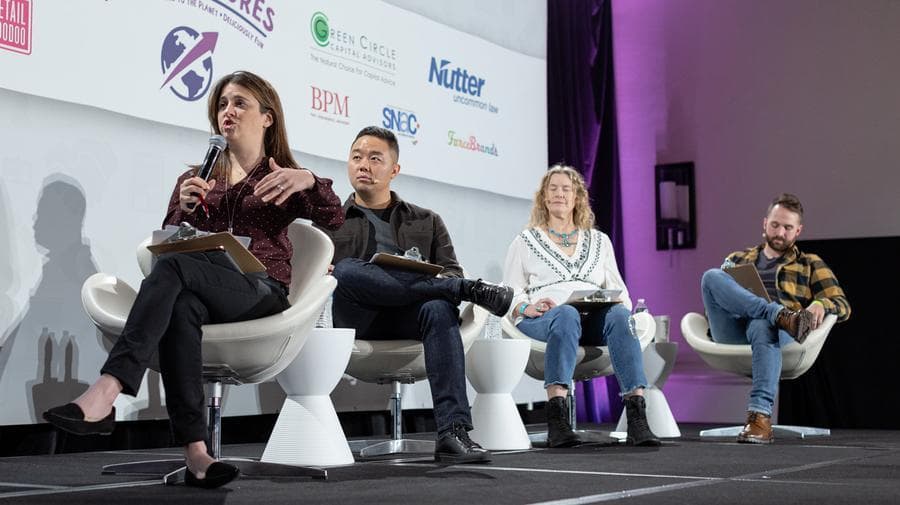
Featuring brands Bob's Natural, Rich Nuts and Kokada.
Captured during NOSH Live Winter 2021.
Transcript
Note: Transcripts are automatically generated and may contain inaccuracies and spelling errors.
Speaker 1 [00:18] Our first finalist of this part is Bob Gruder, who is the CEO of Bob's Naturals. Come on up. Thank you.
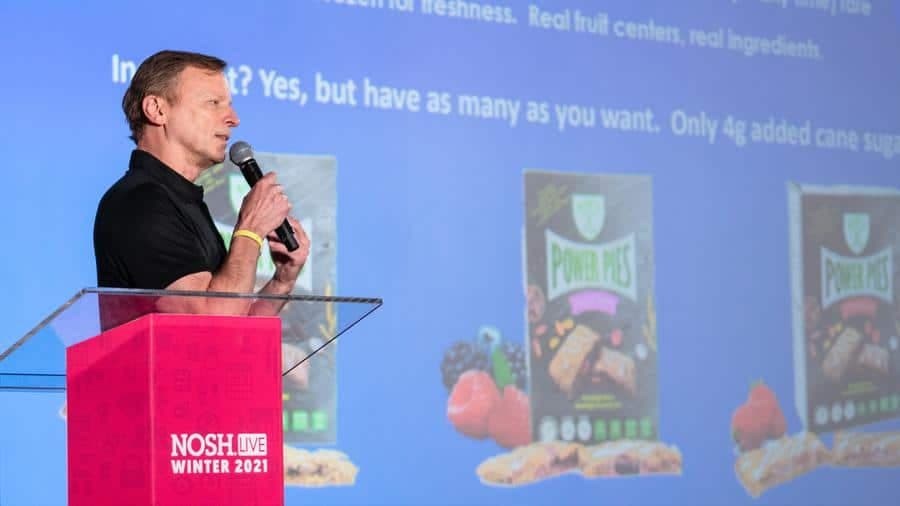
Speaker 2 [00:28] Hey, Gotcha. Thank you. Well, thanks for coming and thanks for listening. I wanna start out by telling you a story about Dave. Dave's a good friend of mine and he's a lawyer in New York City. A couple of years ago, Dave was um working really hard. He was grinding probably like everybody else. He worked 60 hours a week, very dedicated to his craft, but he wasn't feeling great. He had stomach aches, he had kind of a headache, gained a couple pounds, incredible fatigue. So he went to the doctor. And the doctor took his blood pressure and he saw it was up a little bit and he saw that he gained a couple of pounds. But the doctor said something interesting. He goes, tell me what you ate for the last 3 days. Dave kind of looked at him, kind of weird and told him what he ate. So the doctor went to his desk and started writing. And Dave was thinking, oh no, here it comes, the Prilosec and the Lipitor prescriptions for the rest of my life. So he came back and he handed him 3 sheets of paper and said, Here's a diet I want you to eat. Come see me next week, which was very strange for a doctor to say. So Dave followed What the doctor told him to do, came back the next week and the doctor says, how do you feel? He goes, I feel great. I have more energy. I feel fantastic. My stomach. Pain went away, no headache. So I went and visited Dave a couple of years later. Dave had gained more weight. And I said, Dave, what's happening? He goes, I'm on the Prilosec and the Lipitor diet. And I go, what happened to what the doctor told you? He says, uh, I don't want it. It's too hard. I'm just not interested. And I said, why don't you just go boil some oats in the morning. Have some great oatmeal. You can eat it, clean the pots in 15 minutes. And he goes, I'm not interested. And it just kind of resonated with me for a while. And then he says, um, I just, I don't want to eat food that tastes healthy. I just want to eat food that tastes good, that is healthy. And that just, that just kind of just stuck in my mind for a while. I was at my, uh, my local supermarket, staring kind of just like this. At the frozen breakfast aisle, there hasn't really been any innovation in years in the breakfast aisle. There's been some great innovations. In fact, a lot of the innovations have come out of Nosh for snack aisle and other aisles, but you can see it's just a sea of yellow and red boxes filled with empty calories. And then I thought about Dave and the Daves of the world. There's female Daves. There's elementary school Dave's, there's millennial Dave's, there's truck driver Dave's, there's Doctor Dave's. And they're not interested. In trying to formulate or go or become a cause they just wanna do their work and work hard and that's what they do they work really, really hard at what they do, but they think the food companies should work hard and create something that is good for them. I looked at this and I decided, all right, I'm gonna start a new breakfast product. And we created power pies. Power pies, as you can see, come in three flavors right now, dark chocolate, mixed berry, and strawberry. One of the best compliments I think I heard yesterday was they said it tastes indulgent. Indulgence could be good or could be bad. Indulgent could be like, I shouldn't have this all the time. But there's only 4 g of added sugar. The rest of the sugar comes with whole fruit in the center of the power pies themselves, and they're made with all natural ingredients. We're in the process of getting our GMO certificate, non-GMO certification. We should be getting that in the next few weeks. The challenge I found, and I, I'm new to the food business was I must have been insane going into the food business in the frozen category because one, it's a cold chain which is very expensive in itself to support, but when I went to a couple of coal manufacturers and told them what I wanted to make with some prototypes, they said you can't put whole fruit in the center of a baked good. They, they said it has to have some sort of jelly or jam to be extruded and I said, I'm not doing that. So I'm gonna make something that's good, good for Dave, Dave of the world. Had to design an entire machine and process to be able to do that and we've done that. We've created, we have a great machine now that can make, um, make volumes of power pies and the power pies, as I said, are gonna be non-GMO and they do, they do of course cater to the vegan, the vegan and the non-dairy, um, community, but we wanted to create something for everybody, something that would taste good for everybody. And it's not just a breakfast item, it's an anytime item. Think about Pop-Tarts. People have those any time of the day. They're just not particularly great for you, but they, they sure taste good sometimes. Um, That's hard.
Speaker 1 [05:35] Well done. Uh, please bring your mic. Yep, uh, no, you can bring it over here. Yep, of course. All right, uh, power pies, uh, Bob talked about, uh, very little innovation in the breakfast food space, uh, in some time. Gavin, do you see power pies as filling that need for innovation? Well, there's certainly a little bit of a need in the breakfast category for sure, in the frozen breakfast category. Um, this could definitely fill, uh, a gap that is there. Um, I think the decadent. Uh, taste and profile of this product has some legs, and I think, I think there's some more innovation that, uh, Bob and his team can explore a little further with this one. that's my input there. Mhm. Heidi, uh, tastes so important. Bob used the word indulgent. He said he heard that word yesterday. Are these indulgent products? Would you eat these on a regular basis? Well, um, I think you know, uh, the chocolate was kind of like a gooey cookie. Uh, what I expected when I put this in the microwave with a little crisper was that it was gonna come out as kind of a crisp pie, um, right? There was some discussion around reminiscing around, um, uh, what are those things called? um. Strudels, uh, toaster strudels, right, and I don't know that it that it delivered on that. Perhaps if I had had it, uh, out of the oven, right, it might have performed differently. It was kind of soggy. It was like a soggy cookie coming out soggy cookie or soggy bar coming out of the microwave, but the flavor was good, but just the, the, uh, consistency, I think it just could use a little work. Eugene, for the Daves of the world that are looking for better foods, um, you know, are they looking for products like Bob's, like, like the power pies, um, is this filling that need for people who, uh, don't wanna eat healthy food but we just want great food that is healthy?
Speaker 3 [07:19] Yeah, I mean, I think, you know, the concept of power pies is interesting, is like a sort of product description, I think. I was wondering like what exactly is that like mean like is it delivering on high protein, high fiber like I think that was kind of missing in the messaging I think is like as far as the product description goes, but
Speaker 2 [07:38] I just ran out of time. I,
Speaker 3 [07:39] I looked at it as more of like a, you know, better for you toaster strudel it's kind of how I
Speaker 1 [07:44] thought of
Speaker 3 [07:44] the
Speaker 1 [07:44] product
Speaker 3 [07:44] so.
Speaker 1 [07:46] Carol, um, you know, as the other judges talked about, uh, you know, there seems like there is a need for innovation in the breakfast food space in that frozen space, but, um, You know, we've seen to varying degrees of success in terms of what moves the needle. Um, what do you think about Bob in terms of moving the needle, Bob's in terms of moving the needle for that innovation for that space?
Speaker 4 [08:06] Well, I, I mean I certainly have been getting a lot of pitches for frozen breakfast right now and so, uh, they all say it's a, it's a category on fire right now. I think given that you're sweet, um, and not savory, which is where a lot of these. Products seem to be. I would just make sure that you can appeal to a conventional shopper, um, in terms of delivering on that price point, the convenience, you know, yes, you can use a toaster, but let's be honest, a lot are probably gonna microwave it, so make sure that it, it works in that manner as well, um, and I do wonder eventually if you could explore more savory flavors, so it's like kind of a breakfast hot pots, hot pockets sort of style.
Speaker 2 [08:48] Yeah, we, yeah, we are, we definitely are.
Speaker 1 [08:51] Um, any questions for Bob? I mean, I think, you know, it's, it's an interesting opportunity for him to hear feedback. Heidi, yeah, I have a question for you. You know, we heard you talk about that shopper with a health need. You developed this product for specific health need, so, but what I didn't see is how are you gonna connect to those shoppers that need this product?
Speaker 2 [09:10] That that's a good question. Um, interesting enough that the people that have tried it, uh, have started to create a little bit of a community out there and talk about it, and I think it's going to be more of a social aspect, a social media aspect that will, will drive the sales, and obviously we're gonna be working with some influencers to talk about that. And
Speaker 1 [09:29] then Bob, what is, uh, what is your target price point?
Speaker 2 [09:32] Uh, target price point is 5.99 for 4 pies, and that is, um, uh, similar to what the price of a, a protein bar would be.
Speaker 1 [09:42] All right, good stuff. We're out of time. Well done, Bob. All right. Up next, we have Richard Powells and Samantha Coker, the co-founders of Rich Nuts. Come on up.
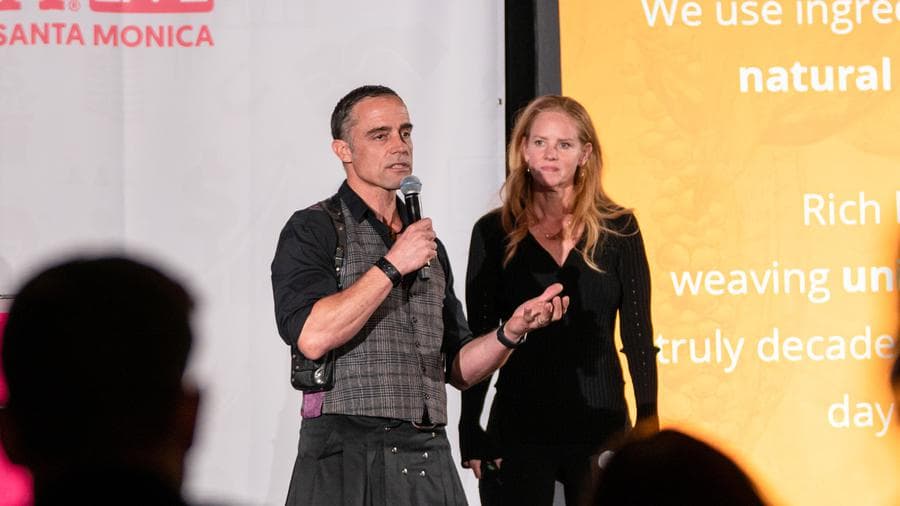
Speaker 3 [10:06] Hello, I'm Rich. I am the founder and sprouting guru at Rich Nuts, and this is my wife and co-founder and our CEO Samantha Coker. Now before I became, uh, before I started Rich Nuts, I was a firefighter and paramedic and I spent 20 years doing that job and the last 12 years I was stationed in Malibu. Now all of you all have seen those crazy fires devastating California. That's what he was doing. Yeah, so imagine fighting those fires without anything healthy to eat. Unfortunately, the only options available to me on the fire line were prison sack lunches, MREs, and fast food. So I started to eat a lot of raw organic cashews and organic trail mix. Instead of getting the energy I needed to fight those fires, I got a lot of digestive issues. I was gassy and bloated. I had brain fog, it was a mess. So I did some research and I found out that if you're eating nuts that weren't sprouted, you could have these symptoms. So I started sprouting the cashews and before I knew it, all of my symptoms went away. So Richard, can you tell us a little bit about sprouting? Sure, so. Nuts and seeds basically evolved over time to survive the digestive tract. The survival strategy of the plants is to have animals eat the nuts or seeds and drop them out whole so they can grow into a new plant. Well, how do they do this? Well, they concentrate certain substances like phytic acid and lectins, which by design block, inhibit, and disrupt our digestion, allowing that nutter seed to pass through us unharmed. Now, does everyone know what lectins are? No, but everyone knows what gluten is, right? Now, gluten is the most famous lectin, isn't that right, Richard? That's right. Gluten is the most famous lectin. So, uh, let's see, where was I here, um. Yeah, so In order to mitigate these effects, what we do at Rich Nuts is we soak our nuts in water to activate them, and then we allow them to germinate. That puts them into a growth phase where they drop their defenses, they become more digestible and therefore more nutritious. So you solved your digestive issues, but how do they taste? Well, Honestly, at that point, they didn't taste great. They were soggy and really mushy. So I discovered dehydration which brought back this amazing crunch, but at that point they were a little bland. And a bit boring to be honest. So I looked to nature, I grabbed some sage and some rosemary and I threw in some liquid aminos and boom, we had our first flavor, savory sage. Now, my flavor philosophy is simple. I think that nuts taste great already, so I use a few simple ingredients to enhance their natural flavor without overwhelming them. And you know, who wants cool ranch flavored cashews? Richard has a really wonderful ability to create unique gourmet flavors, and that's put us at this really interesting intersection of nutrient dense, high impact nutrition and luscious, decadent gourmet flavors, and that's really allowed us to sneak a whole lot of healthy into a satisfying splurge. Yep, and in my work as a paramedic, I often try to save people that were beyond saving. And frequently I thought if only I had gotten to them 20 years ago, I could have maybe helped them change their diet and we might have a better outcome. So, whenever I'm out there sourcing ingredients, I look to find things that are organic, low glycemic, paleo keto friendly, and vegan. So this gets to our demographic. Like we know that health food trends are on the rise, sprouting is on the rise, and of course we feel that our flavors are good enough to lure some of those people who don't care about those things over to the dark side, but generally our consumers care about having healthy organic plant-based snacks. They come in two different categories. Women from 35 to 55 are a main consumer, but we're also finding that. Men who are biohacking Bitcoin loving tech corporate guys are also loving our product. We have 6 different flavors, 2 cashew, 2 walnut, a pecan flavor, and a trail mix. Right now we're, they're priced at 11.99 and 9.99. We're in about 70 stores in Southern California. We're just onboarding into UNFI's up next program where we'll expand Southern California, launch into Northern California, and really saturate California before we expand outside of that. We're doing a little D2C and Amazon, but right now we're focusing on retail, um. Just a few other things about us we're certified minority owned business. Richard is Chickasaw Nation and he's also Latin American, obviously a first responder but also veteran. He was a Navy man owned business. Um, we have a big pledge to regenerative sourcing and responsible packaging, and we have a very big commitment to, um, mindfulness in every aspect of our business with everyone we touch and basically we're just a few crazy nuts. So thank you. Thanks.
Speaker 1 [15:02] Hold on. Uh, if you could just slide up here so our cameras can get you. Um, before we get started, can I ask, you said they only gave you, uh, MREs and prison sack lunches. What's a prison sack lunch?
Speaker 3 [15:16] Is this on? Hello. Really like a terrible piece of meat like an old baloney and maybe some mayo on Wonder Bread with, you know,
Speaker 1 [15:25] you, you could have stopped at baloney. That's fine. Thank you. I couldn't eat it. Uh, uh, if Michelin rated nuts, this is what we'd be looking at. Uh, do you agree with that, Eugene? Yeah, I mean,
Speaker 3 [15:35] I love the concept. I guess I, I got a couple of questions on the application like. These are not roasted then, correct? They're not, no, they're sprouted and then dehydrated. So, OK. And then do you find that the seasonings without the whole roasting that's like a whole component to the seasoning and we don't use any oils to help it stick like they do in roasting. Got it. OK, yeah, that's, I, I think the product's great flavors great. I, I think, you know, the category, like, you know, kind of led the category for for many years and I think it could use some disruption.
Speaker 1 [16:08] Yeah, Gavin, you were nodding your head about the, the category and rich nuts in terms of it's, I think the, I think the flavors, so like I, I tried these a little bit earlier today and I wasn't blown away and then I was sitting down and then I was stuffing my face with them. So something, something happened between the hour and a half, so it's Probably really good, uh, it is hitting on a lot of targets, right? So you're, you are hitting the, the vegan consumer, you're hitting paleo, you're hitting keto, you're hitting a lot of attributes, organic being the main one, so I think there's some legs behind this, um, I think you guys have a scaling opportunity, um. Uh, the firefighter, uh, logo on the front. I mean, I, I would more try to get this as a lifestyle brand, hiking, hiking and all that kind of stuff, um, that way it appeals to more, maybe look at the REIs and things like that and, and try to get in there. Yeah, staying on the demographic for a second, I don't know if you're a biohacking, uh, biohacking Bitcoin guy like they mentioned in terms of their target demographic, but in terms of their target demographic, Carol, uh, you know, do you think they nailed it, or do you think there is an opportunity to reach different types of consumers?
Speaker 4 [17:11] I, I think I was a little confused at times because you said that you often saw patients as a paramedic that you wish you could have saved. Those are probably not the biohackers and the like fitness women. So I think it, you know, there seems like there's a disconnect between who you want to help and who you're targeting and so you know that was a very long story about what sprouting means. How do you condense that down to reach those people that you wanted to help because sprouted nuts have existed as like a bulk bin item you have to figure out how to convey that on a package very coherently and that may mean not focusing on the biohackers they're gonna buy them no matter what.
Speaker 3 [17:54] Yeah, I think like, just to speak to your, to your comment is that um basically where we win is on flavor with those people. They may not even care that they're sprouted or organic or any of that things, but when they taste them and they can't stop eating them, I think that's where we win.
Speaker 4 [18:07] And I would say, you know, then you said, who wants a ranch flavored nut? Like a lot of people want a ranch flavored nut, especially in that market. So if you are trying to reach those mainstream consumers, maybe have two different lines like one's rich's nuts, one's Richard's nuts, you know, like, you know, kind of a, a, a, a, a more accessible version.
Speaker 3 [18:26] Yeah, and I, I think what really ties in there is that, OK, so what I found is that most of the commercially available stuff was overseasoned, it was too salty, too sweet, too something, and I think that speaks to your point that you can continue to eat them for a long time without getting like that oversaturated, greasy mouth fill. So I think that's one of our special unique selling points.
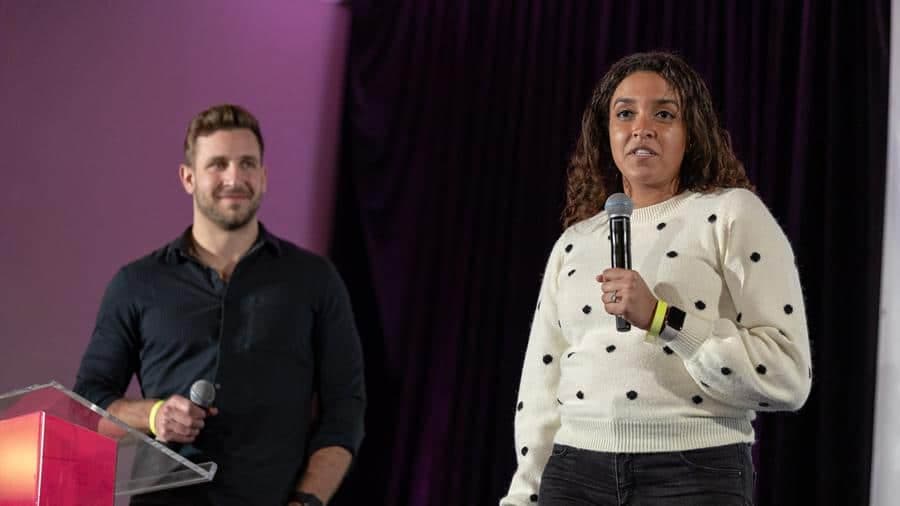
Speaker 1 [18:46] How do you get the last word? What are your thoughts on Rich's nuts? Sure, um, I love that you're diverse owned, indigenous owned, and I love that you have a woman CEO. Awesome, kudos there. Um, I think it's overall a good concept. I really like that they're organic. I think you have play there in the category. Um, the flavors are really bright. I love the clean ingredient panel and the packaging is super fun, like being able to see the, the peppers behind there or the maple leaves, you know, behind the nuts. So I really think you have something good here. Um, just take a look at that price point. How do you get it a little closer to what's happening in the category? All right, excellent feedback, great presentation. Well done. Thank you. All right. Our last presenters of the day are Brianna Atkinson and Jared Golstani. We're the co-founders of Kokata. Come on up to the stage. I guess. I'm gonna start off with a question for you all. Think about what is your favorite nut butter. If you feel so inclined, you can say out loud, but at least think it. I'm going to put a good amount of money on the fact that most of us said one of a few options, peanut, almond. Uh, pecan, some of us who are a little more fun, say macadamia nut, you know, there's, there's really only a few. Well, we created cocoa, the original coconut spread to hopefully change a few of your minds. So where did our brand begin? It began five years ago. Jared and I were student athletes at Duke University until 2016. Our lives were all about working out. We're constantly on the go. After school, I joined the women's Jamaica volleyball team. There I am on the right, in case you can't see me. And Jared went on to travel. 4 or 5 days a week. So we were busy, we were on the go. We didn't really have time to cook and, you know, we loved our nut butters. We were constantly eating nut butter, but I kept craving something sweet, something that would still fuel my body while I'm competing. So we ended up getting into our kitchen, we started experimenting, and we created. Kolkata. We wanted to change the nut butter category, and this is coming from a place of we love nut butters. I would also bet we probably have more nut butters in our kitchen than most of you, um, but we came from a place that we want a sweet spread to complement the nut butters, maybe change it up every now and then. So what makes us different in our category? Of course, we're coconut based, but there's more than that. We're peanut-free, tree nut-free, gluten-free. We are lower fat, so a bit of a different of a different nutrition panel. Um, we're also free of all refined sugars, but we taste sweet and we're really proud of that. And lastly, we have a dedicated give back program, and I'll talk a little bit more about that later.
Speaker 5 [21:37] So we've received some rave reviews from our customers since we launched in October of 2020, 1 of which that came through just a few weeks ago and is my favorite is this one on the left right here, which is, it's the holy trinity of versatile, nutritious and delicious, of which we will probably be using that in a marketing campaign coming up soon. Um, and, but beyond that, just talking about who are our customers to begin with, really it's the health conscious consumer that cares about putting better for you products into their body, folks that care about, you know, buying for children that have, uh, peanut allergies or other allergies and want their kids or themselves to eat cleaner or eat vegan or eat gluten free. So those are really our customers that we're serving. In terms of our business model, we really have a four pronged approach and we have our direct to consumer through our website as well as, uh, we've been through other online retailers as well. And then on the other side we have B2B partnership which is really we're really gonna double down on in 2022 and partnering with ice cream shops, bakeries, etc. so that way we can get our product into the hands of eventual consumers in ways that they're already enjoying. Think like having a croissant with cocada on it and then realizing, oh, I love cocada. I need to get this in my pantry from here on out. And then we also have our brick and mortar retailers, which we'll talk about a little bit more in terms of our future growth later on.
Speaker 1 [22:57] So you've heard about our product. We're a little bit different. You've heard about our plan, but we started Kolkata to give back. We believe that food should be good for you and good for the community, and we really mean that. From day one, we created dedicated give back programs. We donate 2% of proceeds to community building projects in Sri Lanka, which is also where we source directly from the farmers. We're really excited to continue growing, continue creating jobs. We're really, really committed to creating real impact with those dollars, not just throwing dollars at something.
Speaker 5 [23:26] So if we took a look back at 2020 and 2021, we focused on our D2C, we launched in Amazon, we focused on, uh, specialty retail. As we look forward to 2022, our big focus in retail is gonna be on naturals. And then beyond that into 2023 and beyond, we'll look at the mass retail market.
Speaker 1 [23:44] So, I know we've said a lot, but here's our plan for the future. We're going to start with our coconut spreads. It's kind of our innovative product line. Um, we already have 3 new flavors coming out, but today we have two flavors, our classic coconut flavor for the coconut lovers and our brownie flavor for the chocolate lovers, both MSRP for 1099 cents in retail locations and online. Um, and as we go into 2022, we'll keep working on those coconut spread flavors. 2023, you know, thinking about maybe some new coconut-based product lines. Um, but long term, what we're doing right now is, I mean, we're focusing on coconut spreads, but we're building a brand that's more than just coconut spreads. We're building a brand that consumers can trust to be better for you, allergen-friendly, um, and coconut-based.
Speaker 5 [24:26] And just to harp on it one more time, we love our nut butters, as I'm sure you guys all well know at this point. But, you know, there's opportunity for change in the nut butter category, and Cocata, the original coconut-based bread, is here to do just that.
Speaker 1 [24:43] Thank you. All right, nicely done. Um, Carol, uh, do you see a lot of white space, or do you see an opportunity, uh, for Kata to fill a need in that nut butter space in the way they described it? I
Speaker 4 [25:01] mean, I think a lot of parents are looking for allergen-free alternatives. Uh, certainly there's like been sesame seed butters, um, some tahini butters, but again, those are sesames now an allergens, so. You're struggling with that. I do wonder about coconut because I think a lot of consumers when they think of coconut, think of shredded coconut, and that is a very polarizing flavor, um, whereas they kind of know what a nut butter tastes like. So I, there may be some, I wonder, discussion around that.
Speaker 1 [25:32] Yes, we're very busy with that discussion. Um, we, we focus a lot of our marketing efforts on education because it's kind of hard to tell what it's gonna taste like, um, but getting over that texture is definitely something that we have to talk through, um, so it's, it's just
Speaker 5 [25:45] education, yeah, and I think it's funny that you mentioned that because before coata I was a, uh, stark coconut hater which I can no longer claim because now that after you try cocaa it's so different from that shredded coconut and what we found when we launched. And we started doing farmers' markets is as soon as we give a sample out and we're just like, just get over the hump, just try it. Let us know what you think. I promise you I hate coconut too. Well, I can't really say that anymore, but just give it a try and then all of a sudden they're like, wow, I really love this. So yeah,
Speaker 1 [26:12] demoing will be key, I think. Well, what's really important right now is how the judges thought it tasted. Eugene, how did it taste? You know,
Speaker 3 [26:19] I thought it tasted really indulgent and rich. I really appreciate the fact that it was, you know, free of allergens from the nut and tree side. I do, you know, I'm really curious on like how you take this application beyond its core, right? So you think about all the nut butters in the category, you know, their base anchor was nut butter, but how they go beyond that, whether it's, you know, grab and go spreads or even in like the case of Justin's like the, uh, peanut butter cups was obviously, uh, a sort of lighting in a bottle. So I think it'll be interesting how you take this application beyond its core, uh, and then too, I think, you know, to Carol's point around the texture, I think. Trial is gonna be everything for this for this bra brand and I think you know you're gonna have to do a lot of sampling to get that consumer education up on at least you know this innovation.
Speaker 1 [27:05] Gavin, uh, there was a retail roadmap outlined. Uh, what are your thoughts in terms of how that roadmap looks? Uh, is it realistic for a brand like this? So first, uh, uh, congratulations, you guys, uh, your confidence, I, it, it's, it's like very apparent and your, uh, your passion, it shows through. So congratulations with your pitch. Um, you know, in the retail space it's a, it's a hypercompetitive category, right? You're gonna be competing against. A lot. So the trial, uh, to what the other judges have pointed out is gonna be super critical. Uh, you can look at what other, uh, brands like Justin's has done, uh, with like mini pouches and things like that. I think that could be a really cool trial, uh, or, you know, trial and error, uh, portion of the thing. Uh, but I think it's a really good quality product and, uh, I would not ever have tried it, but it's very good. Thanks, thanks, Heidi, do you see the coconut spread space is sort of ownable by Kolkata? Um, you know, honestly, I'm not sure there's, um, others out there, um, so my question for you is how do you differ from, say, like an artisana or, um. I'm not remembering the brand right now, the, uh. Not Natiba. Sorry, anyway, how do you differ from like an artisana? Nutella is that no artisana. I have a coconut, yeah, so we're really trying to create the whole, the original coconut spread. We're a better for you sweet spread, um, so we're really clear in our marketing efforts to try and use these phrases over and over to kind of distinguish ourselves. I also love Artiana, um, but we, we are a little sweeter than a lot of their stuff, and we're purposefully doing that to try and carve out a little niche for ourselves, the. The thing I was looking at too is that they um offer a larger size for a lesser price point and they're actually organic so um that is something for our consumer anyway in the co-ops, right? Organic is a really high uh expectation so organic and then also glass our shoppers tend to skew higher buying in glass versus plastic. OK, thank you. Organic flavor organic ingredients we, I would love to get certified so thanks. All right, great feedback. Well done on the presentation. Thank you. Thank you. Uh, and a round of applause to all our finalists. Amazing job. Well done.