Search across the BevNET CPG Media network including BevNET, Nosh, Brewbound, Taste Radio, Nombase and CPG Jobs.
Investing in Plant-Based Brands, Sponsored by Green Circle Capital
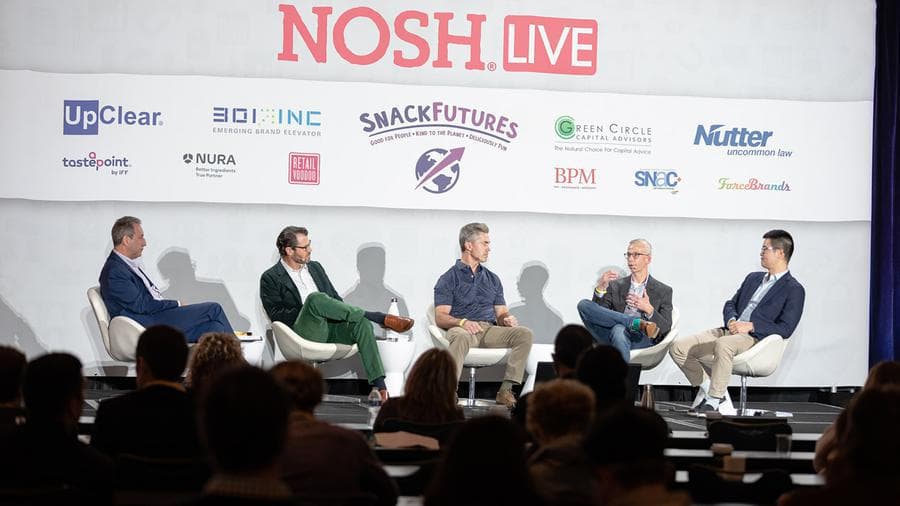
Investing in Plant-Based Brands, Sponsored by Green Circle Capital
Location: Arcadia Ballroom, Loews Santa Monica Beach Hotel
A plant-based revolution is sweeping grocery aisles as consumers’ eating habits evolve. Is it a fad, trend, or a revolution that is sustainable? Which brands, segments and strategies are ripe for success, and which are not? How can emerging companies navigate the changing landscape for growth capital and exit opportunities? These questions and more is answered by a world-class panel, moderated by Green Circle Capital’s Stu Strumwasser.
Panelists:
Stu Strumwasser, Managing Director, Green Circle Capital Partners
Bryan Kreske, General Manager, Hormel Foods Venturing and Incubator Unit
Robert Brown, Managing Partner, Encore Consumer Capital
Joe Rhodes, Co-Founder, Hummingbird Equity Partners
Roy Chin, Principal, North Castle Partners
Transcript
Note: Transcripts are automatically generated and may contain inaccuracies and spelling errors.
Speaker 1 [00:18] This is an amazing panel that Stu has assembled. Um, they're all really, really wealthy, which is cool. um. So if, if not, if not wealthy individuals, then, then representing great wealth. So, um, and they're really interested in plant-based products and so we're gonna, we're gonna let Stu take it away.
Stu Stromwasser [00:47] Jeff, hello. Hi. Thanks, Jeff. My name's Stu Stromwasser. I'm with Green Circle Capital. Um, we're a boutique investment bank that represents plant-based brands and natural products brands. And Jeff's right. Um, we've managed to put together an absolutely incredible panel. Um, I am, uh, these guys think I'm kidding around. I do that a lot, but I'm honored to be on the stage with these guys. To the left of me is Robert Brown, the founder of Encore Consumer. To his left is Joe Rhodes, one of the partners at Hummingbird Equity Partners. Um, Brian Kresky now runs the new venture group for Hormel Foods. And at the end is Roy Chin, who's a principal at Northcastle Partners. Um, you have some of the finest and most deep-pocketed investors who are interested in this space. So, I'd like to have a lively and, and at times perhaps spirited conversation. Um, I'll share with you guys one little anecdote for anyone who doesn't know me. I, I stopped eating meat 40 years ago. And for the 1st 10 or 20 years, I was mostly just hoping that someday I could go to a restaurant and say that I'm a vegetarian without being attacked. But I, I didn't think in a million years that it would ever become a business for me or actually seem sort of cool. Um, but what's happened in the last 5, 10 years is amazing. And what's happened in the last 2 or 3 years. seems to some of us to be maybe overheated, right? So is there a bubble? Is valuation ahead of itself? Is this a truly sustainable change in the way that people eat in the Western world? These geniuses will tell us. So, I'm, I'm, the way that I normally moderate a panel is I'm going to pose a question to each one of these gentlemen and then allow them to pontificate a little bit, but then invite the rest of the panel to chime in. And offer your thoughts on any one of those questions. And we'll go through a few questions. And when we've done that, we'll also take some from the audience if any of you wanna, you know, ask a question of any of these well-regarded investors. So I'm gonna start with Roy down at the end and, um, I guess the question is, um, you know, so now that the whole planet is vegan, right? So how much of this is hype? How much of this is real? How much are we going to find out a year from now was just kind of a fad, or is this a really sustainable, you know, and transformative change to the way that Americans and Western folks think about food and nutrition.
Speaker 3 [03:31] Yeah, so I would correct your prompt and say the whole world is vegan with the exception for myself currently, but I think I bring a pretty unique, uh, perspective to this as a, uh, as a, a meter meat eater. Um, I think the, you know, long term trends are all the way I see it's still very, very positive. Um, I think there's gonna be short term blips every now and then like what we're seeing. In 2021, but the shift that happened over time from, you know, veganism or people who ate plant-based driven by the ethics and, um, the, the, the ethical dilemma of eating meat to now there's just a longer and longer list of more compelling reasons to reduce or minimize the consumption of, of meat and so that includes now, you know, health benefits. Climate change is a real one and so the sustainability factor is real and so I think because that list has become broader that means the addressable market has only increased and so you know people who maybe would never have gone completely plant based like myself, you know, we'll explore flexitarianism so finding ways like meatless Mondays or certain days of the week to cut back on the consumption of meat. I think that's a very powerful force that's gonna keep driving that market up and so I think long term I see this headed in just one direction, but you know you're gonna have blips here and there, particularly as people are learning more and more about the types of meat alternatives that exist today. There's obviously. See a lot of cutting edge science in that regard and so people are gonna, some people are gonna sit on the sidelines a little bit, um, to think about and understand the ingredient decks and what's going into these plant-based alternatives but longer term I think as that comfort level grows the category is gonna, you know, keep going up.
Stu Stromwasser [05:12] Anybody else? Is this a trend? Is it really a change that we'll never look back from?
Speaker 4 [05:21] I would say, yeah, and where it, it hit me was 3 years ago on my father-in-law's 70th birthday. So, normally, we would go up to the cabin and the family would come together, but this time we want to take a trip to the, uh, to the boundary waters, right? So, it's right on the Minnesota-Canadian border. In the middle of nowhere, we stopped at the last town, Grand Marais, before going up the Gunflint Trail and, and going on our outdoor adventure. I'm more of an avid indoorsman than outdoorsman, but it was, it was still a great experience. And so we, we met in Grand Marie and um met up with my, uh, my wife's brother and his family. And so we go to this restaurant and And what do they have on the menu, but, um, a lot of plant-based meat alternatives and I'm starting to get into this space. And what does my nephew do? He orders one. So I started doing a little mini market research. I don't have anything better to do. And, uh, just talking to me. I'm like, why, why are you doing this? And he and my niece for the next hour proceeded to give me a lecture on why they like these products. So, Um, what I see is, yeah, it, it, it is a trend. I mean, our company, we have a heritage in meat, um, but now nearly 130 years later, we're a global branded food company, about 25% of our portfolio is outside of meat, and what we know is people are showing this increasing curiosity to try great tasting alternative sources of protein across, uh, a spectrum of lifestyles. I think it's gonna be driven by that. Young and younger generation cohort and it's, it's something that's gonna, gonna be here to stay.
Stu Stromwasser [07:08] It's a good segue to um pointing out that Brian, who runs the new venture group at Hormel, um, works for a company, as you said, I mean there's a 100 year history um with meat, but not only have they acquired plant-based brands, but they even. You know, launched one, incubated one in-house, Happy Little Plants, and launched that, which was, I thought, really interesting for a company with that history. Um, and what I wanted to ask you, and I, I guess this is apropos not just to plant-based brands, but really to any brands, you know, folks that are sitting in the audience. So as you build out that. You know, investment vehicle, the corporate VC at Hormel, which has a big balance sheet. How do you think, uh, you're the only strategic on the stage. How do you think about the value add that a Hormel or a strategic could provide to a plant-based brand or otherwise that might be a little different from what one of these guys might be able to offer?
Speaker 4 [08:17] Yeah. Well I mean I think let's start you know given the audience from an emerging brand or uh an entrepreneur's perspective and I think from their perspective they just they have to have that um that vision of where they where they wanna go, um, what they need to get to that next phase and, and how a strategic could potentially support them in their development I think it's. Comes down to like any business relationship, right? Um, you have goals and, and aspirations and, uh, and, and interests, right? There's people you wanna work with that have goals and interests and then you come together, try to work together and, and find a pathway, right? To, to building a, a good. A good working relationship, um, so I think that's, that's where it starts, um, you know, at, at Hormel, we know there's a ton of talented people in the food industry, a lot of them are, are right here and, and one of the reasons that we established 199 Ventures. Was to build connections with these emerging companies and and entrepreneurs and invest in building partnerships um with them um as they look to try to build products to better people's and and customers customers' lives and you know one of our venturing group's roles is really to connect those companies back um to Hormel. Um, our resources, um, and our, and the expertise, um, that we have, and hopefully we build a collaborative relationship, um, hopefully, um, we can support that, that startups, um, development through, through strategic partnerships and when you look at Hormel and our, our family of companies with, with brands like Justin's and Applegate, I, I think we have a, a lot of resources to bring whether it's from. Brand building or marketing, um, sales route to market, channel strategy, R&D insights and innovation, other, other support services, um, I think we have industry leading expertise and, um, that, that can benefit, right, a startup, but it all comes back down to. That emerging company understanding where they're at, where they wanna go, and, and how that startup could help or how that strategic could help support them and if you can find alignment from a strategic perspective, an economic perspective, and I, I think just as important a cultural perspective, um, a strategic can can have a lot of value I think that's we just denounced. You know, one of our joint development agreements with, with the Better Meat Company. I think they saw those type of, of benefits and what we could bring, but we spent a lot of time having a good dialogue around what they wanted, what we wanted, and how we could come together.
Stu Stromwasser [11:22] My firm is an investor in the Better Meat Company, so I'd, I'd be happy to let you expound upon that for a few more minutes.
Speaker 4 [11:31] Well,
Stu Stromwasser [11:32] I'm kidding, um, but Brian, I did have a follow-up for you, which is, um, Often I think when big food and bev companies make venture investments, the entrepreneur or founder thinks their problems are all solved, and it was interesting that you, you referenced several times they need to know where they're going. They need to know the plan, but are you able, you know, is Hormel able to be able to jump in and provide real, you know, tactical support even when these companies are small you can't.
Speaker 4 [12:08] Yeah, and we've done that with one of our other investments and as as well. I mean things as simple as providing sensory evaluation work that would be maybe hard to get um on its own or, or, you know, you'd have to invest resources in it we could provide that or or market research and I know you know when we're working with uh Paul Shapiro at Better Meat, I mean what was really important to him. As we signed that joint agreement was that he, he, mission-driven company, right? He wants to change the way that we eat and he wants to get that ingredient out to as many people as, as possible. So, um, not only the accessibility that we can provide, um, but the R&D helping him learn how that ingredient can perform in a scaled commercial setting. And so that was really important. He told me, he's like, look, I just. I can't have this sit as a low priority and not go anywhere. And I, I heard that and that was why I got the team together, right? We got, I think, 7 of our best R&D people, um, in the company on this project, really purpose-driven team who said, I said, all right, what do we want to get done with this? Like, look, we, we wanna try to set a new bar in, in plant-based. That was great, right? We flew them all out to his headquarters. We worked together. Um, and so I think the, the purpose of, of talking about that is he had a clear vision of where he wanted to go and what he wanted to get done. And then he had a good understanding of how he could work with us and how the venturing arm could come connect back to the company.
Stu Stromwasser [13:43] Thank you. um, I wanna bring it back here and talk to Robert because where Brian is creating a new vehicle within, you know, granted a huge company. Robert's really, um, you know, one of the first, you know, venture investors who became focused on, I guess over the years we sometimes said health and wellness plant-based is like a real buzzword right now, but. I mean, he's been at this for 20 years where a lot of people, you know, think this is only gone, going on for a few years. Um, uh, you know, being in, in, as an investment professional, what worries me is, you know, nothing goes straight up and the, uh, the attention on the space has been so intense. Valuation seems a little crazy. The first. aspect of that, you know, kind of question that I have for you is, are there too many plant-based brands, and are there room for more? How do you, how do you guys look at it?
Speaker 5 [14:46] So, so I, I love this question because I think it really depends on, on where you stand. So, um, if you're Oatley or Beyond Meat or, you know, Impossible Foods, you're probably sitting here saying, who are all these jokers and why are they piggybacking off of what we've. Invested, you know, hundreds of millions of dollars behind and it's gotta be frustrating, right? Your commodity costs are going through the roof. Everybody's chasing your raw materials. There's a lot of science involved in these products that is, is not cheap, um, these highly engineered manufactured alternatives to, to animal protein, uh, so that's gotta be frustrating. But if you're a consumer, like, bring it on, right? Like the more innovation, the more opportunities, the more alternatives, the, the better. So you're, you're thrilled with it and. As an investor, um, I, I, I sort of, uh, you know, never ashamed to admit that I'm a capitalist, and I think these things just sort themselves out, right? So are, are there going to be, um. A lot of losses in this category. Absolutely there's so much money that's been poured into it. There's only so so much shelf space, um, virtual or otherwise, uh, and it's gonna be really difficult for all these companies to succeed, but that's kind of the, the nature of the beast and. You know, the ones that do succeed will be tremendously successful and we'll probably get a lion's share of the returns in the in the category. So, um, I, I think it's fine. uh, let it, let it play out, um, as long as there's capital hanging out here, there's going to be more innovation and if there's maybe a little too much failure, maybe that starts to dry up a little bit and that's OK too.
Stu Stromwasser [16:21] So, so you think there'll be some thinning of the herd, but there will still be plenty of big winners in the. Absolutely
Speaker 5 [16:28] and it gets it gets to what both of these gentlemen have said around what's driving it at the end of the day and I think that, you know, when I look at my family, I've got two teenage daughters, both of whom, well, one hardcore vegan, one sort of flexitarian but leaning towards vegetarian. This is values driven and it was values driven from day one when people were worried about animal welfare, but now it's values driven for other reasons as well, and they're not going away.
Stu Stromwasser [16:57] I, I agree very much, um. And, and so, uh, kind of piggybacking on that. Um, by the way, for the audience, I think Joe Rhodes is a little bit less famous, and I don't know why, because Joe was the first money in Dya. Were you the first investor? I was the only outside investor in Dea, but the, you know, yes. And Joe, well, Joe's humble, obviously, but he also owns some really great brands, Lenny's and Larry's and Nivva. And Joe also has been in this space for a long time. So let me ask you a, a, a kind of a corollary question, which is, we always talk about, you know, how, um, You know, the adoption of plant-based milk, right, is a big proof point because it's now like 13, 14% of milk is plant-based and I mean I just thought it was mind blowing two years ago when the two biggest dairies in America declared bankruptcy within two weeks of each other. I couldn't believe it, um, to see a company like Dean Food struggle, you know, it was so blue chip to me my whole life, um. But that 13%, you know, that is plant-based milk. And well, so this is like aspirational for other plant-based categories, because the meat industry, I mean, it depends who you believe, right? It's like about 11 trillion.5, but less than 1% is plant-based. So I always hear people pitching me or saying, you know, um, Well, if it just, you know, indexed the same as plant-based milk, and it just got to 13%, you know, that's like hundreds of billions in revenues. Um, so the question is, can it, you know, and if so, why? But also, and maybe this is just because of who I am, but I wonder, why can't it go to 50%? What it could certainly get to 13% and it could get to 50% if you step back and I know some of the plant-based meat businesses have had a bit of a slowing of sales in the last quarter or so, but that's really a really small view of things. If you step back and dial back the lens, everybody has said it in different ways, but my. Partner Terry Tierney, who was the CEO of Daa likes to call it the triple helix. And there's a triple helix of drivers behind the plant-based trend that you don't have, you really haven't seen it, to the same degree before, which is it's better for you. It's better for the planet, and it's better for animals. So those three things are the triple helix and it's a really powerful set of drivers as to why consumers are interested in these products. The reason that. Some of the plant-based meat businesses haven't had as much penetration as they might hope to at some point. The products just aren't there yet, but they're going to be because they're, uh, you know, there are people in this audience that can speak to the technologies better than I can, but as an investor, I know that the technologies exist and are emerging, fermentation and otherwise, that are gonna allow these products to take big steps forward in terms of their quality. And when you offer consumers the triple helix of benefits coupled with a product that very closely mirrors its animal-based counterpart, there's a, there's a pretty compelling reason why you'd think that that plant-based meats can be 13% or more of the, of the overall category. So,
Speaker 3 [20:39] and, and, and I see, you know, there's sort of two factors at play for me. I think that. Dairy alternatives is a much more mature category and that's why they're at 13%, but I think. How how you break through from the 1% today to the 13 to the 50% ultimately is I think right now there's a lot of more niche products that have a more specific use occasion, so like a burger, a nugget, and I think over time as the technology improves and the alternatives get better, having an alternative that is a lot more flexible than just some of these more specific. Specific use case alternatives. I think it's important because you know you don't wanna always just be limited to eating a burger. You want, you know, a chicken alternative that you can use across the board in every cooking occasion whether it's stir frying, grilling, roasting, whatever the case is, and I think as that piece of it improves, that's how you drive from the percentage of share today to 50%.
Stu Stromwasser [21:33] And you look also that there's a. There'll be a shifting of demographics and a shifting of purchasing power from baby boomers today to Generation X, Y, and Z. So if you look forward 10 years and look forward 10 years as to where the technology is gonna be in terms of what the plant-based food industry can deliver from a consumer pers uh, experience standpoint, I think it's pretty clear to, to, to see that the, the share is going to grow dramatically. Well, it, it sounds like you're saying the group is saying that we believe in the trend and that the, the TA, if you will, is massive. I certainly agree, um, Robert, I mean if I understood you were saying, well, you know, like it is with all early stage companies in any industry. They kind of sort it out for themselves, right? Like the cream rises to the top and they get some traction and then they get your interest, right? Um, is there more to it, you know, how, how do you delineate which ones
Speaker 5 [22:38] I think there is more to it and. When you look at the the milk and milk alternatives category, I think what they've succeeded on is taste, right? Like you may have your preference, maybe you're an almond person or an oat person or maybe a pea person, but you, you've found something that sort of works for you and taste works. Um, I disappointingly learned that plant-based milks actually fry my milk frother, so. That doesn't work. But in general, like taste has to be there. If taste isn't there, you're not going to win. And I think Roy, you know, to your point, you're what I'm hearing you say is, when the when when the product is there as an ingredient is when there's more flexibility and and where it can really take off. Does it cook the same? Can it taste the same if I get a season? Myself, I, I look at my freezer, we used to never eat frozen food at all, and part of this is COVID, part of this is vegetarianism coming into the household, but it's just loaded with frozen food now that are singular use kind of products and so they sit there for a long time. But I look at my refrigerator and where we used to have, you know, 4 gallons of cow milk. It's a mess, right? We've got cow milk, we've got almond milk, we got pea milk, we got oat milk. It all has a slightly different use case, but the share, the share is there, and in my fridge it's probably 75%. So, uh, taste has to, has to be there, and I think, you know, kind of come in full circle on the meat side with respect to anyone in the room who may develop the best tasting. Meat alternative out there. I don't think it's there yet on a lot of these products and texture
Stu Stromwasser [24:15] and we'll, and we'll talk about ingredient decks too, but let me come back to that because to cover off on this, what I really was talking about from an investment perspective, I'm curious what you guys, I know they are curious what you guys think about valuation. Um, that's often the, you know, huge question in the room, and, and, um, Joe mentioned, you know, there was a little bit of a slowdown in some of the, you know, bigger, you know, publicly traded guys, and, um, there was one meat company, you know, recently that announced that they saw some struggles in their plant-based business. Um, how do you guys think about that in terms of valuation, um, you know, it sounds like there's some consensus that this is. Very sustainable long term big market opportunity. Are you willing to pay up for it? Um, has valuation changed recently? How do you see it going forward? Anybody? Hi. The because the growth rate's there to support it, um, as, as private equity investors, you know, we hope to be able to partner with brands at a little bit of an earlier stage so maybe the valuation isn't quite there yet, um, but the valuations are high and they're gonna, so they're gonna stick, you know, with when we sold data and I think some of the people from Otsuka are here. It seemed like a really high multiple, but if you look at that multiple today, it's small. It's grown into it. Yeah. So huge, huge point, right? Like biggest coefficient to valuation is simply growth rate. I can forgive a high multiple if the company's growing at 100%. I'm just paraphrasing what you said. What else? Roy, do you agree, uh, you know, is North Castle willing to pay up for growth in this space? Yeah, I
Speaker 3 [26:09] mean, we're, we're food and beverage is a category along with supplements for us where, um, paying up from a sales multiple is something we can get more comfortable with. Um, I think where for us the rub is, is ultimately we see these brands as food and beverage brands and some of these valuations out there. For the larger, more science for businesses, trade more like a tech or subscription company, right? Like the double digit revenue multiples, um, and I think that's because the R&D aspect of their business model, but also people out there are putting very different variations of that long term penetration percentage against the category. Like for, for us, uh, you know, I'm contradicting a little bit of what I said earlier. I, I do believe it'll get to 50%, but some of these valuations assume like everyone in the world is gonna be eating. Alternatives 100% of the time and like I think that's not sustainable but somewhere in between a more conventional food brand and where the Beyonds and the Oat Leaves are trading is sort of how we view the spectrum but obviously it's a very wide band of outcomes and so the rest of it then comes down to distribution, brand loyalty, and, um, you know, sort of that vision from the entrepreneur that you talked about earlier like that all checks out then we can get sort of more comfortable paying up.
Stu Stromwasser [27:27] It, it, it's a good point that you make about, you know, applying technology type metrics to these companies, and I wonder all the time if it makes sense. And no, and specifically when we within technology, right, like there's a lot of analogies to biotech and even in the food tech world now, you know, synthetic biology. Is utilizing things like precision fermentation the same way pharma did 30 years ago. What worries me is I can charge whatever the hell I want for a pharmaceutical product, but on a food product, don't I have to get the price parity? And how do you do that if it costs hundreds of millions to develop the product?
Speaker 5 [28:15] I mean, I think what we're seeing a little bit of is the, you know, the valuation metrics that Roy talks about coming out of Silicon Valley kind of running up against the brick wall of the physical world, right? I mean, these are, these are physical products that have to be developed, manufactured, distributed, often in a cold chain. Um, Sold, bought, and consumed before they spoil and, and so it's just, it's a lot harder and it's, you know, there's, there's, there's different dynamics there's, um, product spoilage, there's loss ratios that just don't exist in some of these other things so it's, it's hard, um, especially for refrigerated products to hit those kinds of multiples and I, I think that's where some of the underwriting of these deals is probably. Gone wrong, yeah,
Speaker 3 [29:06] and, and I think the, you know, the pharma analogy you mentioned, I think the reason why pharma gets away with that a little bit is the price, you know, transparency is severely lacking in that category, um, with food, the price is right there on the shelf, right? And I think that's the other reason why it hasn't gotten to 13% today is it's a premium right now to meet. And so every single day, every single decision point, someone is looking at the price and saying, oh, I'm paying more for what I perceive to be less because they don't understand. Uh, the, the science behind the product yet, and I think that's gonna, uh, be a battle that has to fix itself over time. And, and that's what's needed to break through that market share barrier.
Stu Stromwasser [29:45] Jeff Kleinman is, uh, gonna be Phil Donahue for today. If anyone has a question from the audience, raise your hand for Jeff, and I'm gonna get to you in one. One quick sec, but I just wanted to ask, um, because I think that valuations are overinflated and in my experience, all markets correct and they go in cycles. And whether that's a little bit of a correction or there's a bubble that bursts or something in between, I don't think, uh, I, I'm not capable of ever predicting, but. What is it that, whether that's gonna happen or not isn't even my question, but rather, what could happen that might finally see a change, a meaningful retracement in valuations?
Speaker 5 [30:31] I mean ultimately most of these companies are running out of money as opposed to being profitable so I think that's a dynamic that that can be at play and when Brian Brian's uh partners across the hall who are making acquisitions as opposed to venture investments tell you what your company is actually worth and you're out of money. You're going to know. So these, these two categories are competing against the lowest gross margin categories in the grocery store, meat and dairy, right? So very, very difficult.
Speaker 3 [31:06] Yeah, and I think to go back to a point you made earlier, I think as the failures start to build up and people have a better sense of what works and what doesn't in this category, that's when people will get smarter on valuation versus right now if you're plant-based, it's sort of a more fixed approach to how to value your business and so once those data points build up, I think that's when valuations will normalize. We saw this in like the meal kit business, for example, at the very early days. I think everyone's valuing Blue Apron and the. Like in a private market setting at a very aggressive price, but then as the, you know, issues around logistics and uh packing and filling and all of that began to become more public, um, after these businesses went um went through the IPO I think that's when the realism set in into
Stu Stromwasser [31:51] the
Speaker 3 [31:51] category
Stu Stromwasser [31:51] and, and to be clear that wasn't the end of meal delivery, it was a correction, right? They're, they're doing great right now. I mean think about cannabis a couple of years ago it was on fire it had a correction. And many of those companies are doing really well right now, right? Like with the internet, you know, died in 2000. Well, you know what, it, it didn't, right? And those were buying opportunities. Jeff, what,
Speaker 4 [32:13] oh, I was, I think valuations will sort themselves out as also the right business models start to emerge. I think there's a lot of companies that are investing so much in R&D and then also trying to build a brand and also trying to build a route to market. That that is not easy and, and some are saying that well I'm gonna try to be B2B and I'm also gonna try to build a brand which is tough, um, so I, I think as a as companies is a more consistent business model starts to emerge that might help give some guide rails on evaluations.
Stu Stromwasser [32:48] Thanks Jeff.
Speaker 1 [32:50] yep, and we have Christian. Hi, my name is Christian. I had a two part question. Can you speak on regenerative agriculture? It's a bit of a shift in terms of dairy or meat done right. Do you think that that consumer will, will see that? And then secondly, The ingredient deck on so many of these options are pretty bad with oils and it, it, it's a kind of disconnect from better for you. How do you reconcile consumers sacrificing on a 30 label ingredient deck, even though it's plant-based when you can do dairy and meat the right way? Well, on the second one, the,
Stu Stromwasser [33:28] the technology is emerging that will allow for cleaner ingredient decks going forward. And again, there's people in the audience that know more about that than me, but Right now some of the products that are out there do look a bit like a science experiment and that's not what consumers want and people understand that and they're working on that and there's investment that's taking place in emerging technology that's already exists that's gonna allow that to be a lot different a few years down the road than it is now.
Speaker 4 [34:01] And I, I think the regenerative agriculture, I think that can be, I mean we're on both sides of this right at Hormel and and. I mean we see that, I mean, our, you know, we uh own Applegate and they just launched a regenerative hot dog and I think they've got other products in that pipeline are looking to build a whole ecosystem around that and then those learnings that can taken from Applegate and applied back to our, to our company and then, you know, in regards, I would agree, um, the technology is is amazing, right? And, and how it's progressing and. Um, that's one of the reasons we looked at, um, at better meat. It's a, it's a whole ingredient, microprotein, one ingredient, right, that has as much protein as, as, as, uh, an egg and, and iron as a beef and great source, um, as, uh, a great source of fiber, right? And so, the technology is emerging, but it's a balancing act. In the end, people have said it a few times. Um, health is an important motivator. People wanting more recognizable ingredient statements, important motivator, still comes back down to taste. If it doesn't taste good, you're not gonna sell anything. And we continue to hear that over, I was just looking at a research study last night. That's what comes back.
Stu Stromwasser [35:21] There is another question from the audience.
Speaker 5 [35:24] Uh, this one's for, for Robert. You, you just talked about something that's been something I've been interested in the, the margins in meat and dairy. Uh, I, I just did, I was doing like a mental experiment thinking about Uber and some of the sort of disrupted companies, and it seems like high margins make things more disruptible. I'm just curious, like just if you could talk a little further about your thoughts about. You know, I, I, I calculated some of these margins is like 5, 10%, and it just seems tough to get in the middle of that. So curious, you just a little more on that. Sure, I'm happy to do what I can there, and, and we have not invested in any of the sort of highly engineered plant-based products, meat alternatives, dairy alternatives. We've invested in a lot of, um. What I would term as sort of nutrient dense single ingredient plant products, um, creating the margins at a low scale is very, very difficult. So I think what's really exciting is some of the stuff that, you know, Hermel and the others are doing because they have the scale to be able to pull this off. Regenerative agriculture is an amazing idea. You look at a company, you know, like. El Campo that ran into so many problems they had to push the envelope because they didn't have the scale and they made some tough decisions and now they're out of business. Um, I, I, I believe it's gonna take real scale for regenerative to, to work at a sustainable margin. I don't see a way around it
Speaker 3 [36:54] and I think we all come from very similar sized, um, firms in terms of the capital we deploy and I'm, I'm in the exact same boat and so is North Castle. We're not in any of the more highly engineered businesses and. You know, we think of plant-based as two sort of broad bucket audiences. The first is someone who really exactly wants to replicate the taste, texture, quality of meat, and there's others who, you know, recognize and accept the fact and like the fact that they are not eating something that reminds them of meat.
Stu Stromwasser [37:22] Isn't an apple plant-based? Yeah, yeah,
Speaker 3 [37:26] like they, they want to eat plants because they're plants and they want good tasting plants, you know, that's the type of business that at the middle market and, and below size, um, can be a very profitable and effective business. So that's how we think about the, the universe that's out there.
Stu Stromwasser [37:41] All right, well, we're out of time and I, I didn't warn you guys about this, but I'm gonna ask you one last question. I, I do this every year at our fancy food show thing. What's the buzzword of the year? A couple of years ago, every single person on my panel said it was CBD and then the next year, they all said CBD again. But what is it this year? You don't have to go and order
Speaker 5 [38:03] Omicron. I don't know. Omicron. All right. I don't know, not bad.
Stu Stromwasser [38:10] Joe,
Speaker 5 [38:10] I mean, honestly, it's the, it's pandemic,
Stu Stromwasser [38:12] it's coming back in the pandemic and just to me, that's, that's the buzz, that's the buzzword. I don't think I served the question well. I was kind of talking about food, but supply chain, supply chain. Yeah, that's a big one. Well said, Roy.
Speaker 4 [38:28] Um, I would actually from the question, I think regenerative agriculture has seen, uh, quite a few, um, uh, strategics and CPGs invest in that space to, to get the scale. I think we're listening to the, to the consumer and what they want.
Stu Stromwasser [38:43] Well, thanks so much to these four gentlemen. I really appreciate you helping me out. Um, really great insights. I hope you, you guys found this interesting and. And entertaining and we'll, uh, we'll get off the stage and make some room for the next folks. Thank you. Thank you.