
Search across the BevNET CPG Media network including BevNET, Nosh, Brewbound, Taste Radio, Nombase and CPG Jobs.
Elevator Talk: Peepal People
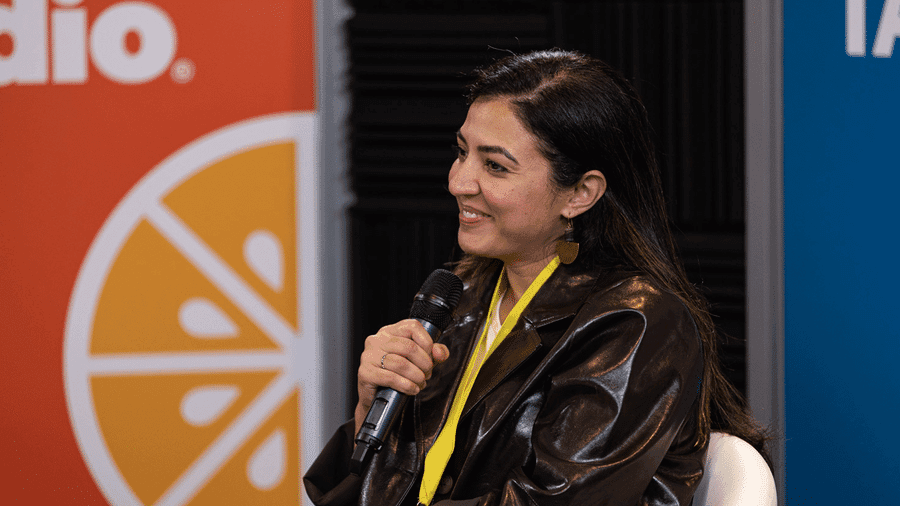
Filmed during NOSH Live Winter 2024 featuring Alyzeh Rizvi, Co-founder / CEO of Peepal People.
Hosted by Melissa Traverse of NOSH.com & Amrit Richmond the Founder of Indie CPG.
Transcript
Note: Transcripts are automatically generated and may contain inaccuracies and spelling errors.
Speaker 1 [00:10] Our next guest guest is all about the spice. We have Elise Rizvi, who is the co-founder of People Pal. Hi Elise, thank you for joining us. How are you guys? Good. How are you? Let, let's see that medal. Oh yeah,
Eli [00:28] I am showing it off today because this is a big deal for us.
Speaker 1 [00:31] Amazing. Congratulations for that best of award. So please tell. Us and tell everybody out there all about the product and the brand.
Eli [00:42] Absolutely. So, uh, my name is Eli. I am the co-founder of People People. We make Better for You and South Asian inspired condiments. Um, our first line of products is 3 hot sauces that are varying in heat and flavor. Um, and our story really is that, you know, we started with, um, these sauces because my husband and I, we moved from Pakistan. We grew up in households where we consume a lot of condiments, uh, 3 to 4 with every meal, um, and, uh, growing up in Pakistan. We would consume these like chili-based condiments a lot, um, and when we moved here and both of us reached our 30s, we realized that we combined together had um issues like hypertension in the family. My husband got diagnosed with diabetes. I got diagnosed with high cholesterol, and so we were really trying to create condiments that were for ourselves, um, so it happened very organically and then we, you know, arrived at hot sauces that, uh, we wanted to share with the community too, so kind of opening it up to everyone.
Speaker 1 [01:42] And you just recently had a massive rebrand. Please tell us all about that.
Eli [01:49] Yeah, so, um, I think, you know, when you start off as a brand that is a more home-based product that people start to call you up and say, we want this product from you, and you don't typically have the CPG journey that a lot of brands do where they carve out their space. I think. Ours was a very organic, uh, product and, um, you know, kind of gained traction over the past couple of years and so we realized that when we started out it was a pandemic we had a very direct to consumer approach, you know, we wanted to keep it small and we named our sauces in Urdu, which is what the language my husband and I speak, uh. It was a lot of the not to culture, but um what we realized was going to festivals, you know, coming to a lot of these events and CPG events and uh speaking to retailers who started stalking us, um, that we had to resonate with the larger audience and we wanted to, we wanted to share our flavors, our recipes that are unique with everyone. And so, um, a rebrand was inevitable, but I spent the last whole year doing it and talking to a lot of industry experts, talking to our customers, going to festivals, um, and really kind of honing in on what those unique value props that customers felt that they, um, wanted to take away from the packaging. Um, and thinking about the, the steps, right, like how does a customer go to a retail aisle and pick out a hot sauce. I, I do that myself, so what are those things that would help me decide which hot sauce to purchase? So I think the rebrand was focused on that kind of retail first approach, um, and we just won an award for it. So I'm, I'm grateful for that,
Speaker 3 [03:21] yeah. So, um, I, I love the rebrand you and I had talked about it all all year and I was, um, I was looking at it tonight. I asked you who designed it and you said I, I designed, I'm the designer. Uh what was it like hiring yourself for uh such a huge project and you're, you're so close to the brand? Yeah,
Eli [03:39] um, you know I have an architecture and industrial design background, um. Everything I know is design. Everything that I've ever learned, uh, is design, and you know, a lot of this is the kind of the thing that I forgot when I was creating my own brand in the first start is I was too close to it and I didn't do the things that I would normally do with other brands as a. You know, as an industry kind of being in the creative industry, so um I did do it largely myself. I had another designer who worked with me on it, uh, but essentially the idea was to keep it, you know, Pakistanis who were trying to bring in something new to the market. Um, and what would that language look like if it was modernized and so being so close to the brand really required for me to, um, follow the research, you know, I was very kind of by the books about it this time around. I took all the harsh criticism. I, I, I wanted it. I wanted people to tell me what's wrong with it, how to improve it, and. And so I think just being a sponge for a whole year and being very close to it, but at the same time, um, stepping away from it when it was necessary and taking that kind of feedback from various folks in the industry and our customers and the packaging so we iterated I think 70 times, uh, the labels which is kind of a lot, but, uh, just trying to get, you know, maximize on that all that space on the label and trying to, you know, convey everything that we wanted to convey was just
Speaker 3 [05:04] hard this summer you said. The color silver was especially important to you. Yes,
Eli [05:09] um, I mean, I think the language of the design is such that we have tops, uh, our sauces have these sleeves that are in silver, and, um, again, of course, I was trying to find something unique, um, so if you walk into a hot sauce aisle, Whole Foods, Sprouts, any of these stores, you won't see any with a silver top. It was also very personal to me because, um, when you walk on the streets of Pakistan, there's a lot of metal that you see everywhere from the cars and trucks to the. To the, the kiosk, to the silverware that you're served, uh, in which you get your whatever you're eating there. So I think there's a lot of nods to the streets that I wanted to bring in those subtle touches, but those are just for me to know and for design freaks like me who, you know, wanna know the story about the brand, uh, and for the customer, I hope it just it stands out to them and looks different.
Speaker 3 [05:57] You, you did an incredible job and, um, the, the top left and right of the packaging has. Uh, attributes like low sugar or excuse me, zero sugar and um low sodium for people that care about that, but it's not a low sodium hot sauce necessarily. Like there's so many other things that you lead with, but again it's there if that if that matters to somebody, but someone who loves salt should also buy it too. There's there's nothing lacking in it that's what I'm saying
Eli [06:22] right. I mean, I think it's a lot of the storytelling is sometimes as, as entrepreneurs, I think a lot of storytelling. of, uh, for cultural brands specifically, right? Like a lot of folks want to know the culture piece behind it, but there is innovation there too, and I think the, the thing that's different about us is we use fermented peppers and that are, uh, that go in a salt brine, so the flavor of the salt is actually coming through, so we don't have to add salt in the end, which means that we can keep the sodium very low. It's 80% less sodium than most hot sauces in the market. Um, and so I wanted it to be something that as somebody who is a consumer of lower sodium sauces, when I walked down an aisle, it's very difficult for me to sift through, uh, which one has lower sodium. It's like the tiniest thing that you have in the nutrition panel, so we wanted to put it front and center for the customer, um, who is looking for that, um, and, uh, yeah, and we really hope that it lands with our customers, yeah.
Speaker 1 [07:19] Well Ali, it's been such a pleasure to have you here at Nash Live and in our elevator Talks. One last quick question for you before we say goodbye for all of the brands out there what's one of the best pieces of advice that you've gotten on your journey so far?
Eli [07:36] Oh wow, that's,
Speaker 1 [07:37] I know, I didn't mean to give you a stumper on your way out.
Eli [07:40] Um, I think the best piece of advice, uh, it really comes from all the entrepreneurs I have spoken to who have, uh, taken a leap leap of faith when it comes to the rebrand piece of it, um, and I have this conversation with a lot of other founders too who are always thinking about doing it. I think uh product is iterative that's what I've learned throughout my career and um of course it's my baby, but it also means that I want to see it flourish. I want to see it, um, excel and so you know, don't be afraid to learn and apply what you've learned to your product. It'll only help you it'll help, you know, help, uh. Other folks who are trying to find it so I think just stop being afraid of changing something about your product is what I would say.
Speaker 1 [08:22] I think that's everything that everybody needs to know. Thank you so much for joining us today, Eli Rizvi of People People. Thank you so much for joining us here having me on Elevator Talks Live.