Search across the BevNET CPG Media network including BevNET, Nosh, Brewbound, Taste Radio, Nombase and CPG Jobs.
Elevator Talk at NOSH Live Winter 2024
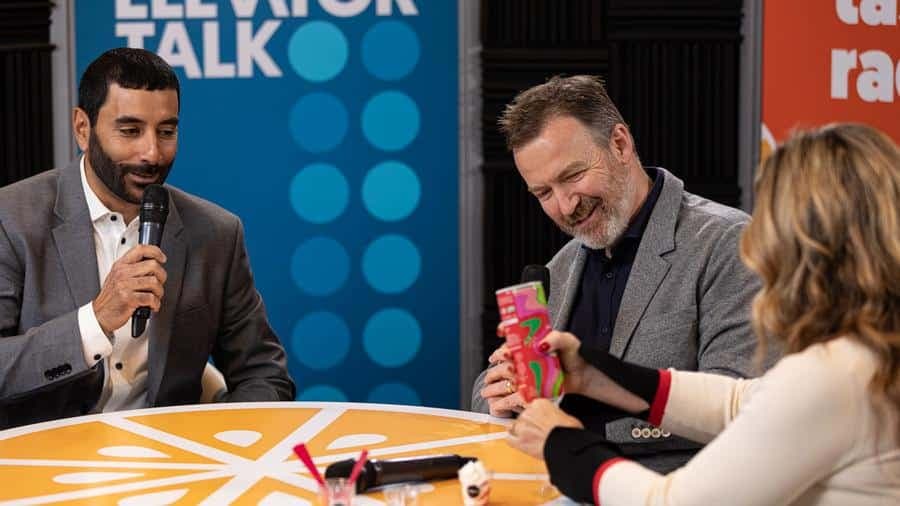
Filmed during NOSH Live Winter 2024.
Featuring:
Kartik Das the Founder of Doosra
Tracy Luckow, President and Co-Founder of Whipnotic
Sarah Nathan, CEO/Founder of Nooish
Alex Bennet, Co-founder of Joon
Sahithya Wintrich, Founder / Owner of Chutni Punch
Lisa Mastela, Founder & CEO of Bumpin Blends
Paolo Internicola , CEO of Primi Foods Co.
Alyzeh Rizvi, Co-founder / CEO of Peepal People
Transcript
Note: Transcripts are automatically generated and may contain inaccuracies and spelling errors.
Ray Latif [00:10] Hey folks, thanks for tuning in to the live stream here at Nosh Live Winter 2024. I'm Ray Latif, the editor and producer of Bevnet's Taste Radio podcast. And this is Elevator Talk Live at Nosh Live, and I'm very excited to be with two amazing people. The first being Brandon Partridge, who is a partner, the, excuse me, the principal with 202 Consumer Ventures, and Kartik Das, who is the founder of Doosra. Thank you both so much for being here. Great to be here. Yes, Brandon, if you know Elevator Talk, has been a co-host for this show in the past. This is the first time you're doing it live though. First time live, yeah, outstanding, and Kartik is our first guest, and we'll get to Kartik in a moment. But I want our audience to know who you are, Brandon. You and I have known each other for jeez, over a decade now, a long time, yeah. So I entered sort of the Nosh Bevnet universe a little over 10 years ago. I had a company called Skyland Foods that launched Ibex Drinkable Yogurt, a brand of which you were a huge booster. There were not enough Ray Latifs out there in the world though. Um, so that business ran its course in the last chapter of my career. I've been Actively involved with different trade groups that represent different segments of the food and beverage sector. So, uh, I'm excited to be here this week at Nosh Live with Snack International, which is a client that represents sort of the salty and savory, savory snack space, and I work with the large end of the industry and also still love being in touch with sort of the challenger brands and disruptors that gather here at Nosh Live. And so it's fun to be here, fun to be on Elevator Talk again. Thanks for having me. Yeah, you've been such a great mentor to Emerging founders and the brands they represent and we have one right here with Kartik Das again of DUSR and you know for folks who are not familiar Elevator Talk is a video series that we produce, uh, and we produce twice a month that highlights what early stage brands are doing and how their founders are thinking about scaling strategies and the point of having a co-host is someone who has the experience. Who's been there, done that to offer some perspective on these business strategies and plans. So, Kartik, let's get to you. Uh, for folks who are familiar with the podcast, Ace Radio listen on a regular basis, you know we love this guy and what you do, but for folks who don't or may not be familiar with what you do, tell us all about yourself and Dora. Thank you, Ray. Uh, likewise, also a big fan of the Bevna and Nash community. So my name is Kartik Das. I'm the snack maker at Dhusra. Now Dhusra means different or other in Hindi, and that's exactly what we do. We create, uh, sweet and savory Indian snacks that are trying to bring Indian snack culture, uh, to the rest of America. I like To say we're introducing America to the Indian snack aisle. So we have a Kre Hero skew, it's the sweet and savory mix. It's a spice chickpea puff base, so it happens to be gluten-free, uh, range of spices, roasted peanuts, and caramelized white chocolate. If you walk into any South Asian household across the continent, uh, when they welcome you, they'll serve you some chai and something crispy and salty to snack on and you don't see that chai had its moment and it's continuing to have its moment, but if Chai is Batman, this is Robin and we're looking to bring Robin to the game. So, Are you familiar with this, Brent? Have you seen it before? It's the first time for me. Yeah, so. Uh, you know, Kartik, when I think about your brand, and I've heard other people talk about this, I think of like a trail mix type of product, is that how you position it? Um, it's, it's tough for me to say that, but yes, I think that is the closest analogy to something that most Americans are familiar with. Think of it like a snack mix, a Chex Mex, or a trail mix. Was that your first impression when you saw the package? Yeah, certainly, um, the. You know, the kind of global flavor trend. There's certainly a growing awareness and appreciation and interest in sort of flavors that sort of come from other cultures. So this is certainly on target with that and, you know, kind of the handheld salty savory snack, you know, it's a natural combination, so it appealed to me right away. Yeah, have you had a chance to try it? I haven't. No, let's rip that bad boy open. This is one of the, we've got no allergies or anything I need to worry about on live camera. Great. OK, just making sure. Thank you so much for asking. That could have been really awkward, especially for a live show like this, but this is actually kind of rare because typically when we do elevator talk it's a recorded show and we're doing this live now and I forgot to ask if you need any hand sanitizer because as everyone knows you need hand sanitizer for everything these days. Absolutely. But while Brandon's opening that, what's the price point? like just for some context, where are you sold and what's your price point? Sure, so our focus has really been in independent retail in Cafes and restaurants as well as we do a lot of events and markets, right? So this is actually our sample bag we sell a 66 ounce pack on our website for $10 even and then retailers have it anywhere from $10 to $11.99 depending on the store. A lot of our stores are higher and specialty stores, there's a larger market there. Nice, nice. This is really good. I think I went into it imagining it was sort of looking at more of a savory profile, but that sweetness is in there too, and it's a really good combination. Yeah, I wasn't expecting the white chocolate. I think when the first time I encountereddusra. Is this, is it typical is it traditional to have a white chocolate? So the concept in in in in South Asia is a kama translates to sweet and sour, right? So if you go into an Indian store, you'll find a crispy savory, sometimes dried fruit, This artificial sugar sprinkles almost or raisins and for me, I wanted something that was an elevated product, spoke to uh a different way of eating our snacks, and I also happen to be a French, a classically trained French chef. So that was, how do I bring things I've learned in the restaurant industry to Indian nostalgia and present something that's very different and that fits the name Tusra, a little different. So for you, Brandon, I, I think it's a question almost as You know, a food industry observer, a mentor, an investor, you know, someone who has seen products come and go, you know, for me, I see this as a very differentiated kind of product, but one that Um, it's also gonna require some education for mainstream consumers. Yeah, the, the education piece was something that I, I thought about right away. I mean, I think, and the other thing I would, I would also imagine is that if eventually if you get to the point of building like a little bit of a range of maybe like 3 different flavors you get. People sort of have an entry point that sort of suits their preferences, um, but certainly as I said in the opening I mean the, the, the growing appeal of sort of global flavors and the open increasing awareness of of and and an appetite for, you know, things that come from other cultures I think is there. I think the one thing that I would, you know, and I think this is something as you grow in retail you want to talk to customers about is, uh, I have a friend who once said his business was the. Ended up being the tallest tree in the wrong forest and um I think you know if if Indian snacks is enough of a of a subcategory to support a brand to get it where you want it to go, um, that's something that you'll find out as you're in the market. I wouldn't presuppose to know that now, but uh I think you're starting with something that's a super strong jumping off point and uh I, I, you know, I think complementing it with some other options that kind of create either different degrees of spice or or or flavor combos would create. Kind of more opportunities for trial and entry from different consumers and that was exactly the approach we started very much from a grassroots perspective, right, so we were doing markets we were doing events where we're getting people to try the product and we're getting firsthand feedback and over the last 12 months, a lot of the feedback we've been given are going to inform our next two SKUs that we're looking to launch next year and so they've been tested again with a very similar group. So now we know moving into next year we'll make a couple of packaging changes to convey that flavor and that texture that's coming on and then be able to offer two different Um, varieties and Kartik, I know that you're in the midst of that packaging redesign and looking at some options right now. You haven't locked anything in yet. Which is perfect because we can ask Brandon for his thoughts on what you might need to do in version two. Yeah, I didn't know if this, you said this was like a sample bag, so I don't know if this is, is, is kind of the same profile. I would say it is a lot. I would use more of the space to show the consumer what the product is. I mean, there's a, it's like pleasing to the eye from being sort of clean and have this modern look, but I would say you need to use more of this real estate to sort of draw people in. Um, but so that if that's, you know, on the, on the drawing board, I would encourage that, uh, but certainly just the the branding, the lettering, the the photography is all good for for sure, and I think that's exactly the feedback we've gotten from retailers, from distributors, from customers. It's what's inside the bag works and the outside of the bag is not conveying that same experience and so that's really the focus for that next iteration. We're, we're running short on time here, but I, I do also want to ask about the name Dousra, which I love and I feel like it's an easy name. It's a, it's a six character word, um. Do people, Kartik, do people kind of gravitate toward the name and understand that it's that what you're getting is An ethnic brand or I mean I, I guess how do people evaluate how do people think about the brand name? It's, it's funny, uh, most the SKU name is the mix, but most people just call this entire thing and so they're resonating very clearly, very very strongly with the fact that it's a fun sounding name, it's a dual. Name and it's quite easy to pronounce and then when we tell the story of how Dustra means different, it means other it also means second because one bite is not going to be enough and so because there are layers to the name as we tell that story, people are gravitating towards it. So we're really hoping to double down on that, yeah. Well, I think you've got a great foundation. Brandon. Any final thoughts on Dero? I, I would just like to keep the rest of the sample bag. I appreciate that immensely, uh, and I'm, I, I think it's exciting. I, I, I, I do a lot of work in snacking. Um, I always love trying new flavors and profiles, and I, I love that more products are coming to market with this type of profile, and I just wish you the best of luck. Thank you, Brendan. I appreciate that. Outstanding. OK. Thank you so much. We'll see you on stage tomorrow as part of the Nosh pitch slam. But uh right now we're gonna bring on our next guest for this episode of Elevator Talk. That's Tracy Luckow, who is the founder of Hypnotic. Tracy, how are you? Oh, good, how are you? I'm well. Great to see you. Great to see you too. Is this you? Is this your first Nosh Live? It sure is. Yeah, how's it going so far? I've watched so many though that I'm ready to go. Fantastic. Well, I'm glad you're here. We always talk about this, which is like it's great that we have the live stream, but being here. Totally different experience. I know. I'm very happy to be here, absolutely. Whipnotic. I've got to stop saying it like that. I've got to stop saying it like that. Whipnotic, tell us all about your brand. Sure, so, well, first of all, thank you so much for having me here. So growing up, my sister's favorite food was always whipped cream. She was the one who would pile it high on her pancakes and even higher on her ice cream. And as we grew up, we realized the whole world around us had changed, evolved, modernized. Every single part of the grocery store had evolved, but her favorite food, whipped cream, had stayed pretty much exactly the same. And so we started to look at what baristas were doing in kind of the fancy coffee shops and milkshake parlors in big cities from New York to LA, and we noticed that they were swirling these beautiful colorful syrups and sauces into whipped cream, making it more fun, more vibrant, more multisensory, and also more versatile. And so we banded together, called ourselves the Whipped Queens, and decided to bring that type of product to the grocery store. Very, very cool. And so how, how, when do you, do you launch the brand? We launched 2.5 years ago. We intended to just launch in 8 stores and then our world changed pretty quickly overnight. So now we're in, uh, just over 1000 stores across 35 states. Wow, that's great, yeah. Uh, you know, I am a whipped cream guy. I'm, I didn't think I'd ever admit that. I'm not sure why camera no less. Yeah, on camera, exactly, live here on Nosh Live, but, um, I, I, I wonder, Brandon, if, if you saw what Tracy saw, which is that this has been a staid category, you know, the brands out there. There needs to be a whipped cream brand for new generations out there. When I saw this brand, the first thing I thought of was good culture cottage cheese, because Jesse, well, from the standpoint of the fact that Jesse, yeah, well, it's pretty good praise, right? Let's end this here and have a great day. No, um, the reason I say this, you know, Jesse saw, I mean, at the time that brand launched, no one thought of cottage cheese as Sort of a growth opportunity right so he was identifying sort of uh an underdeveloped kind of thing that was probably uh mostly consumed by senior citizens and turned it into something that had a real value proposition and appeal to younger shoppers and I, I saw that that was the first thing I thought of when I saw this was that you know basically it's just the kind of standard issue commodity whipped cream that you would find in most stores and. Sort of bringing a sense of fun and playfulness with the branding and also the flavors and even the way the bottle and the and the is designed is really just um sort of kicking it up a notch and sort of I'd say inspiring people to maybe even think about ways they would employ whipped cream that maybe they wouldn't even imagine on a regular basis if you're not like a Ray Latif core whipped cream user, uh, you know, then a whipnotic might might draw them in which I think is really, really fun. Yeah, for sure, and this is the strawberry swirl variety that you brought with us. You got some cups. You got some spoons. We're going to I feel like we have to try some. All right, so can I tell you about the product first and then I'll, I'll have you sample it. Yes, please do. At its core, Whipnotic is a whipped cream that tastes more like homemade, so it's just real cream, a touch of vanilla, and also just a tiny bit of cane sugar. So it's 1 g per serving. Um, and 15 calories in the cup that I'll give you. Um, is there any other sweetener in there aside from sugar? There is none, but what is kind of unique about us, we knew that just cleaning up the ingredient panel wouldn't be enough to really break through. So we have a patented technology. Um, so we have patents on nozzles, which is something I never thought I would say in my entire life, but this colorful button is more than just aesthetic. So essentially all of the strawberry juice is in this colorful button. So when you press it and you spray, it swirls the flavor in kind of like how the baristas do it and taking very much inspiration from the frozen yogurt machine that you would see that swirls flavors together. So now that I've just promised that I better deliver that, uh, hence the name whipnotic. There, there you go. I like it, um. I, I can't, I'm trying to think and, and Tracy can, I'm sure tell us this. Are we gonna, there we go. Who's incredible. Oh my gosh. Viewers, I hope you can see what Tracy just did here. The, the strawberry swirled perfectly with the cream itself. That looks amazing. All right, so while, while Brandon and I are, are munching on this, please tell us, uh, price points, um, and where you think this product is ideally retailed in store. Yeah, so we are, um, in, as I said, quite, quite a variety of different stores. So we're in specialty stores, we're in, um, the, uh. You know, like, basically like the Bristol Farms and Harmon's and Central Market. We're in, um, more of the natural set, so Fresh time Market, and then we just, I love the smile on your face, Ray makes me so happy. That was the whole point of us. Well, well, two things. Brandon and I just could not stop at once. I saw a photographer Nate Fres outside. He's just, his mouth is watering. He can have some. He can have some. He's not gonna have any. This is my jar, um, and then we're also, we just started to. Enter the conventional sets as well, so we wanted to test how we performed at like a ShopRite, a Kroger, so we're in those stores as well. Um, so we vary in price point obviously depending on where we're sold. So uh we range basically about a 20% premium to the rest of the category. So somewhere between the 699 and in New York City $899 price point, but for the majority we're between $699 and $799. I think that's a fair price and I almost feel like this is a product and Brandon maybe you can weigh in here this is a product that is not necessarily something that moms would buy for their kids but that. Millennials and Gen Z consumers would buy for themselves. I mean, would you agree? I, I do agree with that. I mean, I have, I have 18 and 20 year old daughters who I think would, would, who are, you know, coffee shop goers and, um, and, and I think for both the fun factor and just the flavor and the, and the, um. Sort of the way to, to sort of, uh, sort of make an occasion, you know, some sort of snack or eating occasional a little more fun, uh, would be drawn to this for sure. And I've just, the whole, uh, premise around, I mean, even when you were dispensing it, it's not like some sort of, you know, uh. Pre-swirled thing that comes out like, you know, like it was stamped out of a machine. It really is just sort of something that's injected into the product as it's coming out so it just, it conveys, I think, a sort of a a a sort of a naturalness if I can use that uh non-word um that um that is also appealing even though. Obviously this is like literally a food that comes out of a can. It still conveys sort of a quality and sort of, I don't know, just a premium version of what it is. Yeah, what comes out of it too actually, as you pointed out, Tracy tastes like homemade whipped cream as opposed to a processed food. I do want to ask one more quick actually and Tracy, maybe you can back me up on this. I mean, is this a product who's your target consumer for this? Yeah, so we started thinking that it would be kind of women like my sister and I who were really looking for those kind of high fat but low sugar foods. My mother's insulin dependent. We wanted to make sure it wouldn't spike her blood sugar. So we started out in that way, but you're right, like what has happened is that we've attracted millennials and below, so the category. is roughly 75% um boomer and older. It's the first time in my career I've seen like the silent generation on a chart. That's what the category is. We're 75% millennial and younger. Um, wait, the the category of whipped cream is, is a boomer-led category. It is today, yes, and I think that's just the legacy of the brands that are participating in it. Now, people eat whipped cream of all of all ages. in food service, but the grocery customer is aging and so we had hoped that we would appeal to that generation, but thanks to TikTok and a lot of our food service partners who, you know, provide people's first try all of the at-home coffee and being placed kind of near cold brews and coffee foams, we've managed to really recruit a much younger consumer. We're running out of time and I have like a million more questions as I'm sure Brandon does as well, but I gotta ask this, um, do you have investors at this point? Do you have outside investors? We do. We do. We've been very fortunate. Great. I'm sure at some point you will probably look for even more investment every day, every day. There you go. OK. Tracy's like, yeah, do you have money now? Give them you can accept PayPal, Venmo, fantastic, straight cash, OK, um. The, the dispense the patented dispenser Brandon, um, you know, as someone who has worked with investors as someone who knows investors, how do you evaluate that as you know the kind of as part of your process about thinking about whipnotic? I don't know enough about I, I would certainly if I was an investor I would wanna scratch deeper on um. You know, are there opportunities to sort of commercialize sort of the the dispensing sort of part of that product across other businesses? Is that like a piece of intellectual property that would drive incremental value beyond just sort of what it does for this underlying brand, because I think you know that is something that You know, most of the products, as much as we love all of our nosh brethren, I mean, most of them are just sort of like attempts to improve on a thing that is already widely available. We have over 40 claims on our patent. We own it worldwide and it works for all items that work in an aerosol or a pump container. That's, I mean, so I think that certainly is a potential source of incremental value that an investor would want to evaluate. Yeah, I feel like it's a huge selling point, and I feel like it's something that Definitely adds value to the company as a whole. I mean it's certainly a brand uh or part of the brand that I'd love and something that just it's just fun to see and it's fun to play around with but. You know I've never seen anything like it and again as when I, when I first saw the bottle I just assumed it was like a fun decorative, uh you know thing but to see that it's, it's a part of the delivery system is really cool. Yeah. I, uh, we have to wrap up because Amanda's yelling at me and she's cursing at me under her breath over there but Tracy so much for the thank you so much for being with us. Let's continue. This conversation, please let us know if we can help in any way. Just reach out because I want to talk about Whipnotic more and more and more and more as much as I can. Yes, thank you so much. Thank you. Great to meet you. We'll just put these cups down here. All right. That was Tracy Luckow from Whipnotic, very cool brand. Now we're going to bring up the one and only Sarah Nathan. Please have a seat. She's even, oh, we've got multiple. Oh, there's Amanda who was cursing at me before folks. She's our stage director. He's also one of the most integral parts of our marketing team. Sarah, how are you? Good. How are you guys? Good to see you. You guys don't know each other? No, I don't think we do. I'm Brandon. Nice to see you. Sarah, nice to see you. Uh, like, uh, Brandon, Sarah's been in the food and beverage space for quite some time and is here with her new brand, Nooish, which, uh, we've talked about on the podcast. We've had you in a previous episode of Elevator Talk, and I'm so excited for you. You for the folks who aren't familiar, tell us all about it. Yeah, um, so Nooish is a modern Jewish comfort food brand. Um, we are making the first world's first ever instant matzo ball soup. So it is like cup of noodle but matzo ball soup. Um, if you are not familiar with matzo ball soup, it is one of the OG comfort foods, in Jewish culture, but also just very Americana. Um, it's. Matzo meal which is like bread crumbs with spices, oil, eggs into like basically it's very savory. It's very similar to like you know chicken and dumplings something like that, very savory broth. Ours is vegetarian, super clean ingredients. We partner with Broil Up and Barrel, real salt, and no one's doing anything like this, so you can have something that normally takes about 1 hour to make in 2.5 minutes. You hit the nail on the head there. Well, I'm sorry. Go ahead, Brandon. I'm stealing your thunder. No, I, well, number one, an hour, an hour and 2.5 minutes is a pretty good jumping off point. Um, the thing I was drawn to, it's funny, I feel like my pattern today is I'm comping these brands to something else in the market that I see. So this made me think of Daily Harvest, the smoothie brand, because the insight on Daily Harvest, right, was that they're not shipping you the liquid. So that takes the weight out. It takes the cost, the incremental cost out, and so this is an extremely lightweight package and shelf stable and shelf stable, yeah, so I, I just love that idea because it's, um, it's a, it's a well known sort of nourishing food that people, a lot of people, you know, appreciate and as you say, is not a small undertaking under normal circumstances. So, uh, just a lot about the sort of the innovation and the ease and the convenience factor is really appealing. Yeah, can I ask you a question? I don't think I've ever asked you this, Sarah, about Nooish. Yeah. Why has no one done this yet? It's not easy. Yeah, OK, so I mean, what, what is not easy about it and what have you cracked the code on in terms of making an instant matzo ball soup? Um, yeah, well, you stole the line out of my pitch darn it, yes, OK. Sarah's also participating in tomorrow's slam, so tune in for that. I, I like that we're on the same wavelength. Yeah, you know, I think we cracked the code. I mean, we, we decided to take on the undertaking. I think that was a big thing. We make it so you don't have to, so I spend the time, you know, uh, really making it, but, you know, being able to make it on scale when you have like a matzo ball factory and it's not the only, you know, it's the only thing you're making, you can really kind of. Dial it in and and do it, but it is a premium product. I think someone like Manischewitz doing this, they're not gonna be able to get to what people expect a Manischewitz price point to be and nor the quality of what they can offer. So being able to really speak to a customer who understands what this is, understands the clean ingredients, you know, I'm not really kosher. The kosher audience is not my main audience. It really is for a mass market, but if you look at the, the kosher. or just go to any kosher grocery store. A lot of times the ingredients are not clean ingredients. There's a lot of really processed food that's been made shelf stable and um so to have something that really can speak to that audience where they have something that they can like have that feels modern, that feels like something fun and and and playful and really representative and it's kosher, um, I think is, um, you know, a great add on and something new. That market and then you know something more high end and something that you can feel really good gifting so like I would say our main audience right now is gifting. It's parents sending to their kids at college your friend just had surgery or a death in the family or a new baby, you know that's people are like wow I can actually send matzo ball soup but I don't have to pay $150. Those spoon spoonful of comfort, Goldbelly, Zabars, Zingerman's, uh. Pter's Deli, those are $150 to ship and people matzo ball soup is a love language, um, so that's that premiumization is also what allows us to be able to do it too. Premium, convenient, two key terms that we're seeing in food and beverage, two key trends that is, um, a place where we don't see a lot of great premium products is in the ramen space, but people are still eating plenty of ramen. The question that I have and the question that I'll pose to Brandon is, Yes, Sarah wants to see this as a mainstream available accessible product, but how many people do you think are going to want to buy it? Is this something where it's going to be easily understood and people are going to reach for it automatically, or do you think there is still quite a bit of education that people here is going to need to do to get people to understand that this is another option for instant soups, I think. You know, one of the things that I, I think I see brands do is, can they, do they have like a Even if it's starting small, is there a built-in user base that can establish a foothold for a product, and that buys you the time, frankly, to kind of expand and grow. And so I guess one of the questions I was going to ask, you know, obviously you'll have, you know, sort of Jewish shoppers, people who have a tradition of matzo ball soup consumption. This, there will be an appeal there. Do you see Nooish growing to other sort of Jewish traditional like convenient versions of other traditionally Jewish foods, or, um, you know, I'm trying to figure out whether you want to kind of like really double down on sort of the Jewish user base or whether you see other whether there's some sort of built-in insight here around instant products that maybe you would move outside of. An alternate soup or noodle or something like that. Yeah, so I'll answer that question but address something else you said first is that when you look at the global aisle, you talk about brands like Siete Maya Kamal, Fly by Jing, Dozen Cousins, even Fi in Manila, and they'll say that most of their customers, 80% of their customers are not of that culture that are buying it. It's people who have fallen in love with that product because they had an ex that was XYZ Jewish or best friend. or they went to that country or you know, and so matzo ball soup, if you lived in New York, if you lived in LA, you went to a Jewish deli, but you're like I don't know how to make it or I no longer live near there or it's hard to get or it's not open, like you still realize what that understanding of that comfort food is. I've had so many people who are not Jewish, like they just immediately get it because every culture has a soup and dumpling, so either they know it and they don't know how to make it and they want it or they are so excited when they're introduced to it, um. But you know, I think what I wanna do initially is really tell there's 15 million Jews, 15 million ways to be Jewish, so there's all these different diasporic stories we, you know, live everywhere and so you know I'm working on right now a gluten-free matzo ball, so like a matzo ball made with cornmeal, um, and guajillo chili and you know, Mexican flavors because there's a huge Jewish community in Mexico City. I could do, you know, you have Shalom, Japan, a restaurant in Brooklyn doing um, uh, miso ramen matzo ball soup. You have like uh all these people are sharing their intersectionalities through this space through this love language and and really connecting back to their community and who they are through these products so um I think there's a a line of of products that I either want to introduce to people that I want to completely flip on their its head or that I want to make cleaner, you know, with cleaner ingredients and um I think. Jewish Jewish food in a way is Americana. I mean, talk about the bagel, talk about matzo ball soup. Talk about challah, you know, these are, I mean, shakshuka even made it to Trader Joe's. If people can figure out shakshuka, they can figure out the matzo balls. I actually say just hearing you say all that, I'm, I, I really like this idea of almost like. Um, expanding the reach of matzo ball soup by using that intersectionality with other flavors or cultures that people are acquainted with or already consuming, uh, I do think there'd be an opportunity to, um, sort of expand the, the reach by, by sort of meeting people where they are with flavors that are that that they seek out already for sure. Sarah, uh, with the time we have left, price point and where are you currently sold? Yeah, so, um, we are around MSRP between $7.08 dollars. We're on our, uh, you know, you have to pay for shipping on our website, but it's a little bit more depending on the pack size. Uh, newish.co, we're doing a lot, like I said, a lot of D2C, TikTok shop, all of that, um, but then we won Best Brandory at Sunset Foods in Chicago, got an end cap till the end of the year, we're doing really well. Well, we're at the Jewish Museum in Philadelphia. We'll, you know, universities all over the country and around the country as well. Very, very cool. Can we give this to Brandon I think he wants if that's allowed. I appreciate that. Yeah, you, I mean I, I should have asked Sarah for tomorrow you're gonna have the judges be able to sample. This, but I, I should have been like, can you bring your hot water so that Brandon can have some now? But I literally, I was about to and I got here a little too late. I it's fine. You know what? Before you get on that plane tonight, you're going to have, that's the best time to have the food. So I will say yesterday I, I have this little, I, I said to Ray, I have a, um, hot water heater that's just a single serve and I plugged it into the air. I brought it on the, I pre-boiled it, brought it on the plane, poured a little in my thing, a little in a lentiful, made both, poured the lentiful into the newish, and it was like high protein, super delicious. I think there's a collab in the future nosh super user, uh, collaboration waiting to happen. Well, lent with one, Nosh Live's pitch slam last year. Uh, you know what, that would be a really interesting collab if you were to be victorious in this year's edition of the show. It would, but yeah, perfect, perfect plain snack. Yeah. Cool. All right, Amanda's yelling at me again. Sarah, thank you so much for being with us on Elevator Talk. Thank you. We'll see you tomorrow. Thank you. You can hand the microphone over to Amanda. Yeah, hang on to that and your deuce. You're just getting all kinds of good love here. Feel free to invite me back. All right. Up next we have Alex Bennett, who's the co-founder of June. Alex, great to meet you as well. you guys. Yeah, for having me. Right on. Oh my, right on top of pistachios. I have a salt and pepper variety. Brandon has the original salted variety. I kind of feel like we know what you do, but we maybe not know what you do. What is June all about? So June is a, it's steeped in a family tradition and a family recipe. Uh, my background. is half Iranian and half French. My family back in Iran are pistachio farmers, so I grew up around fantastic pistachios my whole life, and over the last two years, me and my co-founder have decided to bring what we refer to as a better for you, really tasty pistachio product to market. OK, two things. Being on brand is so important, and Alex, as you can see from top to bottom here, is just rocking his. I am I am. And June, where'd the name come from? So June in Farsi, which is Iranian for those that may not know, is a term of endearment. So my whole life, uh, any friends that were coming over, they were Alex June, Cody June. It's what you add at the end of a word. So it's just a homage or a pay to homage to my family back in Iran. Very cool. I'm surprised it hasn't been taken already, uh, like for the trademarks. So there was a lot of trademarks there are. June's, but no June nut companies. That was very helpful and we were very lucky to work with some fantastic lawyers early on to make sure that we had that covered. I'm sure they were happy to work with you as long as you gave them a check. Yes, yes, that is correct. That is correct. Well worth it. Yeah, so we have seen a great explosion. I think this is a really good thing for the nut category of branded nuts out there, you know, like there's just there's so many great brands out there. I mean, The question I think is, How much of a difference does it make, right? Like, because nuts are a commodity and you can go into a lot of different stores and buy a bag of pistachios, buy a bag of almonds, but Brandon, what is consumer thirst for, say, a branded pistachio? So quick question, are these in a shell or not in a shell? These are in shell to start and we'll be launching a, uh, out of shell or shell pistachios referred to it about 6 months after. Interesting. OK, I was just curious about that. Um, I, I think that. Um, Sort of culinarily interesting, well branded nuts are a big opportunity. I mean, I was just talking with the Daily Crunch crew upstairs earlier today. Uh, they have this new dill pickle flavor that is so good. Yeah, partnered with Cleveland Kitchen on that and sprouted almonds, Daily Crunch. Yeah, they've done a great job by collaboration also, um, so I, I do, I mean, you know. There's the more competition there is, you know, a subset of the competitors will sort of make it to, will progress and grow and sort of, you know, elevate within the category, but I do think, you know, the interest in protein, the interest in fiber, you know, the interesting, you know, the more interesting flavors on the go snacking, all those things that we all know. I love that there's something, you know, based on your background you have a story that is, you know, compelling and authentic. You know, I grew up in Ohio and so if I tried to do this I could maybe pull it off, but like I just wouldn't bring sort of that authenticity and that sort of passion for it which you clearly have. So I love things that come out of people's backgrounds where people have a history. Uh, you know, even this morning, Jennifer Garner on stage talking about she has this family farm in Oklahoma that she was like, you know, wanted, wants to sort of create, uh, products for people and places that she grew up and, and where her family lives. And so I, I think that has a lot of power and I just think you, if I were you, I would, I would go, I would push a lot of chips in, no pun intended, on. On, on sort of flavors and really driving the interest because I mean Ray's right, like a salty, uh, a salty pistachio is pretty widely available, so make your brand the thing that they have to go to you to get that version, you know what I mean? Totally, totally, yeah, that's, I think you, you kind of hit the nail on the head there like we, we try to be focused, Cody and myself, we start off as saying we want to be flavor innovators, right? So you'll see here you're like, all right, well. These aren't exactly new flavors, salt and pepper. We do have a dill pickle as well, you know, griller, grillos, I think, by the way, just shot pickles through the roof. But I think for us, you know, the idea was let's get people something familiar and an elevated version of what they're familiar with. We do have these couple of ingredients in there that are very specific to the family recipe. Our cooking process is a little bit different, and I think for us it's, let's, let's get people, um. Let's give people something they might know. Let's make it a little bit better in our, in our terms, and then we'll start to go into the wasabis, the sweet chilies. Like there's a lot of opportunities to put pistachios with really, really fun, flavorful, uh, plates. Can I ask you about the packaging, Alex, because, you know, Brandon. Sort of implied this that the story in the you know the the story of you as a, you know, half Iranian and half French and a family farm and a family pistachio farm I feel like you're getting some of that on the packaging and then I feel like you're getting some really good modern elements, um, that consumers are looking for and. You know, the fact that It's, it's almost, it's interesting, it's almost minimalist in, in a certain way because you can see a huge part of the pistachio, but there's not a ton of copy on the front. So how did you think about doing something that was going to get a lot of attention off the shelf that was gonna pull people's eyes toward this product but do it in a way that was going to be sophisticated, um, and also. Easy for people to understand. Yeah, I mean that last piece that you just said easy for people to understand, that was huge for us. I think early days I would have, and I say early days, we haven't even launched, right? We have 3 months until we're going to launch, but early days I noticed that your calorie count is XXX on this side. Yes, you can see, so we have a couple final pieces that we're getting into, but, um, early days I would have just said June, big, powerful, bold, and Cody, my co-founder was like, no, we need to really, people need to know what it is before they try it and as we You know, start to establish ourselves, we can start to get a little bit more creative now. The, the, the basis of the branding, the packaging was nostalgia, so we wanted to lean into nostalgia and create something that feels a little bit familiar. I hope that that's something that is coming through on the packaging. It has a little bit of this old retro vintage vibe while also, uh, not alienating consumers by being something that's a little bit too. Gen Z, a little bit to millennial, we want this. Listen, like pistachios are consumed by people that are 45 years and older, and we know that there's an opportunity for a younger generation. We don't want to alienate the older buyers, but we did want to create something that has this elevated feel, and it does pay homage to again a little bit of that Iranian background, um, that I referenced earlier. Well, this was going great until I was just lumped in with the older buyers, but that's, but I'll let that go. I'm getting there. Don't worry, I'm getting there. We, we're all, I think, you know, facing, we're, we're all facing the same kind of question here. But the question I have for you, Brandon, is about protein. We talk about protein a lot on taste radio and how much of a demand, how much more demand there is for protein in all different forms. How much should protein be a part of the conversation for June? I would say a couple of things. I mean, there's, there's a whole, there's, there's a. A significant segment of consumers who are like so focused on protein that it's almost like you'd have to eat, they'd have to eat like a wheelbarrow full of to satisfy their demands for protein would be happy with that wheelbarrow at you that's our next product. That's why we do it by the serving. So, so I mean there, you know, we've talked about, you know, with we've on the podcast and others we've talked about, you know, like David and these bars and stuff I mean that are just maximizing the protein load that you can get in a single serving of a product, right? Um, here, you know, this is more about a naturally protein rich product, um, and also I think the fiber piece as a complement to that is really valuable. So I think there is, I think protein and the combination of protein and fiber is positive, and I would say, you know. You don't need to compete with like the 35 g of protein per serving products, right, but you can, you can elevate and promote the naturally rich aspects of the, of the product, and, and I think from a snacking standpoint I think that's, that's valuable. You don't need to be like a post-workout food to to kind of. Sell, but I think the fact that you're, you're working with kind of a nut in this case that is naturally a source of those things is positive and should definitely be played up because I think in snacking people are like, OK, it's for I'm I'm I'm attempting to satisfy a hunger that I have right now, but I also kind of want it to be doing something for me at the same time. Um, and I think, you know, nuts are clearly a source of that, and you know, I mean nuts that are brought bring this kind of like authentic consideration of the product and the and the flavor profile, um, you know, alongside some of those nutritional aspects, I think, you know, it's very positive. Yeah, no, that's, I mean, again, you hit the nail on the head there. We Pistachios are a superfood, right? Um, they are high in antioxidants, high in fiber, high in protein, but, you know, we don't want to just focus on, hey, we have all these amazing things. I think one area that we also wanted to get across is what we don't have, right? So we do have there are no artificial. Ingredients, no natural flavors, no seed oils, right? So it's the process in which we cook these pistachios that we think can actually elevate the experience. The pistachio itself is incredible, right? And our, I think ethos is like we don't need to change much about the pistachio or uh change what we put into the pistachio in order to get amazing flavors with uh, without sacrificing amazing ingredients. I keep saying the same darn thing. We're all, we're out of time and I can't, we need more time. Who's in charge of the time here? Because I, this is crazy. We need more time with our guests here. Uh, no, in all seriousness, Alex, thank you so much for being with us. And I gotta say one more thing, you know, pistachios are having a moment. They are. And they really are, you know, what's it, is the Dubai, the Dubai ice cream or it's the Dubai chocolate, Dubai ice cream Tosh, right? The, the pistachio milk. There's pistachio butter's coming out. Pistachio dude, I think they are like very cool. It's awesome. It's awesome. That's great. Yeah, well, I'm really excited for you and your co-founder. Uh, thanks so much for being with us. Please stay in touch when you're ready to roll with your finished product and everything. If you can send us samples, we'd love to talk about it, love to munch on it, love to gram about it. So in the back for you. You're good. OK, perfect. No one else, don't anyone else tell us that. Thank you so much, Alex. Thank you so much. Well, jeez, time flies because I, I honestly thought 40 minutes was gonna be a long time for us to be on the stage here, so to speak, but that flew by. Uh, that was great. I mean, I always enjoy this. It's fun to do it in person, to meet the people and to be able to taste the product in a few cases, so, uh, it adds to the experience and, um, I hope, you know, I just appreciate the fact that this platform exists to help, help people discover these products. Maybe ahead of when they otherwise would have and they can help contribute to their success because I think a number of these have real have real opportunity. Well, you've been a key part of this and you've been such an important part of this community, and I'm talking about the food and beverage community but also the Bevnet and Nosh family community. Thank you so much for doing what you do. I appreciate it with us. We're going to see the stage for my colleague Melissa in Ammaret Richmond. So we're going to throw up a slide. Give us 15 seconds, viewers, and you'll see some other smiling faces momentarily.
Speaker 2 [43:14] Up where Ray left off in the live stream studio, we are doing a live version of our elevator talks right here at Nosh Live 2024. Thank you so much for joining us. To my left, right over here, I have Amrit Richmond, founder of NDCPG. Uh, Amrit, you are content in the front, community in the back, is that right? Uh, yeah, yes. And you've profiled over 3000 brands in your content, yes, over the last five years. I keep very detailed notes in a time machine that I call the Brand DeLorean. The a time machine is an amazing thing to think about in CPG. What, how have you, how have you noticed, um, you know, food and beverage sort of trending and changing over the last five years in terms of, um, packaging flavor profiles? Are there ever sort of any overall arching things that you've noticed as you've been doing this? Yes, I have noticed in the last year or year and a half that brands are putting less emphasis on the function in the front, so they're leading more with flavor or how to use the product or inspire people to buy it, and then on the back you might find out that there's magnesium in the drink or that it has something extra in it, but they realized that what people really care about is flavor and Kind of multi-purpose ways to use a product more than how it might make you feel. Excellent. Well, we are going to be talking to Sahithya Wintrich, founder of Chutni Punch. Sahithya, I've had you on Community Call. I think we waited in line for an after party at Expo West together, and now we finally have you in our elevator talks in the live stream studio. Welcome. Thank you. Thank you both for having me. Yeah, well, please. Tell us about Chutni Punch. Give us your, your full elevator pitch. How is this something that you present to retailers, investors? How do you talk about the product and the brand? Yeah, so I grew up in Southern India and we always had a pantry staple, uh, like this that we could sprinkle on rice or fermented foods and when I moved to the United States I came by Caribbean actually all that sunshine, and here I am, um. Yeah, um, you know, and I realized that these powders that I grew up with from my childhood are great on pretty much anything because what they do is they elevate bland foods. So sprinkle this on your lentils, quinoa, or roasted cauliflower, and you'll enjoy it and you'll eat more of it. So that's how, that's what Chutni Punch is. Uh, it's a dry spice condiment. Um, and yeah, so people have been loving it. Somebody tipped us off that they sprinkle Chutni Punch into a bag of popcorn directly, shake it up for a killer snack, or, um, Mike shared with me that he puts it on his oatmeal, and I tried it and now I'm hooked, you know. So the idea is this is a playful way of bringing flavor. You talked about flavor and, and I tell my customers this is flavor forward, not heat forward, because as we're seeing and in what's trending right now is people love flavor more than heat because it's more versatile, right? So that's, that's where Chutni Punch shines, I guess. And what was your R&D process? Like? How long did and, and what are your skews? Yeah, so we have three flavors. We have a roasted chickpea, mushroom, and turmeric blend. It's very umami forward. Um, I like, like it on avocados and in salad dressings, um, super sesame. is our best seller here. This is like a crunchy nutty with coconut and garlic, flax seeds and sesame seeds. Love it on anything that's creamy, and then we have spicy peanut, which is peanut, cumin, and garlic, and love it on like rice and noodles and soups and stews. And when I started two years ago, um, you know, I'm not from the CPG world. I'm not from the food world at all. In fact, I did stem cell research and by and software development, right? Same thing, same thing exactly. So, um, the good news is that I, I had the lean startup, um, mentality that I brought. To the table so, um, started off calling my mom and and aunts asking for recipes and then making it my own so that it's versatile on anything and roping in my neighbors and friends and anyone who would try it saying please give me some feedback and that that's what I did I iterated over it and sold it at local farmers' market. Amrit, you see, so I mean over 3000 in your content alone, you see so many brands come across your desk. What's one of the first things that strikes you about Chutni Punch? What stands out to you? Um, the, the front of the packaging for, for sure and how big the logo is. I have seen that as a trend over the last year also. Even someone like Banza, their refresh this year made the logo much bigger, made the pasta bigger, so they're leading with flavor too, so people don't. have to wonder what this might taste like. So the the packaging for sure. I love the colors of it. Um, I had featured you in my gift guide two years ago and also in our um Ntopia guide to to booth to to to visit. So I've I've seen the journey of of your packaging over time too. I also love the little pods that you have for sampling that are single serve. Um, can customers buy those? Like if, if I bought 3 sesame online, could I have a few of them? In my order also to try so next year it's funny you ask that because next year we're thinking about launching um the pods as something people can try to drive more trial because people look at our products and they're like I don't know if I would like it and what we're finding is as soon as people taste it they love it and want more of so yes I think next year people will be able to buy that kind of like a a cosmetic sample pack where you get a couple of days of the lipstick that it's all of the spices. I love that. That idea, um, I, I think of your products almost like paint for a canvas because you said it goes on every, everything. So instead of people wondering how to use it, just experiment, have fun, like throw it on the canvas or, um, see how different people in the, the family react to it. Low, low heat things are great for kids, but they're also great for, for older people too, um, so the, the fact that. Anyone can enjoy it is also great versus someone saying I don't want the hot sauce because I'm going to get an upset stomach or, you know, someone older. So, what do you think of the packaging? I think the colors are so bold and beautiful and you have a sleeve that you can put 3 of the of the units in which makes it so perfect for gifting and that brings me to my last question for you which is what's your channel strategy been like? I mean, certainly I can see this excelling in retail grocery on the shelf, but there are so many other opportunities that I can the specialty shops, gift shops, shops, yeah. Yeah, that's that's a great point because um we're right now we're in person and online and in small retailers but we want to, uh, partner with more of those retailers who will help us with that customer education so uh if you go to a cheese shop, people love to talk about the cheese and the products that they carry so that would be a perfect partner for us or other retailers. That have a staff that can prepare on site, uh, are more open to trying the products that they carry and they can speak to it so that's, that's been the strategy but next year we wanna, uh, really lean into the D2C pla you know sales for us so that we can do the customer education we can help them understand you talked about experimenting with flavor. And that's exactly what this brand is like. I wanted to create a brand that's fun, exciting, because spices are intimidating. If you don't grow up with them, they're intimidating. They're like, when do I use what? How do I use it, and so on and so forth. So this brand kind of helps people to take all of that away and make it super easy. All you have to do is open the jar and sprinkle some flavor on, and you've got something tasty. It was such a pleasure to have you here today and you're pitching in the Nosh Live pitch slam. I am. We wish you and everybody out there wishes you so much luck in your pitch, and it's been such a pleasure to have you here today at the show and in our community. So thank you so much for joining us, Sahithya. Thank you both. Thank you. You can hand your microphone right over there. Um, you know how I love Chutni Punch the most roasted broccoli. It's just the most amazing thing ever. We have our next guest, Lisa Mastela, founder and CEO of Bumpin Blends. Please sit down. Hi, hi, so nice to have you here. So great to be here. Uh, Bumpin Blends may be my favorite name for a product ever. Um, how did you come up with that? Um, it's a funny story. I, I was a dietitian by trade for years before this, come from like a medical nutrition background, and. Um, I was about 8 months pregnant when I got the idea for Bumpin Blends and decided to quit my job and pursue it, um, and Bumpin Blends was originally supposed to be pregnancy, pregnancy smoothies, so smoothies specifically for pregnancy symptoms, postpartum symptoms, and, um. It just evolved from there because more and more people wanted it, but we kept the name because it's really cute. I love that this is something that you did when you were 8 months pregnant and already probably experiencing one of the biggest changes of your life and it's something that I've heard from so many other founders so you're in very good company there of course and how did you evolve the product, the I mean the flavor lineup itself, it, it's so innovative and you have such compelling flavors. How did you settle on your offerings? Um, you know, it's funny now that I'm in the industry and I've kind of seen how brands develop SKUs and they take the time and they, um, have a lot of foresight into it and for me it was very much, um, progressive in that I was working as a dietitian. I had this idea I was making smoothies every day for my own pregnancy symptoms and for my friends if or my clients if they were having trouble sleeping or. Feeling moody, I would give them a smoothie recipe to make to help with that and so I had all the recipes, um, and I love playing in the kitchen and having fun with that and and playing with flavors and I just sort of kept creating the flavors and didn't really stop so now we have 30 skews online and that's actually been downsized quite a bit um from the original ideas but. You know it came from very much a place of like passion and wanting to have a flavor for each specific functionality we wanted to support um rather than a more strategic place that I think a lot of brands come at it of like what ingredients can we reuse what is the best you know cost efficiencies those sorts of things ours was like what's gonna taste the best what's gonna be the most fun, um and so that's always sort of been built into what we do is prioritizing the taste and the creative flavors. So Amrit here pointed out that you had an amazing collaboration. Um, Britt, what was, um, what was the collaboration? Yeah, you, so you, you had a big year. You did a Barbie Bumpin Blends smoothie. You also got into Walmart. which one came first? Um, OK, so it went, we had a very big year. We went from just being direct to consumer and doing a little stint in Costco to being in 3200 retail stores, um, and it first went we got. Walmart then we got Target then we got Sprouts then we got Barbie so we actually landed the deals with Walmart Target and Sprouts before we got the Barbie collaboration um. But it was very great timing because getting all those doors I was really concerned of like OK we're gonna have 4 flavors 3200 stores nationwide we're a direct to consumer brand but like how are we going to build that trust with the retail consumer? How are we gonna build that brand awareness and recognition for someone who's never heard of us before to try us out and when the Barbie opportunity came I was like. Thing there it is. So it actually ended up being so perfect and great, great timing to be able to swap out one of the existing flavors we had going into those stores with the Barbie one. What was the Barbie one? So the Barbie flavor is Barbie's strawberry Dream, and it's like a strawberry raspberry coconut flavor, um, where it's just so delicious. And do all the skews have functionality. So yes, the Barbie flavor has collagen in it, so it supports skin and hair and nails, um, which I thought was just so perfectly adorable for Barbie to have collagen in it. Um, peanut butter cup is for energy, cinnamon toast for mood, watermelon prickly pear for hydration, and then online we have flavors for everything. Um, collaborations are something you track to all the time. What are, how, how can a collaboration open doors for an emerging brand? Sure, I think whether it's with a, a creator or a movie or another brand, thinking a couple of steps. Backwards, like a few months out from that partnership, how are you going to leverage each other's audiences? How can you leverage each other's creative teams and assets? So maybe one side of that collaboration has an in-house photographer or an agency on retainer that they can leverage. The other one has a PR firm on retainer. Make sure that you're leveraging all of those resources, um, especially because these are limited runs that might become a permanent. flavor um in the lineup, but most likely it's 1 to 10,000 units and you have a few months to to sell those through. So do more for a collaboration than you would for a typical flavor launch on on your own. And is the Barbie flavor still available? It is. We actually have a very long contract with Barbie, so we can use it for up to 2 years, um, which I was really excited about because it just relieved a lot of that pressure and stress for it to do incredible out the gate and sell everything, and it gave us the ability to kind of just take a deep breath and see how we're gonna market this over the next year, year and a half. And did it open any doors? Um, You know, not yet actually. I don't think so. Everybody, everybody out there who's watching and listening, there is a door that is ready and and I think I, I emailed like Whole Foods, everybody when we got the Barbie collaboration we had the beautiful like packaging photography. I was like, alright, time to email all the buyers that ignored me email, email, email, and it actually did not move the needle anywhere, which is interesting. Sounds like you're moving the needle in plenty of places. Yeah, exactly. I kinda don't want to move the needle too much. We have a lot going on this year and we have a lot coming next year so I'm kind of I'm very happy with where we're at, um, but, but it is interesting that the Barbie collaboration actually it it's had a big impact in terms of trial and it's beautiful and we love it so much um and and I've enjoyed it so much but it's actually surprising that it didn't immediately, you know, I don't think people are immediately like oh Barbie OK let's get you in stores now. And um Ollipop also had a big Barbie collaboration this year. So for the two of you, it's not the year that the blockbuster movie came out, it's the year after, which I would hope gives you more room for press opportunities. And um more, more time to tell your unique brand story versus being in those roundups of here's 100 collaborations that Barbie did last year, which is great press too, but there's a little bit less noise uh in Barbie land this year. Yeah, there is and I it's interesting too working with Mattel with they have their own very strict guidelines and and their processes and what's required when working with them with a Barbie license versus the Barbie movie license and so. In doing that, yeah, it's been really fun this year because both getting more attention on the actual brand and the brand story and getting to be creative with Barbie's story as well, like, you know, getting to look at it from an angle of this like inspiring doll and and women empowerment and a lot of those different angles versus the movie, um, and having the attention be on the woman owned brand, um, and Barbie. But it was also fun because I got to use a lot of inspiration from other brands that were doing it and Ollipop. I, I did pull some inspiration from, but we were actually working with Mattel at the same time because we launched like a month or two after them so we had already finished everything, um, when I got to see their stuff, but, um, definitely pulled inspiration from them and I think brands had a lot more space to be creative this year with it. I think we need a smoothie soda recipe on TikTok from the both of you. I reached out to Ollipop about that, and it did not move the needle. That's another message that we're putting out there, OK? Lisa Masella, thank you so much for joining us. You embody inspiration and women's empowerment, so thank you so much for joining us today in the live stream studio in Elevator Talks with Bump and Blends. It's been such a pleasure to have you. Thank you so much for having me. Have a great day. You too. Um, yeah, I definitely think I, I need one of those, um, combinations of lollipop and bump and blends. Hello, welcome Paulo Inter Nicola, you. Nice to meet you. You are the, you're the CEO of Prey Foods. Please, this is such an interesting and innovative product. Tell us it's jumping off the table into people's hands. I know it's doing great in just 10 months. Funny story how I started like I have 4 kids, 2 dogs, um. Or 2 kids and 4 dogs, but it depends how you want to treat the point that during COVID, I spend a lot of time with my kids at home, like, and I see every 20 minutes that we're going in the pantry and look for junk food, like every 20 minutes. That's their life, you know, so every, so I say I gotta do something. I, I, they cannot eat all this food all the time that's very unhealthy for them, um. So, after COVID, I went back to Italy. I have experienced, 17 years of experience with food and wine, and I said I gotta find something else I love pasta, I gotta do something, so why not we start with pasta. So, I went to Italy, I find a product that after 5 years of R&D, uh, what Italian partners, um, create a technology that's post-production. So the pasta you find here is the same pasta you buy in the store, in the box. It's the same, identical. But the technology is postproduction. That means we steam the pasta after it's come out from the machine and then we let it dry for 2 hours. So at the end of the day. You have the same pasta, but it's pre-cooked by 80%, so you finish in the microwave or you finish it without water, and in 2 minutes you got ready to eat pasta. There's nothing like this in the market. All the pasta and ingredients that come from Italy and we pack here in the US. So premium means first, and our goal is to be the first company to Introduce a new way to cook that is fast and quick and healthy. There is nothing like this in the market, you know. Usually convenient food is very quick. They are very unhealthy, and that is our goal. We want to really change the way that people eat because a new generation don't have the time to eat. I know this from my kids. But any generation, uh, kids, they, they don't have time to eat, but they are, they look at stuff too healthy. Like my kids are going around with a Stanley Cup full of water, so they know what a healthy means. It's just you gotta give them, you know, because as we are kids, you gotta give stuff, you know, they will not figure it out on their own. Uh, so that's why we create remi. We started with pasta and we'll come up with other. Um, type of products like rice, vegetable, and couscous in the future as well. So not only is the product ready in 3 minutes, which for pasta is pretty amazing, but you also have a protein component and you use quality ingredients. Tell us about those differentiators and how do you decide which to focus on. So the protein is. Very important to the market. We noticed today in the amazing speech that people did during the event today we learned that protein is the way that people are looking for in any product. We have 9 g of protein. They are natural proteins. They are not added like from soy or nothing. Um, we are going to come out with a 50 g of pasta, protein pasta in the future, um, and there is with soy, uh, that we're going to add on the pasta 50 g of protein, 50, 50, 50. Yes, yeah, yeah. You could hit your protein target in like two containers of pasta, and this is under 300 calories. It's 270 calories, um, it's 0.1 g of fat. So, um. Very healthy, you know, Mediterranean diet, you know, that's what I, you know, all the ingredients of the pasta, they all come from Italy, you know. My mom, when she's in Italy, all my family's in Italy, when she go to the market in the morning and buy the orange or they buy the vegetables, they will spend 30 meals, 40 minutes at the fruit stand because they've got to check, they got to talk, they've got to make sure it's fresh, so we know what we eat, you know, when you go to Italy, you say, oh, Italian food is amazing. It's not the ingredients are amazing. It's not because we have a crazy chef, they know how to cook, but whatever we use is fresh, and you taste much better. Where in Italy is your family? South Sicily, Palermo. Um, and, uh, yeah, everybody's there. I moved here 26 years ago, and, uh, it's been an adventure, but it's, it's good. It's great, you know, great, great, very, very grateful. My, my family's in Sardinia, so I know you been there? It's gorgeous. The water is beautiful. My, my aunts also spend a lot of time at the farmers' market and they, they know all of the producers and, um, most food there. It's just naturally organic or biological because the farmers can't afford the the certifications but they don't spray anyway. So it's just everything's very clean and the soil is so fertile so that's that's why the products are so good. It's the ingredients that is the key for everything like the ingredients are there they are. You know, I'll tell you a little in the 1st 20 years of my life I lived in Italy. I never eat the same bread for lunch. Lunch for dinner, like my mom, she was going in the morning to buy bread for lunch, and the afternoon was going to buy bread for dinner. Like Italians are there for food. We are very perceivable. Like you can't touch us anything about food. It's like, you know, it's very important for us. So, and it's all about quality, all about the ingredients, you know, what do you put in the food. So our product is only the same ingredients that you do like marinara. Um, have the same ingredients that you use in the marinara sauce, the pasta, the tomato, the garlic, the, um, the salt, and everything is the same, identity they use. We have also a spicy marinara because spicy is a new trend for new generation. They like spicy. And then we introduce our Italian mac and cheese that's made with Italian cheese, Parmesan, Fontina, Russico, and the reason why we did that is because people don't understand the concept, so they try, at the beginning, they try Italian mac and cheese, and then we noticed after 2 or 3 months, the sales, Italian mac and cheese from number 1 become number 3, and marinara become number 1, because people understand, oh, this is regular pasta, like I want with the sauce, and that's why. So, yeah. I can see this being merchandis of course with their ready to eat products that you add water to. We have lentiful here that would make Nooish Nooish exactly the flyby Jang noodles. Flyby Jang noodles, but I can also see it being in the pasta set. Where do you think this? Product would do best. So next year we are coming out with a cup with just pasta on it, and the reason is because a lot of family, a lot of kids, they want the pasta with butter and cheese, but also because we are going to introduce a new way to cook. We have a chef, George Duran. We were featured in Good Morning America a few weeks ago where we really reinvented the way that you can cook, you know, having the plain pasta and cooking in 2 minutes, you can add anything that you have left over in the fridge, if you have pre-cooked chicken, if you have a. Vegetables, whatever you have, you can put in the cup and done so you can create your own. So there would be pasta category and there is nothing like this. All the pasta you see on the shelf is all fully pre-cooked, uh, or not cooked at all. So there is nothing that is 80% pre-cooked like ours. So it's, uh, there's a category we would like to approach, but. As somebody mentioned today in one of the um meetings they were saying like you should focus on one category and not more than one so we are trying it out on the ready to eat, you know, focus on there because you know college is uh perfect for this kind of problem we we did advance in. UVA, other colleges around the US, and the kids love it. Like they love this product like really like they add the stuff they are going crazy with this product and everybody knows pasta, you know, 62% of American people eat pasta every week, so pasta. When I moved here in the states, you were eating pasta at the wedding or at the restaurant. Now pasta become like something that you eat almost every week, so. Yeah, so that's a typical product. Yeah, it sounds almost too good to be true. A product with Italian quality ingredients. I know it's ready in 3 minutes. It has high protein. Are there any challenges that you have at all? The challenge is that, you know, letting people understand there's a new way to cook and the flavor, and it's al dente like you do the pasta al dente in Italy. This will be al dente. Usually when you cook a pasta already precooked, it's very mushy. Uh, and so you will, you like it, but you not like it that much. When you do this, like the pasta is al dente after three meals, so it's like stay there and when you like. Again, if you go in Italy, you eat pasta with sauce, um, the tomato tastes like tomatoes, and here the tomatoes are from Italy, so you taste amazing stuff. Paolo Internicola, thank you so much for coming to us from Primi Foods. It's been such a pleasure to have you. Thank you. Thank you so much. I really appreciate it. Thank you so much. Good luck. Bye. Well, Paolo was talking about his spicy skew. Our next guest guest is all about the spice. We have Alyzeh Rizvi, who is the co-founder of Peepal People. Hi Alyzeh, thank you for joining us. How are you guys? Good. How are you? Let, let's see that medal. Oh yeah, I am showing it off today because this is a big deal for us. Amazing. Congratulations for that best of award. Thank you. So please tell. Us and tell everybody out there all about the product and the brand. Absolutely. So, uh, my name is Alyzeh. I am the co-founder of Peepal People. We make Better For You and South Asian inspired condiments. Um, our first line of products is 3 hot sauces that are varying in heat and flavor. Um, and our story really is that, you know, we started with, um, these sauces because my husband and I, we moved from Pakistan. We grew up in households where we consume a lot of condiments, uh, 3 to 4 with every meal. Um, and, uh, growing up in Pakistan, we would consume these these like chili-based condiments a lot. Um, and when we moved here and both of us reached our 30s. Realized that we combined together had um issues like hypertension in the family. My husband got diagnosed with diabetes. I got diagnosed with high cholesterol, and so we were really trying to create condiments that were for ourselves, um, so it happened very organically and then we, you know, arrived at hot sauces that uh we wanted to share with the community too. So kind of opening it up to everyone. And you just recently had a massive rebrand. Please tell us all about that. Yeah, so, um, I think, you know, when you start off as a brand that is a more home-based product that people start. To call you up and say we want this product from you and you don't typically have the CPG journey that a lot of brands do where they carve out their space. I think ours was a very organic, uh, product and, um, you know, kind of gained traction over the past couple of years. And so we realized that when we started out it was a pandemic. We had a very direct. approach, you know, we wanted to keep it small and we named our sauces in Urdu, which is what the language my husband and I speak. Uh, it was a lot of the not to culture, but, um, what we realized was going to festivals, you know, coming to a lot of these events and CPG events and speaking to retailers who started stalking us, um, that we had to resonate with the larger audience and we wanted to, we wanted to share our flavors, our recipes that are unique with everyone. And so a rebrand was inevitable, but I spent the last whole year doing it and talking to a lot of industry experts, talking to our customers, going to festivals, and really kind of honing in on what those unique value props that customers felt that they wanted to take away from the packaging. Um, and thinking about the steps, right? Like how does a customer go to a retail aisle and pick out a hot sauce. I, I do that myself. So what are those things that would help me decide which hot sauce to purchase. So I think the rebrand was focused on that kind of retail first approach, um, and we just won an award for it. So I'm grateful for that, yeah. So, um, I, I love the rebrand. You and I had talked about it all, all year, and I was, um, I was looking at it and I. I asked you who designed it, and you said I, I designed it. I'm the designer. Uh, what was it like hiring yourself for, uh, such a huge project and you're, you're so close to the brand? Yeah, um, you know, I have an architecture and industrial design background, um. Everything I know is design. Everything that I've ever learned, uh, is design. And you know, a lot of this is the kind of the thing that I forgot when I was creating my own brand in the first start is I was too close to it. And I didn't do the things that I would normally do with other brands as a You know, as an industry kind of being in the creative industry, so, um, I did do it largely myself. I had another designer who worked with me on it, uh, but essentially the idea was to keep it, you know, Pakistanis who were trying to bring in something new to the market. Um, and what would that language look like if it was modernized. And so being so close to the brand really required for me to, um, follow the research, you know, I was very kind of by the books about it this time around. I took all the harsh criticism. I, I, I wanted it. I wanted people to tell me what's wrong with it, how to improve it, and. And so I think just being a sponge for a whole year and being very close to it, but at the same time, um, stepping away from it when it was necessary and taking that kind of feedback from various folks in the industry and our customers and the packaging. So we iterated I think 70 times, uh, the labels, which is kind of a lot, but, uh, just trying to get, you know, maximize on that all that space on the label and trying to, you know, convey everything that you wanted to convey was discharged this summer you said the. silver was especially important to you. Yes, um, I mean, I think the language of the design is such that we have tops, our sauces have these sleeves that are in silver and, um, again, of course, I was trying to find something unique. Um, so if you walk into a hot sauce aisle, Whole Foods, Sprouts, any of these stores, you won't see any with a silver top. It was also very personal to me because, um, when you walk on the streets of Pakistan, there's a lot of metal that you see everywhere from the cars and trucks to the to the Kiosk to the silverware that you're served, uh, in which you get your whatever you're eating there. So I think there's a lot of nods to the streets that I wanted to bring in those subtle touches, but those are just for me to know and for design freaks like me who, you know, want to know the story about the brand, uh, and for the customer, I hope it just stands out to them and looks different. You did an incredible job and, um, the, the top left and right of the packaging has Uh, attributes like low sugar or excuse me, zero sugar and um low sodium for people that care about that, but it's not a low sodium hot sauce necessarily. Like there's so many other things that you lead with, but again it's there if that if that matters to somebody, but someone who loves salt should also buy it too. There's there's nothing lacking in it. That's what I'm saying that's right. I mean, I think it's a lot of the storytelling is sometimes as as entrepreneurs, I think a lot of storytelling of uh for cultural brands specifically, right? Like a lot of folks. To know the culture piece behind it, but there is innovation there too, and I think the thing that's different about us is we use fermented peppers and that are that go in a salt brine, so the flavor of the salt is actually coming through. So we don't have to add salt in the end, which means that we can keep the sodium very low. It's 80% less sodium than most hot sauces in the market. Um, and so I wanted it to be something that as somebody who is a consumer of lower sodium sauces, when I walk down an aisle, it's very difficult for me to sift through which one has lower sodium. It's like the tiniest thing that you have in the nutrition panel. So we wanted to put it front and center for the customer who is looking for that, um, and yeah, and we really hope that it lands with our customers. Well Alyzeh, it's been such a pleasure to have you here at NOSH Live and in our Elevator Talks. One last quick question for you before we say goodbye for all of the brands out there. What's one of the best pieces of advice that you've gotten on your journey so far? Oh wow, that's, I know, I didn't mean to give you a stumper on your way out. Um, I think the best piece of advice, uh, it really comes from all the entrepreneurs I have spoken to who have, uh, taken a leap of faith when it comes to the rebrand piece of it, um, and I have this conversation with a lot of other founders too who are always thinking about doing it. I think, uh, product is iterative. That's what I've learned throughout my career. And, um, of course it's my baby, but it also means that I want to see it flourish. I want to see it, um, excel. And so, you know, don't be afraid to learn and apply what you've learned to your product. It'll only help you. It'll help, you know, help, uh. Other folks who are trying to find it, so I think just stop being afraid of changing something about your product is what I would say. I think that's everything that everybody needs to know. Thank you so much for joining us today, Eli Rizvi of People People. Thank you so much for joining us here for having me on Elevator Talks Live. And uh you can head right out there. Thank you so much Ari, thank you so much for joining us today um for all of the folks out there who are watching how can brands get in touch with you? Um, send me a message on Instagram at NDCPG. You heard it one more time just in case at NDCPG on Instagram. Definitely reach out to Amrit. She covers the most emerging and cutting edge brands in the business and thank you all so much for joining us here in the live stream studio. We're gonna get back to our main stage content.