
Search across the BevNET CPG Media network including BevNET, Nosh, Brewbound, Taste Radio, Nombase and CPG Jobs.
Origin Materials Reinvents the Beverage Cap with Sustainable PET Innovation
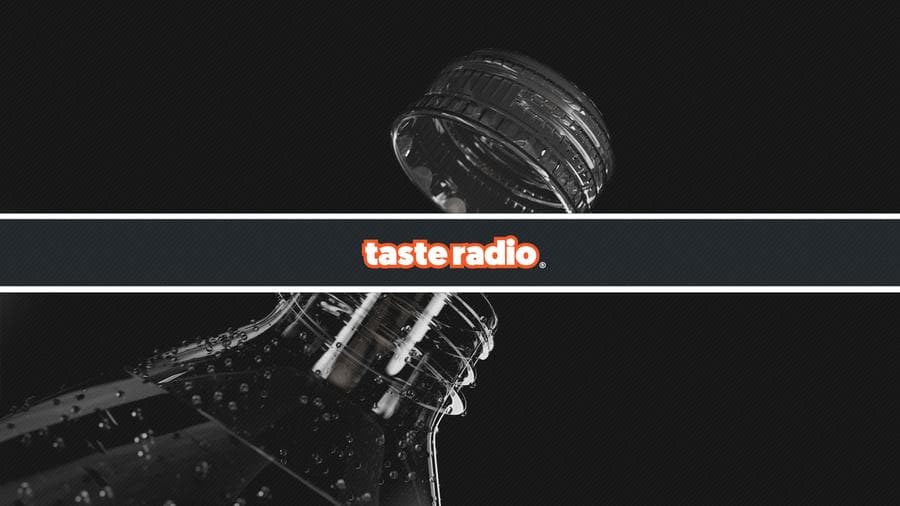
What sets Origin’s solution apart is its performance on the line and shelf. These PET caps not only meet the technical demands of bottling but also present a premium, crystal-clear look that’s difficult to replicate with PP or HDPE. With applications across beverages, solid foods, and more, the caps are especially valuable in high-barrier and eco-conscious markets. Origin collaborates directly with both brands and co-packers to ensure seamless integration and functionality.
Want to learn more or request a sample? Visit originmaterials.com and click the contact button.
Transcript
Note: Transcripts are automatically generated and may contain inaccuracies and spelling errors.
Speaker 1 [00:04] Hey folks, it's Ray with Taste Radio. Right now, I am honored to be sitting down with John Bissell, who is the co-founder and CEO of Origin Materials. John, great to see you.
John Bissel [00:14] Pleasure to be here.
Speaker 1 [00:16] Yeah, Origin Materials, you guys do some amazing things for beverage companies. Tell us all about your company.
John Bissel [00:21] Yeah, sure. So, uh, so I'm John Bissell, I'm one of the co-founders and the CEO of the company. And, um, what we do is we make, uh, PET caps. Um, now, what's interesting about this is people have attempted to make PET caps for quite some time. Uh, and the problem has always been that, um, The way that you make an HDPE or a polypropylene cap has to be different than the way you make a PET cap. And so we've developed the process, we've re-engineered the design for uh beverage caps, and, uh, that's enabled us to make a, a PET cap that performs really well. Um, in fact, in a lot of ways, it performs better than an HDPE or a polypropylene cap. And we're really excited about it. We see this as a solution that can be deployed across the entire industry. Um, it's, uh, a solution which doesn't require a highly specialized PET or material going into it. Um, that's a differentiator, you know, you can, you can use, uh, recycled PET in it, you can use off the shelf PET. In fact, that's how sort of how we got into this was we thought. Uh, as material scientists and chairs, we thought we would need, um, a specialty material to, to make these PET caps work, and we thought that would be the value add we brought. Uh, by the time we were finished, we found that you could use off the shelf PET. We didn't need a specialty material, and, um, we think that that's, you know, obviously that's hugely advantageous from a cost perspective, but it's also advantageous from a scalability perspective. And
Speaker 1 [01:44] I think from a marketing perspective as well, if you can tell your customers as a beverage brand. That you can not only recycle the bottle, but the cap. I think that goes a long way in a, in a time when people are much more socially and environmentally conscious.
John Bissel [01:58] Yeah, we often say that it allows you to remove the asterisk on the label, right? Cause it usually says this, this beverage package or container is uh 100% recyclable asterisk except the, it's except the cap.
Speaker 1 [02:10] Now, do you work directly with brands or do you work with your co-packing partners? How does, how does that work?
John Bissel [02:15] Uh, we do a little bit of both. It tends to be more directly with the brands of various sorts, um, but there are also cap manufacturers that we have been working with. Um, so that seems to be the, the combination. We end up spending a lot of time with the co-packers. So obviously, when we're putting our caps on, um, on, uh, bottles, we have our people there frequently because, you know, this is the first time PET caps have been deployed to the industry. And so there's a lot to learn, um, you know, while our folks are at the co-packers, um, or the bottling sites, whatever else, uh, we really are seeing how our caps perform in the capping machines. We're seeing how they perform on the bottles after they've been capped, all these kinds of things. So, it's, uh, it's important for us. To be there, um, and so as a consequence, as, as I said, lots of work with co-packers, but most of our transactional work is with either, um, existing, uh, cap manufacturers or with, um, with the brands.
Speaker 1 [03:08] Functionally, do the caps work with all, all different types of bottles, um, you know, is it sort of a 1 to 1, uh, comparison between what has traditionally been used in your caps?
John Bissel [03:20] Yeah, so we're starting with an 1881 cap. So, you know, right there, it narrows down to the 1881 format specifically, not because the technology writ large is limited to 1881, but that's just the starting point for us. And then inside 1881, there are lots of different features that, that um different customers need, right? So, there are different seal qualities and types that a customer might need. Um, there's different levels of barrier that can be valuable for a customer. And then, of course, if you're in certain geographies like Europe, you need to have a tether. Um, and we consider that sort of an additional feature on top of this 1881 PET format. Um, and so, generally speaking, yes, we think that this can be used across essentially everywhere that, um, caps are currently used in the beverage world, uh, and, and even non-beverage, right, uh, solid foods, etc. where you have a, a lid, a screw up, screw top lid. Um, but we're starting with very specific applications because we, we, we just haven't had the time to develop the full feature set across every single geography and everything else. Um, so we're, generally speaking, we think it's, this is a, a, a solution which, um, again, can cross the whole industry, pretty much every product type. We think it brings particular benefits, um, in places where you need high barrier, uh, and then also, uh, in places where, um, Recycling and aesthetics matter. So one of the interesting things that really surprised us about this cap is that it looks good. Um, you know, we didn't think it would look bad when we started out developing it, but we didn't think it, that wasn't. The top of our list for differentiation, we were thinking about really just straight performance. But the reality is, once we, once we saw it on beverage bottles, and the, the consumer studies and um brand feedback has been uh aligned with this, what, what people have found is, and what we found is, it just looks good. It looks really different, and it's a, it looks. It looks different in a way that is, is difficult or impossible to replicate with uh polypropylene HBE, right? It's this clear, really transparent cap that you can see the product through and the larger the format, uh, of the cap, the more differentiating that is. So we're really excited about, uh, about all those different components.
Speaker 1 [05:33] I definitely want our audience to learn more about this. I think they probably do already. What's the best way to get in touch with you and your team?
John Bissel [05:39] Best way to get in touch with us is, uh, through our website, you know, hit the contact button. You can see, uh, biz Dev at originmaterials.com.
Speaker 1 [05:46] Outstanding, John, this has been such a great conversation. I've really enjoyed it. Thank you so much for taking the time and let's stay in touch.
John Bissel [05:53] Thank you.