Search across the BevNET CPG Media network including BevNET, Nosh, Brewbound, Taste Radio, Nombase and CPG Jobs.
NOSH Pitch Slam 11 Semifinal Round
Transcript
Note: Transcripts are automatically generated and may contain inaccuracies and spelling errors.
Ray Latif [00:18] Good morning. Welcome to NOSH Live Winter 2021. It's so great to be back in person. I'm Ray Latif, the editor and producer of Bevnet's Taste Radio podcast and the host of NOSH Pitch Slam 11. Presented by 301 Inc. the venture capital arm of General Mills, the NOSH Pitch Slam gives early-stage and promising brands the opportunity to present their business plans and products to a panel of expert judges in the audience watching on the live stream. The winner of the two-day competition will receive a $10,000 industry awareness package and join a shortlist of brands that have triumphed in the competition, including Beckon Ice Cream, Creation Nation, Elite Sweets, Tribali, and Bronx Hot Sauce. We're kicking off the pitch slam with a semi-final round in which entrepreneurs from 11 brands will have 2 minutes to deliver their best elevator pitch. Our judges will provide approximately 2 to 3 minutes of feedback following each pitch. The judges have already sampled the products, very quickly, I might add. Uh, after all the brands have presented, the judges will pick 5 brands to move on to the final round, which takes place tomorrow. The 6 finalists will be chosen by audience vote. At the end of today's semi-final round, we're going to show a short list, or excuse me, a list of all of the participants and a number next to the brand name. Live stream viewers will have an opportunity to vote by texting the number corresponding with your favorite brand to a phone number that we'll provide. We're gonna show that phone number at the end of the semi-final round. You'll have until 10:00 a.m. Pacific time to vote. We'll announce our six finalists at 12:00 p.m. excuse me, 12:00 p.m. Pacific time today. Now let's meet our panel of esteemed judges. Starting all the way to the left is Anna Maria Friede, who is the executive leader for breakfast, baking, meals and essentials at Whole Foods Market. Since joining Whole Foods in 2004, Ana Maria has led supply chain process improvement projects and has advanced quality standards for multiple categories at the retailer. She was recently recognized with the Whole Foods Market's 2021 All-Star Award in recognition for excellence and leadership. Before joining Whole Foods, Ana Maria worked for Ahold USA in several merchandizing roles. Next, we have Johnny Tran, who's a senior senior business development manager for 301 Inc. General Mills' venture capital arm. Prior to joining 301, Johnny was a brand manager on a number of General Mills platforms, including Progresso Soup, Pillsbury, cereal, and snacking. Before his time at General Mills, he was a project manager in a construction firm by day and a break dancing instructor by night. True story. True story, yeah. Uh, next up we have Danielle Lavolci, who is the founder and CEO of Nutso, which is a well well-deserved reputation as one of the most innovative nut butter brands. Danielle is also the co-founder of Project Left Behind, a nonprofit whose mission is to help orphaned and disadvantaged children in Peru. Project Left Behind is supported by every sale of Nutso products. Danielle, great to have you. Last but certainly not least is Erin Cabre, who is a staff reporter with NOSH. Erin joined the NOSH team as a staff reporter in November 2020. Prior to her current role, Erin served as the editorial assistant across all three Bevnet media properties. She came to the company after interning at Nylon in Untapped New York while a student at Fordham University, where she graduated with a BA in journalism in 2018. So delighted to have this amazing group with us today. All right. Who's ready to hear our first from our first semi-finalist? Everyone. All right. That person is Avery Henderson, who's the CMO of Marco Sweets and Spices. Come on up to the stage. How are you? Thanks. We can give him a round of applause. There we go. Just mind your timer Hey, I'm Avery Henderson, co-founder and CMO at Marco's Sweets and Spices. At Marco, we create culinary inspired international ice cream that echoes a love for travel and honors the diversity of ingredients from around the world, taking flavor profiles from across the globe and recreating them into ice cream. The inspiration for Marco came from a perfect marriage of what I'm passionate about and what we feel is a hole in the market. I'm an avid foodie and an avid traveler, and although I may be on one end of the spectrum with this, I'm certainly not unique. There's been a widely publicized foodie revolution in America with more people eating foods from around the world and more of an emphasis on cultural and culinary expressions. Moreover, An increasingly diverse consumer set is demanding and expecting foods that represent them and what they take home from the grocery store. Yet when we look at the ice cream aisle, the big major brands are still offering the same 6 to 10 flavor profiles they always have. They recreate or they mix and match these flavor profiles any which way and call that innovation, but at the end of the day, if the category is real, it's still all the same. With Marco, we can have an ice cream aisle that better reflects the diversity of the consumers that shop it. We launched Marco a little over a year ago, uh, at a time when it was nearly impossible to launch a brand into retail due to the restraints on sampling and diminished consumer exploration due to COVID. With this, we initially launched direct to consumer, focusing on building a design forward brand that could succeed in that arena that we could then take into retail. With this, we were able to unlock a national consumer base and therefore garner, uh, endorsement from major publications like The New York Times, Boston Globe, Forbes, amongst many others. Uh, we were able to parlay this excitement into our retail launch working with notable retailers like, uh, Central Market, Harmon's, Citarella, and many more. Uh, what we think though is the most exciting component of Marco is its ability to grow the overall category. There's been sub segmentation across many different categories of the grocery stores. Consumer preferences have deepened. We feel that, uh, Marco can grow the new international flavor segment of the grocery store and the ice cream aisle, which is the area we aim to champion in the years to come. Thank you. Excellent. You just hand your microphone to her. Nike. All right, Marcos Sweets and spices, um, let's talk about the packaging. We see it here on the slide right here. Uh, Danielle, what's your initial thoughts on how Marco is positioned in terms of its label hierarchy? Well, I love ice cream, as you know, so I love it. I think, um, it's a totally different segment of the international. Everyone wants to travel, especially after the pandemic, so I think it's a great idea. Erin, um, these flavors made my mouth water. I mean, they look really impressive. Uh, do they taste as good as they look? They definitely do. Um, I'm also a lover of ice cream and not afraid to eat it at 7 in the morning, um, and, and vanilla. I tried the vanilla chai, which was a delicious flavor and a nice spin on the classic flavor, um, so I thought they, the ones we're able to try were pretty good. Fantastic. Anne Maria, Avery talked about, uh, Marco is presenting an opportunity to expand, uh, more bring more people to the ice cream category. Do you see it that way? Yeah, I'm actually very impressed with the, uh, flavor profiles that he's bringing to the table. We definitely need more variety in the ice cream doors, so the question that I would have liked to ask him was price point. I don't know if the, uh, those flavors because they're enhanced and they're more culinary driven will have a different fit in the pricing profile for the ice cream category. Yeah, price point, uh, definitely plays into scalability, right? So, um, Johnny, you know, in terms of a sort of specialty, uh, approach to the ice cream category like Marco has, do you see this as a scalable proposition? Yeah, I, I, I think it's a big question. I've worked with our Haagen-Dazs brand a little bit and we've done a lot of explorations and we find that they're great at driving people to the aisle, but not everybody always buys it as like a plus one, like I'm always gonna go back to get the vanilla plus a a little thing of this thing on the side. Um, and so I, I, I think that is a, a really big question is like how big could it be, but it is definitely an awesome story for retailers to bring in, uh, something, uh, that brings news and excitement to the aisle. Do you have a favorite flavor? I, I only got to try the chai, but I'm not complaining about eating ice cream for breakfast. Fabulous. I think it's a new, it's a new thing for me. Fantastic. Well done. Well done, Avery. All right. Up next, we have Dean Ernst, who's the co-owner of Essential Candy. Dean, come on up. Great to see you. Just mind your timer. All right. Thank you, NOSH, and thank you judges for this opportunity of being here today. My name is Dean Ernst and I am the co-owner of Essential Candy based in Wellington, Florida, where we are redefining confectionery. Essential Candy was founded in 2018 by my wife and business partner Tracy Ernst. She, she had the desire here to help a dear friend who is battling cancer for the fourth time. She was inspired to create a unique way of infusing essential oils into hard candies to help combat the nauseousness associated with chemotherapy treatments. That was the day essential candy was born. Essential Candy makes functional hard candies that are infused with essential oils and as well plant botanicals. All of our delicious, all-natural hard candies are organic, non-GMO, gluten-free, vegan, soy-free, dairy-free, have no artificial colors, flavors, preservatives, or sweeteners, and are low in sugar and also low in calories. Essential candy's target market are ages 21 through 65. Currently we offer our products online and through e-retailers and several mom and pop shops. We accomplish this through two specific product lines. Our first product line is our signature blends. We have 9 different SKUs with an MSRP between $10.12 dollars. Our most popular blend is our digestive blend, which is lemon, ginger, and peppermint. Our second SKU, or sorry, second product line is our CBD plus signature blends. We have 4 different SKUs with our mandarin being our most popular. A MSRP is between $20.35 dollars. With our mission of giving back and helping those with cancer, we created a unique campaign called Get One Give One, where for every bag purchased, we donate one to cancer support groups and individuals going through chemotherapy. This is why we are candy with a purpose. Thank you very much for this opportunity. Magazine, if you can just hand your micro. Uh, ice cream and candy to start the day. Fantastic. Um, Ana Maria, uh, Dean talked about this, uh, all the attributes of essential candy. It seems like it checks so many boxes. Um, it's candy for adults. Um, do you see this as playing into a new sort of space for the candy category, or does it fit into a different one? I think that this product definitely I mean love the the story very inspirational touches a lot of homes and like that there is a product behind uh for that purpose the uh the question that I I would have liked to ask or or they get more insight is how to find the perfect. Blend of those essential oils to really test that efficacy and also adding the uh CBD effect into or ingredient into the mix um just for those uh customers who really need to understand more more about essential oils in general or in CBD. Erin, um, you know, I think when people expect candy they expect something that's gonna taste great, um, you know, what do you think about the taste of essential candy? I think that I didn't get to try all of them, of course, but I, the ones that I tried taste pretty good, um. Uh, for, for the flavors that they have, you know, sometimes when you have a functional product, sometimes come second, but I, I like that they prioritized, uh, with this product. Yeah, and in terms of function, Johnny, I think, you know. Um, typically you're looking for, uh, something indulgent, something sweet, something fun with candy. Um, do you think customers are gonna be looking for function as well in this kind of space? Yeah, I, I think this is a, a killer concept here. Uh, this is such a cool, uh, cool benefit that it brings and like, uh, he was talking about the pricing. The price slopes of essential oils are like way wonky. Like people will pay so much for this stuff and it'd be so good for retailers to bring price appreciation, uh, to the aisles, um, I. So I think this is, this is a great concept. It's, it's a great, um, articulation of the idea too. They taste great. I actually brought, um, some of the, uh, the digestive ones after pounding like 10 of these samples right before coming in here. So, uh, proof is in the pudding there and, um, I think the one thing that you might wanna think about is, is the packaging design. Uh, I think packaging is like the articulation of a brand's soul. I think you could, there's so much you could do here. Uh, there's so much behind this, this idea and concept. I, I think you could bring it to life a little bit. Packaging is the articulation, articulation of the brand soul. I'm gonna steal that, Johnny, I can. Uh, Danielle, as an entrepreneur, I mean, what are some of the things that you're seeing in Essential candy that you think, uh, will give the brand, uh, a leg up, and what's the, what are some of the things that they might need to improve upon, uh, as they scale? Yeah, I mean to just kind of piggyback with what Johnny said, I love the concept like amazing, um, I can see moms giving it to their children that are over the age of 5, just helping them boost their immune system. We're in a pandemic it would. Just be scalability and I know they're online, which I think is a great place to start, but probably starting off small in your region and uh getting into maybe even like a Whole Foods region you can definitely do it one store at a time and more of the wellness section, but I love the concept. Well, luckily we have someone from Whole Foods here. Maybe you can talk later on. All right. Up next on the Pitch Slam 11 is, uh, excuse me, Ann Klassman, who's the founder and CEO of Undressed Snacks. Ann, how are you? Come on up. Mm. Your microphone is here, and please mind your timer.
Speaker 2 [14:23] Good morning. Today I'm going to show you something that's never been possible before. On stage with me right now are 12 toasted almonds, a bed of organic kale and spinach. I've got some strawberries, blueberries, and chia, dressed in a bright white balsamic vinaigrette with some basil and a touch of salt and pepper. These are the ingredients of a savory summer salad that I can now enjoy anytime and anywhere, because for the first time ever, I can put a salad in my pocket. Hi, I'm Anne Klasman, founder and CEO of Undressed Snacks. We're on a mission to change the snack bar space from sweet to savory with our patented shelf stable, savory green bar with over a serving of delicious vegetables. And require no fork, no bowl, and no fridge. And thank goodness for that. It would be a lot tougher putting those things in my pocket. Thank you.
Ray Latif [15:28] Nicely done. You can just hand your microphone. Thank you. Liberated greens, uh, greens in your pocket, sell in your pocket. Interesting concept. Uh, Aaron, what are your initial thoughts on, on, uh, undressed greens? I really, I like the concept, you know, um, the salad in your pocket has a nice ring to it, and I appreciate, I appreciate that, and I think people are always looking for stuff on the go and portability, and I think, you know, most bars play in like a sweet flavor profile, so I think to introduce something that's savory but also has a, a serving of vegetables, um, in each bar is a is a really smart idea. Ana Maria, the bar category very competitive, um. You know, what are your initial thoughts in terms of the disruption that this brand is bringing to that space? I think it's a very interesting concept that is really nothing like it. I had, um, the opportunity to try the, uh, savory salad bar and the, uh, berry balsamic. I, I think it would be good to add more flavors to the mix to really bring, uh, the brand exposure and also, um, in terms of packaging just call out more what the concept is. I think that that was a little bit lacking and. And for customers who are really looking into a grab and go solution, it would be good just to call out that it's truly a uh a salad in a bar and on the go so that would be the suggestion, but yeah, curious about price point and and the uh strategy to go to market with this brand. Danielle, I saw you nodding your head talking when Anna Marie was talking about packaging. Is this something that you would pick up and put in your pocket? Yeah, so I mean, love the concept again. It was really brilliant, um, but I wish that it said on the packaging like salad bar. Um, I read her autobiography and, and the background of the story online, and I thought it was so brilliant that she. You said salad bar and I just wish, you know, even in the tagline it said a salad bar or salad bar. Um, the other thing I really love is everything is so sweet and especially in the bar section and the fact that it's savory and there's no dates. I feel like everything has dates in it anymore. So I think she nailed the savory for sure. And Johnny, you know, a lot of times brand owners will say they're creating, excuse me, a solution to a problem. Um, do you see this as that solution to a problem that is that that exists in the bar category and that there are less, not as many bars like this? I, I think there's definitely a space here. This one is a little bit of a weird, uh, like technical challenge. I love the idea. I love the concept. Uh, we launched like a Lar bar fruit and greens bar a while back and we, we, we came into this weird little dynamic where when you take the water out of a lot of vegetables it like concentrates the flavor a lot so like a kale it gets like really bitter and like you a lot of folks weren't able to palate that because you lose all the brightness that comes with putting vegetables in there. So I love the concept. It is a truly difficult technical challenge to kinda like try to tackle, uh, but if you are able to, and I think this one probably still needs a little bit of work, uh, yeah, I think there's a big opportunity there. Fantastic, great feedback. All right, on to our next semi-finalist, that's Amy Keller who's the co-founder and CEO of Pure Plus. Amy. How, how are you? So please mind your timer. So I come from sugar. What does that mean? Well, my family is Fangler Candy Company, and we make 2 billion Dum Dum lollipops every year along with a lot of other nostalgic candy, but I'm also a 7 time Ironman and an environmentalist who set out to combine my personal passion for sustainability and health, uh, with my family business. So I'm creating a climate candy that's good for you and good for the planet. So imagine a world where fruits and vegetables taste like candy. Faves, the first climate candy, has set out to, uh, set out to solve the climate crisis by preventing food waste, by upcycling perfectly good fruits and vegetables to create a candy that's good for you and good for the planet. Faves makes both healthy choices and climate impact more accessible. Faves works with local farms across the US to procure imperfect produce that otherwise would go to waste. 90% of people don't get their 5 to 8 servings of fruits and vegetables every day, and with each pack of Faves, we provide a serving of fruits and vegetables. You get 1 carrot, a half a beet, a slice of squash, a slice of pumpkin, and a slice of sweet potato. We have a transparent supply chain. We're also building a carbon tracker so consumers can measure how many fruits and vegetables they're saving every time they eat Faves. The global market for candy is $80 billion. The market is ripe for alternatives to sugar and filler because food is fuel. We're also an alternative to all the zeroed out label candy. Faves is currently direct to consumer and e-commerce. We're partnered with SnackMagic, and in Q1 we'll be in Thrive Market, Amazon, and Good Egg, and we're also getting, uh, knocks on our door for retail and for Q3 of next year. We build a team of consumer brand leaders, uh, that work with us from Just Water, Beyond Meat, uh, this bar saves lives and Plum Organics, and we bring value as this alternative solution to wasted produce to deliver nutrition to new consumers. Our goal There you go. Hold on. Give me a tweak them, that's it. Nicely done. Um, Danielle, uh, you have a mission component to, or a social mission component, excuse me, a mission-driven component to your brand as well. Um, do you see, you know, faves as, as, you know, their positioning and their mission as aligned in terms of what you see in the package? Um, I don't really see it on the packaging. It's definitely on their, um, website, so I think it's hard. I don't know what the, maybe the back, you know, I think they would should definitely put something on the back if they haven't. I think consumers are, you know, want to know that, you know, there's some sort of, uh, a nonprofit component, but it has to make sense, and she clearly sounds passionate about, um, all the, uh. You know, all, all of her, uh, nonprofit. So yeah, I think it's, uh, you know, it, I tasted it and it tastes like a Starbucks burst. So I thought that was pretty cool. I mean, it really is identical to a Starburst. So, well, that's, that's, I mean, that's a huge thing. It sounds like a pretty innovative concept and I think Amy mentioned that this is fruits and vegetables are the world's first candy made out of fruits and vegetables. Sounds very Willy Wonk-ish. Um, Johnny, I mean, is that a proposition that excites you? I think that's uh it it's a it's an interesting one because like it's uh it has uh the danger of being a little bit of warm tea because it's a candy aisle, right? And you want the things to taste great and the product does taste uh like really great um I think what uh the, the, the benefit, uh, I love the the climate story and all those other pieces to it as well. I think what, uh, this one is really gonna be predicated on that pricing pee, um, especially when you talk about we versus me benefits is what we call them like, uh. When like things for saving the world and everything like that, the price slopes are very, very sensitive, uh, or folks are willing to pay a little bit for those types of things but not necessarily a whole bunch, um, so I just uh I think that would be one thing that we would wanna hear about and learn more about. Erin, um, you know, when I think about faves, I think that this seems like a brand that could play to a lot of different, um, a lot of different people. Um, do you see it that way as well? I mean, do you see this as a brand that could go across, you know, kids to adults? I definitely do. I think that within the upcycling space, you know, it's a smaller but growing kind of subcategory of products, but I think if the brand kind of plays into that larger idea of, you know, climate candy and kind of just the general idea of sustainability and where they're sourcing their products and things, you know, consumers are increasingly more interested in the in sustainable products and the impact of, of the food that they're eating. So I think if they play play into that they can definitely, um, reach a wide swath of consumers. And Anna Maria, uh, Danielle mentioned that these products are one of the products that she tasted tasted like a Starburst. Um, that sounds like a good thing to me. Uh, what do you think about the taste? Um, I had just the opportunity to try one, but yeah, I think the, the taste was good. It's just, um, I think that going back to the conversation before is how you make sure that in the packaging is it calls out what it is so, so you can grab it as you see it that it has an amazing story behind. I also had the opportunity like Danielle to check the website and I didn't see that translating into the packaging so for a category that is so competitive it will be good to just have something that really calls out the message what it has the up cycle concept is amazing and it's great that that addressing that as a sustainable product and and initiative. Fantastic. Great feedback. Let's move on to our next semi-finalist. That's Michelle Rozavi, who is the founder and CEO of Elavi. Come on up. Are you? Please just mind your timer. Just what? Hi, I'm Michelle, one of the founders and CEO of Elavi, a wellness brand on a mission to reinvent modern nutrition and boost longevity, all while tasting delicious. We launched just under 2 years ago with our collagen boosted protein bars and have already formulated a brand new product line about to launch. Lunch in a plant-based superfood spread, so we're more than a bar company. My co-founder and I met while teaching at Equinox. Uh, we taught fitness classes and we also worked very demanding office jobs. Nikki was at PWC. I was at Sephora corporate. So a glimpse into our days, we were awakened at 5 a.m. teaching a HIT fitness class, working. All day teaching another HIT fitness class. I'm exhausted just thinking about it and so at that time we really struggled with feeding our bodies on the go. We had no time and we struggled finding a bar that, you know, in a crowded market still couldn't deliver on taste that we look forward to something that we can trust wouldn't upset our stomach with sugar alcohols and whey dairy protein. And something that offered functional benefits for energy and recovery and so in that process to solve our own problem we ended up discovering a way to integrate collagen efficiently and successfully into shelf stable products and so with our unique advantage as fitness instructors we've been able to very efficiently on board fitness ambassadors and uh bootstrap a lean pandemic proof business with uh a business. Business and a brand that consumers love and trust, and that's evidenced by a repeat purchase rate 40% higher than industry average. We're sold mostly online, D2C and Amazon. We're shelf stable, no refrigeration required, ship very easily, and we're also in specialty retailers, uh, such as Airw and Equinox Cafes here in Los Angeles. Our plan is to continue accelerating our growth, uh, with our new product line extension. Uh, expanded to food service and natural retailers and, uh, continue building our brand with wellness and. Outstanding. You can just please hit the right now. Thank you. Elavi, snackable collagen. Um, Erin, I'm sure you've written, you've written tons of stories about collagen, snacking, uh, these two collide in Elavi. Um, what are your initial thoughts? I think it's definitely an interesting idea and I really like the fact that they're individually portioned because I think portion control is really a big trend right now and being able to grab just one on the go is a really good idea. Um, I think that the only kind of disconnect I'm seeing is perhaps, you know, the packaging kind of looks more like sports nutritiony and sometimes collagen is more in the beauty space so I'm kind of trying to understand like the how those two kind of the ideas come together, um, within the packaging and kind of how it's marketed to consumers, but I think it's a great idea. Um, Danielle, you know, uh, the flavors that Elavi has, uh, will definitely help to introduce the brand to new consumers or consumers looking for this type of product. Um, do they fit into what you were looking for in terms of the brand? Yeah, I thought they did a good job with that. Um, my one question that I would love to know is about the collagen because I see that, um, you know, it's non-GMO, but we, um, I tried to use collagen a few years ago before the pandemic and sourcing collagen can be kind of tricky, so that would be my only. Um, thing that I'd want to learn more about is how they're sourcing that. But yeah, and I, and on to Erin's point, I do think the packaging looks upscale, but I, I do hear what she's saying about maybe, um, being a little too much like, you know, in the nutrition space, but I thought the gold, I liked it, so. Um, Johnny, in terms of the concept, um, you have snackable collagen once again, um, you know, is this something that consumers are looking for? Is this something that investors are looking for? Uh, I think the collagen is just a piece of it. I think it's a way in. What I love what you guys did here, uh, the concept is kind of like a, uh, it's like performance nutrition that has like a little bit of a female bent, right? Like the, the packaging looks more like almost, uh, like a beauty, uh, packaging which I love. I love the spirit of, of your packaging and a lot of the performance nutrition stuff out there has that like male bent like Quest bar and it's like super aggressive and this is more for you and I think collagen is a way that you use to articulate. That right? and I that's awesome, really cool, um, I thought the product was like it was tough for me to get through and I know that a lot of folks in performance nutrition were like, uh, are willing to make sacrifices for those types of things, but I think that's one thing that you know, as you go through it, continue to work on the macros are killer, but how can you get the, the taste, uh, to, to get a little bit more like approachable so you can open up the, the bell shaped curve a little bit, yeah, I I love, I love the positioning. I love a lot of the things you're doing, yeah. Anna Maria, in terms of the nutrition profile, the product attributes, you have 8 g of protein, 120 calories, gluten-free, dairy-free, no fake sugar. Um, do, do these check the boxes that, uh, retailers are looking for? Um, I will say so. I'm personally, I like when companies don't use too much of stevia and monk fruit, so the fact that they're using honey as part of the ingredients to make it more sweeter, um, I, I enjoyed that when I tried the product, so I will say that the fact that they also list that as no sugar added and, and having all the clean ingredients in the packaging is something that customers will gravitate to. Fantastic. Once again, great feedback. And to our next semi-finalist, that's Gina Shi, who's the founder and CEO of Munchrooms. Gina. Please keep an eye on your temperature.
Speaker 3 [30:19] Hi everyone, my name is Gina, and I'm the founder of Munchrooms, a 100% mushroom jerky company based in San Francisco. Our mission is to make healthier snacking more sustainable and achievable with our meat alternative proteins. We upcycle the stems of shiitake mushrooms to recreate a delicious, meaty, pull apart texture that's similar to beef jerky. In fact, some of our customers, when trying mushrooms for the very first time are blown away by the fact that they're in fact eating a product that is 100% vegan and 0% beef. Mushrooms themselves have been used for thousands of years for both their medicinal as well as their general health benefits. One pack of mushrooms will give you 6 g of protein, 50% of your daily vitamin D needs, 60% of your daily fiber needs, and so much more. Since we launched last summer, we have been growing tremendously. We are available in over 40 specialty shops across the nation. We are sold online direct to consumer both on our own website and Amazon.com. We also have B2B online channels through companies like SnackMagic as well as Hive Brands. In addition to our 4 delicious flavors, we have 4 adorable corresponding flavor mascots, each with its own unique style and personality. We hope to use them as a platform in the future to help educate children and adults alike about the wonderful world of mushrooms themselves, as well as about sustainability efforts. In the future we not only want to expand our line of mushroom jerky flavors, but we also want to increase our portfolio to include other mushroom snacks, sauces, beverages, and more. Thank you.
Ray Latif [32:14] Thanks, again, if you can just please hand that. Thank you. Uh, Munchrooms. Uh, Gina mentioned that some people are blown away by the taste, the flavor, the fact that it's only plant-based. Uh, Danielle, what do you think of the taste? It was amazing. I mean, it blew my mind even at 7 in the morning. It was so good. Like you nailed the flavor, so. Bravo. I think everybody would love them. I can see people not even realizing they're eating mushrooms. I wish there was a way to explain it better on the packaging, you know, so people wouldn't hesitate, but like in an airport, I would grab them every time. They're so good. Yeah, let's stay on the packaging, Johnny, um, and your initial thoughts on how mushrooms is, uh, presenting themselves. Yeah, I, again, I thought the product was awesome. It was like such a, like the texture too, uh, amazing. Like it felt just like a jerky. Um, to that point, I, I do think the, the packaging looks kind of like almost a farmer's market-y scale. Uh, I think you have such a killer product here, you could really blow this thing out, uh, to, to make it feel and, and like, uh, you know, get people to think about it differently cause it, it looks so close. I'm not sure if most these people would even notice that. Uh, yeah, it's, it was really good. Erin, we, we're seeing more and more plant-based jerky come to market, um, as we continue to see that. Segment scale and grow. Um, what do you think about the potential for a brand like Munchrooms? I think it has a lot of potential. I mean, everybody said we were blown away by the flavor. It's just Very has a very similar texture to me which I'm sure a lot of people who are interested in jerky are looking for that kind of texture so they really scored big on the texture there um. And I think the only thing, you know, going back to the comments on the packaging, you know, that's saying things like magically satisfying and things like that, I think maybe it's like kind of a show versus tell situation where maybe you wanna tell consumers, you know, why it's satisfying because they don't really know the health attributes of mushrooms compared to a typical meat jerky so I think that's something that they could improve upon but the product is great and they have a lot of potential. And Anna Maria, staying on that, um, you know, Gina talked a bit about the growth strategy, the plan to scale for Munchrooms. Um, did you hear things in there that would sort of wet your palate beyond the flavor itself? I will say that um something that will be beneficial for them will be to add more of those benefits in the packaging and to call the attention to customers there are other uh suppliers that are trying to get into that space so just for them how they're gonna differentiate in terms of pricing in terms of calling out. What is different about what they do, uh, the flavors that they use, um, I would like them to use a natural preservative too um I noticed that there isn't an artificial one so I think that again if they want to be competitive with other brands that are out there it will be good for them to switch that and also have a good pricing strategy to go to market. All right, good stuff. All right, on to our next semi-finalists for Pitch Slam 11, Naj Pitch Slam 11. It's Bob Gruder who is the CEO of Bob's Naturals. Come on up, Bob.
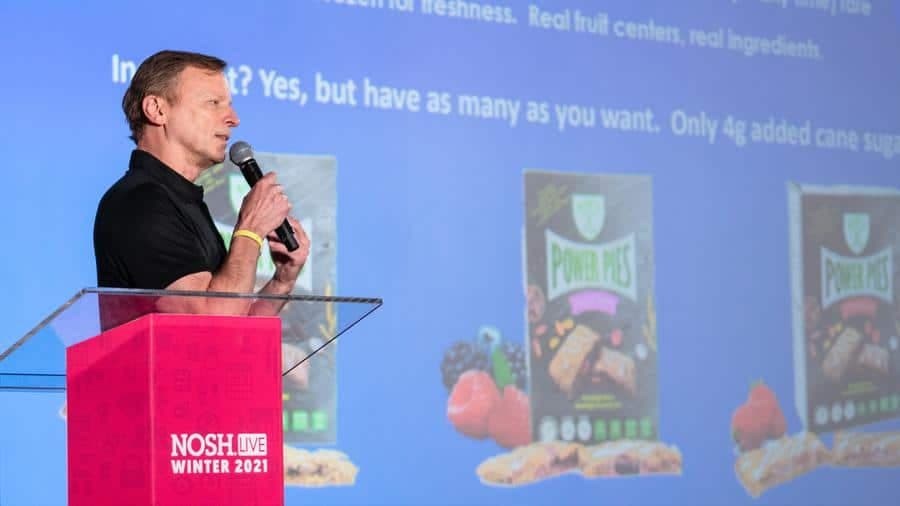
Speaker 4 [35:19] Got you. Yeah, I'm Bob from Bob's Natural, and I bet if you ask your doctor or your personal trainer the best way to maintain your health, they'd say eat well, work out. The eat the working out part is obviously on you, but the eating well, it's really difficult, particularly in the morning. People are on the go. Professions are running out, grabbing a protein bar or they wanna feed their kids, and there's nothing nutritious. In fact, If you go to the frozen aisle at, in your grocery store, in fact, many of you may not even be going there anymore. But you'll see that it's a just a sea of yellow and red boxes, just a blur of empty calories. Nothing really is truly been innovated in the frozen aisle for over a decade. Well, I wanted to try and create something new. In fact, I spent an eternity in the kitchen, or at least it felt like an eternity in the kitchen, and I found, I finally found the right blend of ingredients to create something called power pies. Power pies. Are made with all natural ingredients like almonds and dates, rolled oats, and all you do is you take it out of the box. It's a frozen item to keep it fresh. Take it out of the box, put it in a crisping sleeve, put it in the microwave oven for 65 seconds, and you have your power pie, or you can put it in the toaster oven for a crispier, for a crispier crust. There's also an optional icing packet made with all plant butter, almond milk. Um, all natural ingredients as well. There's 9 g of protein, 10 g of fiber in each pie, very low added sugar to it. And the, the retail price on it is $599 which is a pack of 4. the frozen aisle is growing at 16% a year and it's also, um, a $4.3 billion dollar market which evidences that the market is growing and people want something on the go, but there really are no healthy alternatives and that's why Power Pies were created. So we like to say turn your breakfast meh to breakfast, yeah, thank you.
Ray Latif [37:27] Uh, I'm kind of embarrassed to say that I grew up eating toaster strudels and Pop-Tarts and things like that. Uh, so this looks really good to me, but, uh, Ana Maria, do you understand the concept when you look at the packaging? Yeah I think it's an interesting concept we don't have anything like that in the frozen aisle. I think the packaging will probably need more explanation about what it is and uh being in the uh natural channel I will say that um it would be good for for them to list more what the natural ingredients are and maybe look into a non-GMO certification and maybe um some of that research that they're doing in terms of benefits being more clear on the packaging. Danielle, that it feels like there's a certain amount of indulgence and nutrition that are sort of blended into power pies. Um, when you ate these products, did you kind of feel both? Yeah, I mean, I love the fact that it has so much protein and fiber in it. Um, it did feel indulgent. I mean, I feel like it was, it was an oatmeal kind of pie is what I was getting. And I love the fact that the, um, icing was on the side because again, I feel like everything's so sweet, so I'm glad you took that away. Um, but I agree with Anna Maria. Like I'd like to see it called out more, so I really felt like I wasn't just eating a pie for breakfast. And Aaron, would you eat, if you ate power pies, would you feel like your breakfast went from meh to yeah? Yeah, I mean, like you, I did used to eat toaster strudel and Pop-Tarts for breakfast as a kid, so this isn't too far away from that. Um, I think, I think other people have kind of references as well, but you know, then Power Pie's name, I wasn't really sure going into it, you know, what the use occasion was if it was gonna be a dessert it was gonna be breakfast or somewhere in between, um, so I think that maybe you could work on calling that out a little bit better just so consumers know when they should be eating this. Johnny, the frozen category, uh, challenging space, um, you know, but are customers looking for a product like this, and do you see some scalability in terms of what they've created? Yeah, I, I love the idea of like the, um, I really like the idea of like an upmarket, uh, toaster strudel, um, and I see you had to go frozen because you. Um, like the, the water activity in the fruit, like you can't use as much sugar to soak it up, uh, otherwise it can like leach out a little bit. Uh, so I know that it kind of like melts in together so it becomes like a little bit more of a baked oatmeal. It was delicious. It actually tasted really, really good. Probably one of my favorite samples of the morning. Um, I think it, it is a little bit of that gray area, the warm tea of, uh, it's, it's pretty indulgent and like does that kind of, uh, get in the way of maybe some of the health benefits that it might have and how frequently can you eat something as indulgent, you know, we, we find the same thing with our toaster strudel business where people might crack it open just on the, on the weekends, um, or on a special occasion and it just limits the amount of, uh, yeah, the amount of volume you can get out of it. All right, fantastic. All right, moving on. We'll bring up to the stage now Shelly Marshall, who is the co-founder of True Scoops. Shelly, come on up. Nice to meet you. Hi guys, my name is Shelly Marshall, and I'm the co-founder of True Scoops. We're a Brooklyn we're a woman owned business operating out of Beverly, Massachusetts, and we make shelf stable ice cream and topping mixes that make the process of making ice cream fast and easy for the for our customers. Now during the pandemic my two kids had a craving for ice cream, of course, but we couldn't leave the house. Um, I'm an ice cream maker by trade and I know how long and complex the process is. You have to heat milk, cream, sugar, add temperate eggs, and age the base overnight. Anyone with kids know that they don't have the kind of patience for that. So I realized at this moment that there was an opportunity for a better DIY ice cream experience, and it got me thinking, what if Betty Crocker married her favorite pint of ice cream and they had a baby? Wouldn't that be so easy? True Scoops was created to eliminate all of those steps. All you have to do is add half and half, um, and follow the instructions on the back of the pouch. Each ice cream makes 2 pints of each mix makes 2 pints of ice cream, and each topping mix makes 8 ounces of sauce. Our vanilla, chocolate, and strawberry retail for $9.99 and our hot fudge and salted butterscotch retail for 550 cents, and we think that's on par with, um, the, the, the, the brands in the industry. We created a product that we think is both innovative and clever. No refrigeration is needed to store our mixes. Unlike frozen ice cream, it is light and inexpensive to ship without the need of dry ice. We're peanut gluten-free and kosher certified, but most importantly, and we think this is what sets us apart, is that it, you do not need an ice cream maker. You can just use a simple blender to make our ice cream. We launched this business in July of this year and are currently selling direct to consumer on our website at wholesale through Fan Pod Foods. We're working to get ourselves shelved in more independent, more specialty stores and larger grocery outlets and are in talks with a lot of large corporate gifting companies and food subscription boxes. Um, further into the future, we plan on targeting, um, food service, particularly restaurants. True Scoops has taken the fuss on. Sorry, but well done. If you can you please hand your microphone. I hate that gong. I really do. I gotta get something better than that. Um, True Scoops, uh, it seems like a really innovative concept. Um, Ana Maria, um, you know, when you first saw this, did you see it that way? And, you know, what do you think about the education component that's going to be involved in scaling this brand? Well I think that it's interesting because the concept was born when customers couldn't go out to the stores and shop for for their favorite products or buy ice cream so now that things are changing a little bit in terms of consumer behavior I would like to understand more the strategy of where do they see this product being merchandise in the stores and how they can educate customer. Customers about what the product is all about and maybe um understanding if they're uh diversifying a little bit now that customers can buy ice cream will they be looking also at extending maybe on toppings or anything that you know doesn't put them in a position that is only making ice cream but also how to enhance that experience when customers are eating ice cream at home. Uh, Danielle, I mean, does this idea excite you in terms of sort of making ice cream at home, doing something for your kids? I mean, I think, um, as Ana Maria mentioned, there's an experiential component to this. Yeah, I, I love the idea and I, as I said before, I love ice cream, so I thought you really nailed the, um, texture, which was pretty phenomenal, uh, but I, to add on to it. Anna Maria is saying, I just, I, my concern would be how often I would make it, um, and the scalability if you're just so pigeonholed into the ice cream section, but I love that it's shelf stable, you don't have to worry about all the logistics of frozen, which is a nightmare right now, so that's good. Yeah, I mean, in terms of merchandizing this product, I think Anne Maria and Danielle touched on this, Johnny, I mean, um, in terms of where it fits on the store, our customers, you know, based on the packaging and based on the proposition, going to see it and pick it up off the shelf? Do you see that? Yeah, I, I think this one is, uh, the shelving is a really complicated thing. Like, is it more in the baking aisle where like the DIYS section or more in the ice cream aisle? I think that, uh, The that the the corollary that she built with uh, with, with Betty Crocker, I think is a really interesting one, right? Because for, for Betty Crocker, when you're, when you're baking, you get like this, this payoff that's worth the friction where you, there's like freshly baked cookies, you know, versus ice cream. I'm not sure if the delta is quite as large, uh, for like, you know, the ice cream that you make yourself versus the ice cream that you can buy in the store at payoff. So I think that's the real question here is that friction gonna be worth the squeeze, uh, for folks and, and the, the difference in experience. Uh, in terms of the packaging and the presentation, um, I shouldn't, I shouldn't inject my own opinion here, but, uh, you know, Aaron, what do you think? I like it it's very simple and you know whimsical and I like the colors. I think it goes really well with what the product is. um, I think the only thing that I might call out, and I don't know if this is perhaps on the back of the packaging, but the fact that there's no ice cream maker needed is, you know, something that might stop somebody from buying it if they see it and they say that looks great, but I don't have an ice cream maker at home, um, so I think that's an important call out to show, you know, how, how convenient this is versus other ice cream mixes. All right, great feedback. All right. Up next, we have Nicholaserio, excuse me, Nacao, who is the founder and CEO of Mli. Nicholas, come on up. Did I get any of that right? OK. Hi everyone. Pretty sure we all love cookies. Well, most of us do. It is an $11 billion industry in the US and in the past couple of years, I've found that the classic brands have a bunch of junk and they taste really good, but you likely don't want to eat those cookies on an everyday basis. And the so-called health brands are taking out the bad ingredients, but they haven't really put anything good back in. Um, so that's where we come in. I created Emily to put the good back into cookies while also maintaining a great taste integrity. So I launched Emily in 2021, about six months ago, and I've wanted to start this brand for years. I developed the recipe and shelf life in 2019 and directed the branding process with about $15,000 from my aunt and an angel investor, and after they tried the cookies and they clearly liked them. What's so special about us? We're disrupting the cookie and snack category and driving new growth to the cookie aisle. Our cookies are really meant for active consumers that haven't been able to go back into the cookie aisle because there are no viable alternatives. And there are no cookies for regular consumption. So our cookies have a bunch of benefits. They're made with root vegetables, nuts, and fruits, and they have balanced macronutrients. Think of like uh an RX bar or a Kind bar, but better for you, that tastes like cookies. They have prebiotics and they have immunity boosting ingredients, and in 2022, they'll be 100% plant-based and have a little bit more protein. We're in about 125 retail stores right now, and we're the number one new chocolate chip cookie brand on Amazon. And more importantly, I started this mission, uh, from a, a, a deep struggle with food, and I am here to You please hand your microphone. Thank you. Uh, Nicholas mentioned that uh it's almost like a Kind bar or an RX bar in cookie form. Johnny, what do you think of that? Uh, I thought the, the product was delicious for the macros. Uh, you did a great job of it, it's a super tough balancing act because you try to chase those macros too hard, it gets really dry, chalky, and all that sort of stuff, really dense. Uh, I thought you did a really great job with the product here. Yeah, in terms of the brand proposition, fruits, nuts, vegetables in a cookie, Ana Maria, um, is this something that, uh, more and more consumers are looking for is more fruit, vegetables, nuts, things like that in their sweets? Absolutely, and I think the, uh, the benefits of the added probiotics into the bodies, it was, uh, something unique that we don't see in every bar, um, love the packaging, love how they're calling out the ingredients in the back of the packaging as well. Um, I think in terms of sugar it will be something that I will look more um understanding why they will add sugar to a bar if they're they're already using monk fruit and, and I believe they're using apple juice to sweeten the bar so, so maybe it was, uh, excessive there but I think the texture and everything was, was pretty good and I love the 100% recyclable packaging. Yeah, um, Aaron, um, I love soft cookies, love soft cookies. Uh, do you, and did they sort of fit the bill for, or did Oly fit the bill for you? Yeah, I also love soft cookies. They're the best. Um, so yeah, I, I did. I was pleasantly surprised by the flavor, um, you know, as I said, you know, previously, you know, when you have a functional product, those kind of macros, you might not always deliver on taste, but I think it, it was a pleasant surprise of how good it tasted. And Danielle, I mean, I think, you know, in some ways not so and are positioned in the same way in that they're offering something better than what's currently available, um. Do you like what you saw in terms of the presentation, the packaging, the whole proposition? Yeah, I mean, for being such a young brand, I have to say great job on the packaging. Like you really nailed it and I love the name. I think it's really memorable and easy to remember. I tried the dark chocolate cookie that was kind of like a brownie, soft, and it was really good. So great job on the balancing act of getting all those micros and macros in there. But yeah, great job. Fantastic. All right. On to our next semi-finalist for this edition of the Nash Pitch Slam. That's Richard Paulwells, who is the co-founder of Rich Nuts. Come on up, Rich. Please just go. Got it.
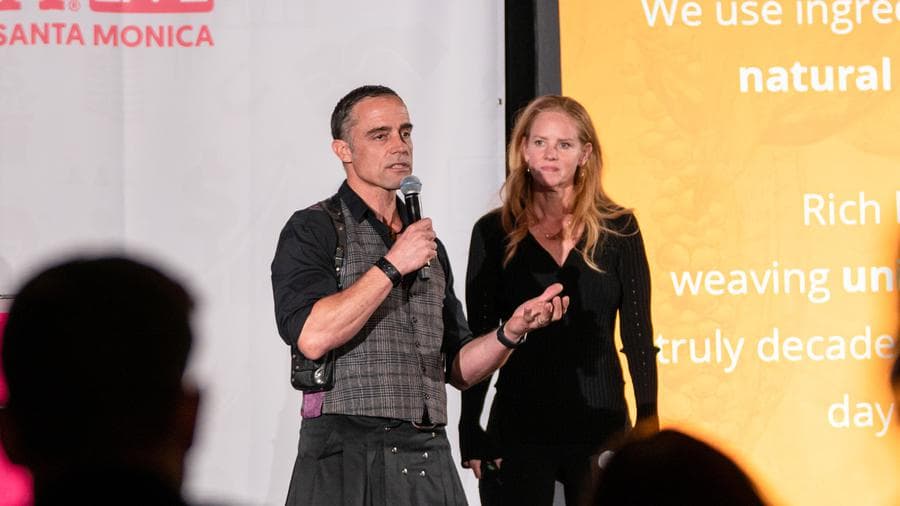
Speaker 5 [50:59] Good morning everyone. My name is Rich and I'm the founder of Rich Nuts, a gourmet sprouted nut brand, and yes, I am wearing a kilt. Now, we sit uniquely at the intersection of gourmet flavor and high impact nutrition. So I worked for 20 years as a firefighter and paramedic, and during the last 12 years of my career, I worked in Malibu and I quickly discovered that there was no healthy food on a brush fire. We'd be out there for 10 or 12 hours and the only options were prison sack lunches, MREs, or fast food. None of that worked for me, so I started eating a lot of raw organic cashews and organic trail mix, and instead of getting the energy I needed to fight those brush fires, I got digestive issues. So I did some research and I found out that by sprouting, I could eliminate the anti-nutrients that were causing my digestive woes. At that point I was like, wow this is great. I got rid of my digestive problems, but now I had a soggy nut that I couldn't really eat, uh, or keep in my bag for 3 months. So what I did was I broke out the old dehydrator from the garage and I started dehydrating them that brought back the crunch we all love and preserved them naturally. I had one last challenge to overcome and that was the flavor. Once I created these now crunchy, healthy nuts. That tastes kind of bland. I was like, what am I going to do now? So I went into my backyard. I grabbed some sage and rosemary, and I started experimenting. I added some liquid aminos and next thing you know I had this delicious flavor, savory sage, and boom, that thing was a hit. I started sharing it with all my friends, fellow firefighters, and family, and I quickly realized that this was not going to be sustainable because I was spending more than $700 a month on organic cashews and giving them away. So at that point, I told all my friends and family, hey, you guys are gonna have to start paying me for this, and that's basically how Rich Nuts was born. Thank you for your time.
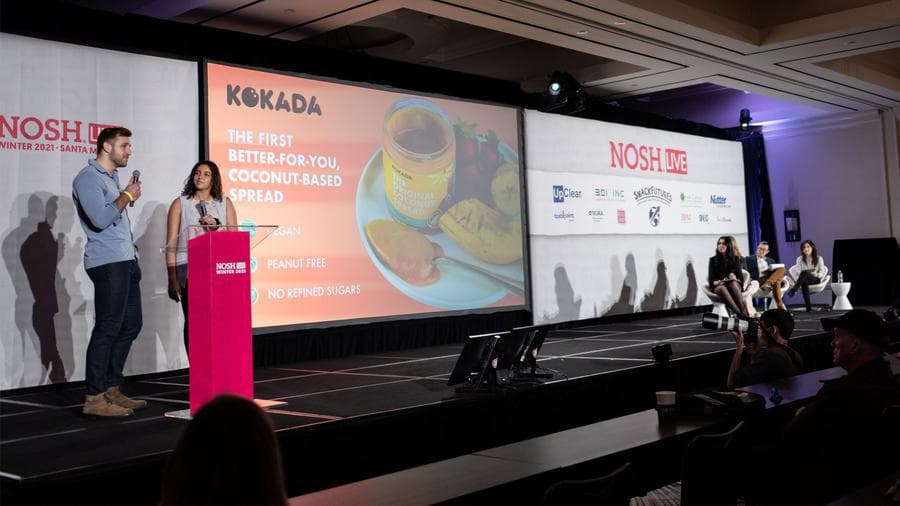
Ray Latif [52:57] Well done. Please please say that. Thank you. Danielle, you know a thing or two about nuts, right? Um, things, yeah, what do you think about rich nuts in terms of the flavor, uh, of what you tasted? Yeah, they dialed it right in. I mean, the flavor is phenomenal, um, and so, and I'm, I really love the fact that the differentiation of the sprouted, and that's really hard to do, especially on a cost basis. My one suggestion is just that I would like rather than making a secondary on your packaging, which the packaging is great, I would really call it out because it is like when I'm running through the airports like seeing sprouted and something healthy, I would just grab it. I don't care if it's $25 you know what I mean? But um, great job. Yeah, I mean, you know, nuts in general, uh, could be looked at as a commodity kind of item, um, but in terms of elevating it to a premium level, Johnny, what do you think of the approach for rich nuts? Yeah, I, I thought the, the sprouted benefit was really interesting too. Uh, the, the, the one thing was that the, um, it was almost like, uh, like you're saying, there, there's almost one too many things there where the flavors on top of the sprouted, uh, it got a little bit unclear to me, like what is the, what was the key benefit. Because a lot of times when you do um like uh something with a functional benefit, you go in with a core, like a solid core, and then you use flavors as more like birate plays so that you can keep people in the ecosystem and keep them engaged, but uh, you have to solidify that core first, and I think that sprouted piece of it and your execution of it to keep it crunchy was was enough and you should, uh, you should scream that loud and proud. Ana Maria, Rich's backstory in terms of why he created this product, um. Seems pretty compelling, um, as a buyer, were you interested in hearing about why this brand is on the market, why he created this? Well, I will say, so this is not a new concept. There are older brands that have already explored that space in the past, but I think this product is unique in the way the, uh, seasonal had the right blends with the right knot and, and just like Danielle said, I think that there is a, a secondary packaging needed here for that grab and go. Proposition for the registers or for you know like at the airports like she mentioned before that would be something unique and I think that even adding a seasonal uh program or item or group of items that can translate into that seasonal flavors um will be something that will be good for this brand to explore. Erin, you get the last word. Rich nuts, uh, do you like what you see? What do you think in terms of, uh, your opinion on the brand? I really liked them. The taste is great, as everybody has said, um, and the flavors are great. I think, um, the only thing I would echo what the other judges have said is, you know, bringing out that, that sprouted concept on the packaging, making that clear. I'm not sure if the everyday consumer even knows really what it means to be a sprouted nut, and I know on the back of the packaging kind of lists all those benefits, um, digestive health and things like that. So are easier to digest. So I think that you know if you kind of call that out and what what benefits do sprouted nuts have over the typical nut, then that could help grab some more consumers. All right, great feedback. All right. Our final guests or our final semi-finalists for this edition of Nosh Pitch Slam 11 are Brianna Atkinson, uh, and Jared Goldstein, who are the co-founders of Kolkata, come on up. Thank you. This might be surprising. I love nut butter. I was the kid housing peanut butter, almond butter, cashew butter, you name it, but as I got older, I realized there weren't too many options outside of the traditional butters that we all know and love. I kept looking for a sweet butter that would satisfy my nasty sweet tooth, but without the refined sugars, so Jared and I went into our kitchen and we started experimenting. Inspired by my Jamaican culture, we created cocata, the original coconut-based spread. Our two flagship flavors are our classic coconut flavor up on the screen here, and our brownie flavor tastes like a spreadable macaroon, and we realized that after sharing with friends and family, this spreads different than other things in the nut butter category. We are peanut free, cashew almond free, no refined sugars added, no preservatives, but you can enjoy it just like the nut or butters that we all know and love.
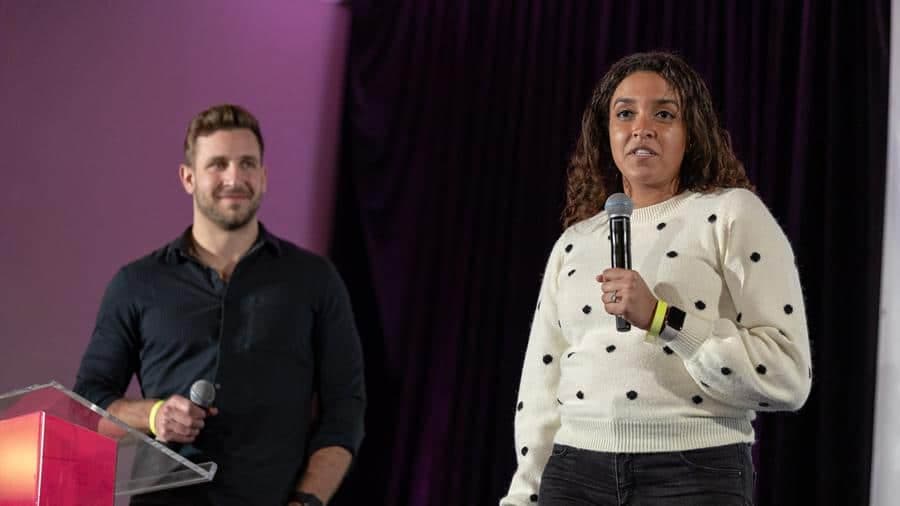
Speaker 6 [57:17] And that's been a huge reason why our customers fell in love with us from day one and day one for us has only actually been just over a year ago. Um, since then, we've focused on expanding past our D2C e-commerce business, and we launched in Amazon as well as in retail. Now looking forward to 2022, we plan on expanding our retailer partnerships and entering new geographies as well. Additionally, we're gonna double down. Our B2B partnerships with ice cream shops, smoothie shops, bakeries, others of the like to drive additional brand awareness and to also get our product into more hands of eventual consumers. We are bringing the first ever naturally sweet coconut based spread to the market, and we know that everybody is going to love it. Um, and I think that that's really, uh, what we're, uh, what we're here to offer. Thank you.
Ray Latif [58:08] Well done. Well done. Thank you. Um, I'm not familiar with too many coconut spreads. Uh, Erin, have you seen any types of products like this in the market? What do you think of the potential for cocata? Um, yeah, there's a lot of potential. I mean, there are a lot of spreads on the market right now. Um, I'm not sure of one that's particularly like this. I think it's pretty unique and the taste is great and I like the, the story of it coming, um, from your Jamaican roots. I think that's really great and the taste is great. Um, the packaging is beautiful, so I think, you know, there's a lot of opportunity there. Mhm. Uh, texture, um, Danielle, you know, what do you think about Kokata in terms of the spreadability, the sort of day part usage of this type of product? Yeah, I was really, I was very excited to try this one, of course, and, um. You know, I love the fact it was kind of like a honey as far as the consistency, but so much less sweet, which I loved. Again, I'm talking about sweet all the time, um, and so I think it's a great, uh, the one thing I was thinking, I mean, I get why you would want to be in the nut butter spread section because you're, you know, highlighting the coconut, but even in like. Like the honey jam section. The jam section is huge. And even if you could get both placements, that would be a great opportunity. Um, and I love that you're using some coconut, something that's kind of that sweetness, you know, so it's, and maybe if there's a way to tell why you're using it on the packaging because it was really unique. Yeah, Johnny, let's talk about that. Why, um, are, are consumers looking for this type of product? I mean, and, um, the call out of the original coconut spread, is that something that's going to attract consumers, do you think? I, I, I, I agree. I think it is kind of like a little bit closer to a honey than like a traditional nut butter, just the, the flavor profile, a little bit sweeter or jam. Um, and I, I think I'm not personally a coconut person and it's pretty coconut forward. It's like the, like the entire thing. So I think that there is going to be maybe a limit to how big it could be, but there's definitely a market here to be had. Ana Maria, would you agree? I mean, um, it, it seems like they do have a, a, a pretty innovative concept, but, um, you know, how do you feel about it? I think this is a unique product. It's not a product that you look for, but you discover in the aisles. I like the fact that they share recipes online because it's multi-purpose product. I thought that the taste was right on. uh, it reminded me of a South American dessert that is also called cocada, and I, I don't know if it was a. Purpose or not the name, but uh it was it it is definitely a good name for it. Love the fact that you're giving back to communities in the process and you call it out on the labels. You also call out the uh the benefits and and the ingredients, so great job on, on all of the uh on checking all the boxes. Outstanding and great job by all of our semifinalists. This is a tough competition. I think everyone did incredibly well. Well done. Uh, I want to bring it back to the judges real quick. I just wanna ask, uh, you know, from what you saw today, uh, 6 brands are gonna move on to the finals tomorrow. Um, as they prepare to move on, uh, what are some of the things that you'd want to see more of? What do you think some of the things that they should be highlighting in that presentation if they make it to the finals tomorrow? Uh, Danielle, let's start with you. I would definitely add the cost. Some people did, but it is good to know because that's gonna be the number one thing that people look at when they look on the shelf besides your amazing packaging is the price. So Johnny, yeah, I think the, uh, um, just like the problems to be solved and being really tight around like the, the, the discreet market need or the, uh, the like the tan, the taps you're you're trying to, uh, tackle, I think would be super helpful. Aaron. Yeah, I think that price point is definitely, as was mentioned, um, a big thing, and I think as well just trying to get across, you know, the main differentiator, the main mission of the brand and not making sure that's not lost in, in the smaller details of it. Outstanding. And Anne Maria, I will say a strategy to go to market along with the pricing and the merchandizing, especially for those brands that might be competing with other products that are already out there. Fantastic. Well, uh, I'm excited to hear from the judges. They're going to pick 5 brands to move on. The audience is gonna pick 1 brand to move on. I'm so thankful that we had this incredible panel. Thank you once again to our judges. OK. As I mentioned earlier, we're going to show a board here with uh the brand names corresponding to a number, folks at home, and I think folks in our audience as well, please text the code to uh the code corresponding to your favorite brand to the number up there, 970-592-4430. You'll have until 10:00 a.m. Pacific time to vote. It's very important that you do one of those brands with the winning brand, we'll move on to the finals. Uh, until then, we're gonna go to break here, uh, at the Lowes Santa Monica Beach Hotel, but for folks watching at home, we're gonna go to our live stream studio. Stay tuned. We have some amazing guests on the show and we'll be back here on the main stage at 1:0:00 a.m. to kick off the main stage portion of Nosh Live, uh, winter 2021. Thank you so much. We'll see you all soon.