Search across the BevNET CPG Media network including BevNET, Nosh, Brewbound, Taste Radio, Nombase and CPG Jobs.
Building the Brand S1E3: Building an In-Be”Tween” Brand
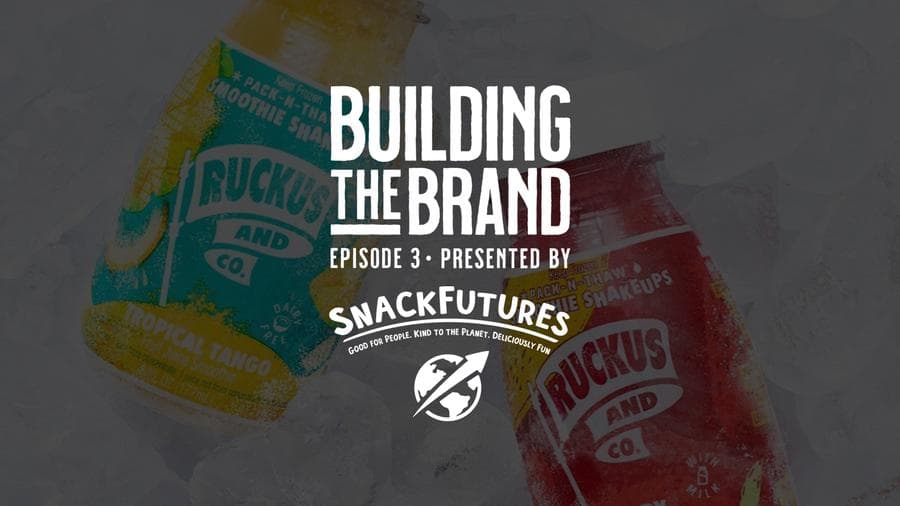
Building a brand for kids is not as simple as it might sound. In Season 1 Episode 3 we discuss appealing to the tween palette, the complexities of messaging to multiple audiences, package design, the importance of language that kids trust, addressing the reality that your audience grows out of your product and and honing in on which focus group insights are the truth. Featured experts include Shannon Neumann, Associate Director for SnackFutures and Ruckus and Co Brand Lead, and Barbara Schandl, Insights Lead of SnackFutures Innovation.
Each episode of Building the Brand will break down the processes and challenges related to product development, brand building, audience discovery, messaging, retail and direct to consumer and provide actionable takeaways. Following the video discussions, experts and NOSH subscribers will get together on December 1st for three roundtable discussions on investment, ecommerce and the complexities of building a kids’ brand. Registration is included in your NOSH subscription.
Watch the full Building the Brand series and then join the experts on Tuesday, December 1st for virtual roundtables.
Transcript
Note: Transcripts are automatically generated and may contain inaccuracies and spelling errors.
Speaker 1 [00:07] How do you create a snacking world that is good for people, kind to the planet, and deliciously fun? Empower and enable kids to snack with confidence. Let us tell you the story of Ruckus and Co. Today's tweens have the passion and power to be heard, but it seemed nobody was quite tuned in to their snacking struggles or their desires for something that was fun, delicious, good for themselves and the planet, and of course, parent approved. That's when our light bulbs went off on how to build a brand for the next generation of snackers. We left nothing to chance and took nothing for granted by letting tweens lead the way. Their voice and vision drove the process, weighing in on every ingredient and testing each packaging concept. Their understanding of food, desire for discovery, sense of self, and authenticity led to the creation of a brand we could have never imagined. Ruckus and Co. was no longer just a snack brand, it was a community in the making. Our first product was the frozen smoothie shake-up, and we couldn't wait to launch it. But let's be honest, tween talk is complex. Not only does it have to strike just the right tone, it also needs all the right emojis. We enlisted the experts at Super Awesome to help us calibrate the conversation in a safe and respectful way. Tween influencers raised a ruckus on TikTok and Instagram. To generate buzz about these little bottles of goodness, we quickly realized the power of encouraging creativity, celebrating individuality and empowering tweens to plant their flag for their beliefs in building a snack brand they can get behind. We can't wait to see what our community of ruckus raisers inspires us to do next. At Snack Futures, we push the boundaries of what's possible. Visit us
Speaker 2 [02:06] at www.snackfutures.com to learn more.
Mike Schneider [02:14] Welcome to Snack Futures Presents Building the Brand where we explore the lessons learned building innovative, better for you foods. I'm Mike Schneider, the CMO of Nosh and co-host of the Taste Radio podcast, and I'm with Shannon Newman and Barbara Schondel. Shannon is a senior director for Snack Futures Innovation at Mondelez International, and Barbara is Insights lead of Snack Futures Innovation at Monalez International as well. Of course, everyone's from Mondelez International here today. Welcome to the show. Could you please introduce yourselves, starting with Barbara.
Barbara Chandel [02:43] Hello, everybody. Um, I'm Barbara Chandel. I'm based in Zurich, and I'm the insights leader of the Snake Futures team, and I'm the person who asked the team actually, um, I would say not almost every day, but almost every week, what do we need to learn in order to move on and yeah, I'm supporting the team with, uh, all the insights agenda, the data, the learning, um, the trends, yeah, so, everything.
Speaker 5 [03:10] Well, um, I'm Shannon Newman. I'm an associate director in the Snack Futures Innovation team, uh, part of the founding team when we launched just under 2 years ago. I've been focused on building our first kids' brand, which is Ruck and Co. that we'll talk about today. And before that, I've been with Mondelez and its predecessors, Cadbury, Kraft, Nabis. Go for the better part of almost 20 years. I don't like to admit that, but yes, almost 20 years. Um, so come from a very kind of traditional CPG brand management background working in categories like gum, candy, biscuit, fruit snacks, bars, um, on the local, regional, global level. So it's, um. Being part of the Snack Futures team has been a really exciting adventure to really step out of the norm and what I was kind of raised to do and think things differently, put on a very different hat and try to think like an entrepreneur and, and think about the consumer first.
Mike Schneider [04:11] Well, it sounds like you've had a very delicious career thus far. Um, and today, as you said, we're gonna talk about the brand Ruckus and Co. which is a new brand for tweens that features, uh, fruit juice, smoothies, and other products. Maybe let's start just by talking about the brand itself and some of the products.
Speaker 5 [04:28] Ruckus and Co. is a Snack Future's first snack brand designed for kids. The idea is to give kids a snack that they're going to love to eat and that parents are going to feel great about giving them. And our first product in that is our frozen to fresh real fruit and veg smoothies. They're called smoothie shake-ups, and that will be, that's the introduction to the brand. We absolutely have the aspiration to create a platform of snacks that meet consumers, both kids and parents' needs throughout the day.
Mike Schneider [04:58] Let's start by talking about the white space. Why do you create a kid's brand in the first place?
Barbara Chandel [05:04] Um, actually, we, kids snacking was a place, uh, where we knew we wanted, uh, to play in Snack Futures because it really, um, presented, uh, a clear consumer need and opportunity. And as everything what we do in Snack Futures, um, we start with the consumer and I think that's important, uh, to understand. So really the need, what is, what is the need, but also how can we, um, help, uh, to support them. Um, and is there any problem we can, uh, solve? And, um, it was very interesting because throughout the insights work we did for Ruckus, we identified, uh, that lunchtime is really, um, presents a sort of uh, a bit of a tension between, you know, the parents and the kids because the parent, uh, it was so interesting and um when I think about it, I have to smile because the parents. They were always actually um saying, you know, I want to really give something for my kid, you know, what is good, and I want to feel good about it, and sometimes also parents want to feel this kind of, you know, gratitude so that uh they feel good about it. But the, the, the problem was that sometimes, you know, there was not a real um overlap between the parents and the kid because the kid uh wanted something more uh playful, a bit more fun, but really delicious. Um, so, um, so I think that was, uh, quite, quite interesting. Um, and also something, you know, I remember from, um, the early stages, where sometimes the parent told us, yeah, sometimes my kid brings, you know, back home, uh, the, the lunch or the packed lunch. So this is obviously something, uh, we saw a, a big opportunity there. And if you think around, you know, um, kids snacking for, uh, lunch. Time it covers, you know, a really big spectrum of categories, so it went, you know, it goes from yogurt to cracker to cheese, meat snacks. So it was interesting because through the insight works or when we started, we identified, you know, that lunchtime really represents a tension between, you know, parents and kids because parents They want to give the kids something they really feel good about, um, so, um, a really a great, a great lunch, while um the kids, you know, they were more looking for something, I would say really delicious but uh fun at the same time. So there was a bit of a tension, and I think this is where we really saw the opportunity. So if you think around kids snacking, um, this entire category represents a lot of subcategories because it reaches from cheese and pretzel, cookie and cracker, meat snacks, but also fresh foods. So it's a lot of processed, processed things, but also a lot of fresh what parents prepare from scratch. And um that gave us a, a big opportunity. So when we started, you know, to develop the concepts and ideas, not only to narrow down to one category, but really to represent, you know, a variety of ideas. And um by starting to to do that, it was very um important. To consider the absence of the negative, make it really, um, real ingredients, but also simple, because if you look now how we came out of the product, it only delivers seven simple ingredients. And then it had to be fun and delicious for kids, so kids have to love it.
Mike Schneider [08:42] So, as you're having a conversation with parents and kids, are you having the conversation together, or are you having separate conversations, or a combination of the two? Because I can imagine that the things that parents say when kids aren't around, have to be a lot different than the things they say when they're together. And even when I know that kids, when we're not around, the way they talk is a lot different. So, how do you, how do you have that conversation in the first place?
Barbara Chandel [09:07] The best part is always when you go out of the room, when you talk with kids or you do inside work with kids, the best is when the moderator leaves the room. This is when you gather the best insights because it's exactly what you said, you know, they're starting to talk the reality as I like to call it. Um, but what we did is, um, I think that was really great, and it was in the, uh, um, actually in the early stage, you know, it was still the idea stage where we let, um, so there were the kids, um, and the kids, you know, they brought their friends, uh, or, or a sibling, here, and it was cool because they could really, um, be themselves, right? Um, and that language we could also use, um, to develop our product ideas. And then we had the parents, um, and at the end, it was super interesting because we let the parents um to watch the kids via Zoom. And then it was like exactly as you said, you know, it was a big surprise, um, because um what the parents assumed their kids would like, um, and they might like it. I'm not saying that, they will not like it, yeah. But it was, uh, slightly different, yeah. And I'm sure Shannon maybe has, uh, something to, to add here as well because it was quite a, a fun journey, uh, to listen to and we learned a lot here.
Speaker 5 [10:28] Yeah, absolutely. I think we did this very simply, um, we, but the one thing we made sure to invest in was a moderator who had experience with talking to kids and understanding more about their body language than what they actually are saying, because it's, it's harder. You're younger to articulate what it is about something that you like or you don't like. So it's like kind of like trying to squeeze orange juice out of a, out of an olive. It's just not going to work, right? So having that person that really could help us understand and pull out the insights of what they aren't saying as much as what they are saying was, was fantastic. And having the parents in the back room was just, I mean, it, it offered a lot of comedic relief also, because, I mean, they're just sitting there like shocked. Like, they were, we would have them rate what they think their kids' favorite idea was going to be, and overwhelmingly they were wrong. And it's not that parents don't know their kids, it's that they're in an age where they are changing so quickly, and they also Might behave differently at home than they might around their friends or their or their um family, so we tried to make sure that we weren't putting them in groups with strangers. They were kids who were with, as Barbara mentioned, they were with their siblings or their best friends or their classmates, and they would just have smaller conversations about the idea.
Mike Schneider [11:50] One of the challenges that you alluded to is that kids are always changing, and they don't have a lot of experience, and they don't know exactly what they like. Sometimes the parents know, because, you know, they know what they like, so they know what to introduce, and when they might like it. But how do you kind of hone in on what the right flavors are, and, and, you know, what the right product is going to be, and, uh, you know, because Barbara was talking about this just sea of possibility for snacking, you know, for, for kids, and, and, you know, so blue sky often is the enemy of creativity. Uh, how do you even figure out, you know, what the platform is gonna look like?
Speaker 5 [12:22] I mean, I think we started first with trying to narrow down not who the broad target range is. So we would love any kid who brought a lunchbox to school and brought a snack to school to want to pack our brand, but that goes from anywhere from 6 to 14, um, generally, and that's a huge range. Kids change from 678, and versus like 1213, 14. Um, but one thing that was clear was we needed to pick a specific design target, not just for how we were going to create the brand and the brand tone of voice, but the product, the product profile itself. And what we really saw was, one, there's a huge opportunity within that tween space to create something that's specific to them. There are a lot of, um, toddler and kid brand options out there. And you also tend to, in those flavors, kind of dilute flavor a bit, but you also promote them in a way that might have like fun characters or designs that are appealing to kids. When you're creating something for a for a teen or tween audience, you need to try to take a step back from that. So all these younger kids are aspiring to be their older brother or sister. Uh, tween is thinking they're going to be like a teen. They're more adults than they really are, um, and they, they want that kind of understanding and respect. And so when we designed the product for them, we brought them in, we, we designed kind of up, we, we aged up in what we were creating, both in the way that we brought it to life. As well as the, the product taste and experience. And so those were the consumers that had to love it. And if they didn't love it, then their younger brothers and sisters weren't going to use it if it's in the house or they weren't going to take it to school either. Um, and if we lost or didn't catch like the older teens, that's fine. They're not bringing lunch to school as often, and if they have it at home and they like it, that's great. So it's really about finding what that sweet spot for design target was and then sharing all these various options, and we did. We had 12 different food types, concepts and food types, and the way that we got to the smoothie shakeups as our lead was just process of elimination, which ones were it really through concept to delivery seemed like such an easy no-brainer. to kids. It was something that they were already consuming, but it wasn't, um, it wasn't convenient and it wasn't easy. It wasn't something they can just like throw in their lunchbox and eat while they were at school, and it tasted great because it's got these great overwhelmingly fruit sweet flavors, um, but we, uh, without hiding it, threw in some vegetables and some other ingredients in there just to make sure that it rounded out the overall kind of health benefits.
Barbara Chandel [14:59] I think you know what Shannon mentioned really shows this powerful, the power of co-creation. And really um also collaborating with the consumer, in this case with parents and kids, you know, along our journey. So I think this is also, you know, um, Mike, to your question around, you know, how do you find that out? I think it's quite powerful if you do, and I think Green Snake Futures, you know, we, we try not to learn, you know, in isolation, so we're not doing this type of study or that type of study, and then in the next phase, we're doing a packaging study. We really try, you know, um, to keep it almost like multi-dimensional, so, through the steps and also acting like a startup because, I mean, we said, OK, why, why would we not try out, uh, talking, you know, to our friends and, and family? Yeah, we can recruit, you know, we can go out and uh we have uh consumers, target consumers in our circle. And I think with that, you know, um, having, uh, one idea group, but then also when we started to uh really work on the product was uh powerful because, you know, the kids were in their natural environment and uh with their friends, and by listening to them, uh, not asking them too many direct questions, but also listening to them what they like, uh, we could really uh create a wonderful uh product brief. Which was still uh gave us uh the possibility of being a bit broader, but also at the same time quite focused. And I think, um, this is actually why uh the whole journey until we went to in real-life learning, but then also later into transactional learning. This is uh such powerful, uh, yeah, that was such a powerful journey for us.
Mike Schneider [16:40] You can't just walk into a room and say, hey, we want to build a, a kid's, a kid's brand, you have to have minimum viable brand before you go into the room, because, again, you know, if you just give someone. Blue sky, it's, you know, hey, here's a million dollars, go create something cool, or, you know, here's a million dollars, and I need a new fruit juice brand, you know, or a fruit smoothie brand. So, like, those kind of constraints set people free. So, what kind of constraints do you put on The parents and the kids as you're having the conversation to begin with.
Speaker 5 [17:10] I mean, I think when we walked into the situation and talked to the parents and the kids, we didn't go in without some ideas already in mind. So our first conversations with them, yes, we start the conversation with, talk to us about your Kids' snacking behaviors, habits, challenges that you go through, like, what are some of the tension points we do the same thing with kids. What are your favorite snacks? We'd throw a whole bunch of snacks on the table and say like which ones are your favorite? I mean, and really ask them what it was that they liked or didn't like about them. Um, but, but what we already had in the back of our mind were themes or territories, like snack spaces that we're going to deliver against our guardrails, which was real simple absence of negatives, no added sugars, and artificial preservatives that that automatically pulls a lot of things out of the mix. Um, and so as we're exploring and talking to, to parents we've got a set of really rough ideas to get them to react to and then they help us build on that idea and to make it into something that's more, more interesting, more compelling, that has the right language, the right ingredients, um, the right claims, um, because we did have. a lot of conversation with parents, not so much kids, but what, what is important to you? Is it just the absence of negatives? Is it the the presence of additives? Is there something else that you're missing that you want in this as well? Um, and so it's very much a back and forth dialogue, and they constructed this like final concept with us all along the way and. It's, uh, at a company like Mondelez that can take us 6 months to a year. We did it in a matter of 2 to 3 months, um, but that's because we got very granular, we got very like one on one conversations, friends and family. Um, we just, um, we just took a very different approach and tried to have a real authentic conversation.
Mike Schneider [19:03] We talked about building a brand for tweens. Probably the most challenging audience you could build for, because they're not tweens for long. So you have to grab them quickly. You want to, like, you mentioned earlier that you want to get them younger, so that they can, you know, they can experience the brand for a longer period of time. When you build the message, when you build the brand, are you trying to build the language that appeals to both the parents and the tweens at the same time, or do you actually have to Sort of build two parallel messaging platforms to talk to them. Yeah,
Speaker 5 [19:34] there's, there's the building of the brand, and then there's the communication that goes with it and how you target that. When we built the brand, it was all in design of the tween. So from the brand name to the packaging to the message and the tone of voice that we use, I mean, not saying no artificial ingredients, but saying no fake stuff, it's just a small example of the tone that we would take and Um, that was, that was important. Regardless of whether we're talking to tween or we're talking to the parent, the tone of voice still had to be inherently ruckus. It had to be a little bit rebellious and more tween language, um, a very, very fine balance between being pandering and being too young and kiddy and trying to use vernacular that, I mean, I'm a 40-something year old, I don't speak tween. Um, so that there's, there's that learning process as well, uh, and using emojis is, is huge. When we want to speak to the parent, we use a similar tone of voice, but we find a different platform. So parents, you're targeting them more on Facebook. Where your tweens are more on Instagram and TikTok, you're giving them the health message or the the ingredient message. It's still inconvenience. This is a convenient snack. It's made with real simple ingredients, no fake stuff. You're still bringing that tone to life, um, but with a message geared to the parent, and that advertising is targeted to the parent, where with tweens, You bring in things that matter to them. We, um, we partnered with some kid influencers, um, some tweens on Instagram who have a following and who have a voice and have a distinct personality, and, um, and they're there as ambassadors to our brand, and they're talking about it in a different way. They're just showing how it fits into their life, not so much the, the fact that it's got all these great ingredients in it, and that's where we are, um, we're finding the right platform in which to talk to your ultimate. Consumer.
Mike Schneider [21:36] And you can't talk to every tween, obviously. Um, what were the lifestyles that you chose to, uh, you know, from the kid influencers that you, that you reached out to, and, and how did, and how did that work for you? Yeah,
Speaker 5 [21:47] when we created the brand, it was, um, we talked about like this little bit of rebellion, but it really was like the brand or the name Ruckus and Co. was meant to be something that was inspirational for kids. It gave them a voice, let them raise a ruckus, really bring out their creativity. Celebrated their individuality. Like we wanted a brand that was going to kind of like empower our kids to be the kids that they are. And so we wanted to find influencers who embodied that idea. So yes, there might be some dancers, singers, actors. We're looking at athletes. We are looking at people who are trying to make change in their community, um, people who have a voice and use that voice in a really interesting, different or powerful way. And that's where that's what tweens are gravitating towards. I mean, obviously some love watching dance TikToks, um, and that's what they'll go down that rabbit hole on TikTok all the time. Others are really interested in what's happening in, um, in media, in TV, in singing competitions. There's, I mean, obviously kids' interests are quite diverse. We just wanted to make sure that we picked, um. Partners who uh would embody and what the brand wanted to stand for.
Mike Schneider [23:05] And it seems like there was a design concept in here that I have in my notes that we, I just can't get away from. We gotta go down the rabbit hole for here for a second, because you're making up words like kid influencers, so why not talk about adulting.
Speaker 5 [23:18] Yeah, Yeah, we had, um, so we brought on our design partner Interact Boulder, fantastic agency who brought forward this
Mike Schneider [23:28] Brad and Blake, really? No, come on, absolutely,
Speaker 5 [23:31] yep, love those guys. They are, they are kids at heart, so they were perfect for this, this project, and yeah, they brought forward this concept of adulting. It's, um, it's, these
Mike Schneider [23:44] are like I can hear Fred saying it right now. I can just hear him sayingulting.
Speaker 5 [23:49] And he should be the one that's explaining this because he just does it so, so well.
Mike Schneider [23:53] We'll have him do it at some point for sure. You
Speaker 5 [23:55] should absolutely. He um. It's, I mean, kids wake up at this certain like age, and you never know when it's going to be. It could be 8, it could be 10, but all of a sudden they feel like they're more grown up than they probably are. They want more responsibility. They are going to Starbucks with their friends by themselves and ordering that frappuccino. Um, they're not taking those, um. Kind of cartoon fruit snacks to school anymore. There's this very different mentality where they are trying to emulate their older brothers and sisters, the teens that they're about to join in high school. And so, uh, it's It's this time in their life where they think that they're an adult, and so, but they're still kids, and we still need to make sure and be conscious that there's still things that they need. There's still kind of things that need to help to shape them into the adults that that they want to be.
Mike Schneider [24:52] Let's talk a little bit about some of the elements that you use in the brand. Um, one of the primary elements is, is the, the flag. How did that, how is, how does that represent Ruckus and Co?
Speaker 5 [25:03] Yeah, that was, um, that was brilliant. When you go through any design process, when you're creating and establishing a brand, um. The flag was something that was won in a series of like 3 or 4 designs that interacted and put forward for us. And the second we saw it, we said yes, yes, because it's one, it's a distinctive asset. When you're creating a brand, you want something that's going to be recognizable to your brand, um, regardless of where it lives, but also because it could Stand for something. People plant their flag for things that they, um, they feel strongly about, and we wanted to be able to use something like this. This flag can stand for Ruckus and Co. It can stand for what we want to stand for. It can be something that as we extend the brand can, um, can live outside of just smoothie shakeups. Um, and so we, uh. We want kids to be able to use that flag and to stand for, to use their voice, and to stand for whatever it is that they stand for, and they plant their flag in that sense. And
Mike Schneider [26:07] also, I think some of the brand pillars are built into the code, like it Ruckus and Co. you might think it's Ruckus and Company, but, you know, uh, it's actually stands for a company or community, or even collaboration. So, are those the brand pillars kind of built into the brand, a little, a little meta action there?
Speaker 5 [26:23] Absolutely, yep, um, we actually had started when we started this project, the working name for the brand was Wild Child, um, and so, I mean, any startup is going to go through this process where the name's not available or you learn something that maybe it's not the right direction to go in. Um, we had just finished up some of our like in real life learning where we were working with consumers and realized, like, you know what, we love the spirit of this name, but does it really speak to tweens as much as maybe it was more relevant to the parents, and what, what more can we do with it? And so We, uh, we worked with Interact to, again, Interact helped us with the, the brand naming process to, we wanted this brand to embody that wild child idea, um, and we brainstormed against that, and that's where Ruckus and Co. came from because we were also doing this in collaboration and partnership with kids. We want this brand to, um, not to just be something that this like group of adults. Out in New Jersey are creating and trying to sell to kids. We want kids to have their say in what it is they're eating. And so that's, that was the co-creation bit of it, and that also comes into the name. So the ANC is, yes, it's in company, it's community, it's collaboration. The idea that the brand was built with a community of kids and will continue to be directed by what they want, what they need, what they believe in.
Mike Schneider [27:47] And let's talk about these elements in the package design, and how you're using this to stand out on the shelf, and we should also talk about where you, you find Ruckus and Co. in store, because a smoothie, it's not always obvious that it's going to be cold, it could be frozen, it could be, you know, it could be shelf stable.
Speaker 5 [28:03] Yeah, and this is, I'd say, one of our largest executional challenges as a brand. So one, we wanted to create something that was, that was natural, that didn't have preservatives, that was fresh, um, and that mimicked an experience of if you were to blend a smoothie at home. And the only way to do that and get the experience we we really wanted was to put it in the frozen section. So by putting it in the freezer, we've, we've kind of put a couple of challenges in place. One is there's nothing there except for current frozen fruits and vegetables that that exists that's like it, and parents aren't naturally going down that section to shop for their kids' snacks or kids' lunchbox snacks, so they're not in the right mindset. They're not always going down that aisle. So that's a big challenge for us to have to. To to overcome, but we found it was important to be able to deliver against the experience and really create something that was, that was different. But when it comes to, and, and we also thought a challenge was going to be, well, are people going to really gonna, are they gonna worry about how to eat it? Like, do you need to give them direction? Does it have to be like, let thaw 3 hours on a countertop or put in the fridge overnight to Let it thaw. That seems like a lot of work, and we, we were picking up on that by the questions that the parents were asking us. But what we realized, what we found is kids don't care. Like they'll grab it out of the freezer and they'll eat it whenever they want. If they want it and they want it frozen, they'll just stick a spoon in there and spoon it up and eat it that way. If they want it a little bit more thawed, then they'll, they'll wait a little bit longer or they'll already have learned to kind of put it into the fridge ahead of time. And that's what matters. It's the the kids love the different ways that they can eat it. They like having fun and eating it in the, we have to get over the concern of the parents, of course, but the fact that it is something that is enjoyable for the kids was most important.
Mike Schneider [30:01] I think also if you take something, you know, frozen to school in your lunchbox, by the time it's lunchtime. It's thought, so there's magic there too. I'm sure kids feel clever. I know, I, I would have back in the day.
Speaker 5 [30:17] It also doubled as an ice pack, so there were less, there was that less like other things that you needed to throw into the lunchbox to keep things cold. It kind of had that like that double purpose. The cool thing, I mean, we talked earlier about like what that tension was and where the white space opportunity was when it comes to lunchbox or lunchtime. When you have lunchtime and you're in school, one of the biggest challenges was kids just don't have long. They have maybe a half hour for lunch. It involves a lot of socializing. They need food that they're going to be able to kind of like eat quickly. And be able to still do what they want to do in that kind of little bit of free time that they have. And I mean, parents were seeing foods come home. A lot of times it was like the food that they just couldn't get to in time or it wasn't their favorite, so it wasn't what they prioritized. But also having something that could double as a beverage helped to extend how they could eat it throughout their day.
Mike Schneider [31:11] So, you've created this product, you, you know where it's gonna, where it's going to live, um, you've got the packaging. And you know who the audience is, and that it's going to be challenging. So, how do you decide how to spend money on the audience? You know, how do you decide this, this marketing mix for two different audiences? This is definitely a challenge that um You know, a lot of companies don't experience, because they're, they're used to, you know, creating segments and messaging for different audiences, but not two different audiences that are interacting.
Speaker 5 [31:43] And coming from a company like Mondelez, I was used to having a decent support budget in place to a war chest, if you will, to do what needed to be done. Um, but that, that's not the case. I mean, yes, we are part of this fantastic company, but we are very independent and very much working like a startup would, and that means a small new brand in test mode, tiny, tiny budget to work against. We're also like, we were in test mode. We're not in a full blown launch yet because we're still trying to tweak and optimize the product, the bundle, the messaging before we, we blow that up. So we had to be really efficient in how we spent the, the dollars that we had, um, and to reach the consumer, and yes, there are 2. So, I mean, our entire budget went towards, um, social and PR and it was really designed to build this social community so that we had people that were advocating for us. We wanted to kind of build on our social followers to, to help to spread the word. So when we wanted to find the right platforms to target for both parents and kids, we wanted to see where they were, where they were spending their time, where they were consuming information. For parents that was Facebook and to some degree Instagram. And for tweens it was Instagram and TikTok. And so we made sure that that that that was where we kind of allocated our time, but there are a lot of rules in place and rightfully so in Who you can target, what age range you can target, the messaging that you put in place and how you do that. And so there was a lot to navigate there and, and how we best do that and do it responsibly. Um, so we, uh, we wanted to invest a lot in influencers. So we brought a, a bench of parents and tween kid influencers in. Um, and kind of just gave them missions. We didn't tell them exactly what to do or what to say. We told them what they couldn't do and what they couldn't say, but then let the rest of it kind of go. And that more organic message that came to life was what really Uh, whether it was a parent or a kid seemed to connect with best. When we weren't the ones directing and creating the message, and the, the, they were doing it on their own, it really was the most powerful.
Mike Schneider [34:04] We hear it time and again that the best thing to do is to find an influencer that you can work with and To really do your research on what kind of content they create, what kind of lifestyle they purvey, and who their audience is, and just give them the product, give them a couple of guidelines, and let them go, because that's just how it works better. If it, if they do things organically, if they work it into their own, you know, into their own mix versus you trying to force it in, cause kids can tell, and people can tell in general. They can tell if it's an ad, and they can, and they can tell if it's authentic.
Speaker 5 [34:34] Yeah, and we do. I mean, regardless of whether it comes off like an ad or not, we still are very transparent about the fact that this is a paid partnership and it is an ad, but when it can come across as just being very kind of natural and authentic to who that person is, absolutely you get better engagement rates, you get better responses. You really do see how their communities come together and then you see that impact on our brand when you see our sales start to increase right after a um something went live or an influencer, they're leveraging one of our influencer discount codes, you know you can attribute it to that specific activity.
Mike Schneider [35:12] Well, let's talk about how everything went out the window. Um, you had a, you know, a great plan for how you're gonna, uh, launch marketing plan, all that kind of stuff, and then, of course, um, the coronavirus hits. So, let's talk a little bit about how you had to pivot when that happened.
Speaker 5 [35:28] Yes, yeah, and they're, and pivot in a lot of different ways. We were in talks with retailers when COVID hit, so it was early this year. We were just trying to get our brand into stores so that we can start to, to learn and get into consumers' hands, and retailer focused. At that point in time was really rightfully on maintaining inventory of, of products that they already had stocked and kind of consumer safety, so making sure that it was safe for consumers to shop in the stores, um, and that they were not then focused on innovation from a small little startup like us. So what we did was We partnered with a distributor that the Snack Futures ecosystem already had in place that had D2C capabilities. They created a D2C site for us. Uh, within a month we were live, as well as getting into 20 LA area brick and mortar stores, kind of smaller independent stores throughout the LA area, and that was our way of getting out there. It was not ideal. It was not perfect, but it gave us the opportunity to. To get into consumers' hands and to learn to make sure that we were delivering against the promise that we had planned on and that we could adapt if we needed to without having to wait for things to get to some sort of new normal and clearly that was the right decision because now we're in um October, almost in November, and we're still, we're, we're still not back to anything of what the the life used to look like, right? So The retail environment was, was one of our big challenges. How do we just get the product out there? But consumers' lives were changing entirely. We created a snack that was meant to be in a lunchbox, and I mean, kids weren't going to school. There was virtual learning in place. The lunchbox was less relevant, but what we learned, what we saw was that there was still this real need for easy access for kids to convenient snacks at home. Um, because kids are snacking more and more throughout the day than they were before, because they're at home and they're learning, and in between a Zoom class, they can run to the fridge or run to the pantry and get something to eat. Um, so our messaging changed. We changed from lunchbox snacks to just focusing more on the kind of convenient, delicious snacks with no fake stuff. Um, we just wanted to make sure that we were still relevant and adapting to what the consumers needed. Um, and hopefully the D2C site helps as well because their shopping habits changed. You saw a huge surge of online ordering, Instacart becoming much more, um, much more relevant in consumers' lives, um. So part of, part of the challenge, of course in this environment is discovery. How do consumers discover new brands when they're not spending a lot of time walking the store? The kids aren't always with them in store like they perhaps used to be because it might not be as safe. So still a lot of hurdles and challenges that we're trying to overcome.
Mike Schneider [38:31] Sometimes with calamity comes opportunity, and, and, and, you know, when life serve you lemons, make lemonade, uh, kind of thing, you know. So, Barbara, you must have been able to learn a lot, uh, by pivoting to direct to consumer. Um, there, you know, there's often a lot more opportunity to see how somebody moves through a shopping cart, or, uh, you know, learn a lot more about your audience, because you know exactly who your consumer is. What kind of opportunities to direct to consumer create?
Barbara Chandel [38:57] Yeah, um, we have also actually, absolutely, and we have also, what we did is we also started to experiment, you know, with external partners to exactly learn in that space because uh creating T2C happened a lot, a lot during the last couple of months uh by many companies, you know, um, also by many of our competitors. I mean, we saw a lot of things coming out. But, uh, we also actually learned that um there is, nobody does it yet, you know, in a, in a really perfect way. And I think the fascinating thing is now, you know, to uh work uh with uh smaller, actually, I call them startup research agencies, uh, to learn about DTC um, we did uh fascinating studies with a small amount of our target consumers and, you know, we could really actually Almost uh learn and change as we go our, our website, which is amazing. So, um, we got so many great um insights, as you say, about our target consumer, but also how really, you know, we assumed certain things, how people would shop, right? How they would navigate the site, yeah. But it was just more, you know, how we created the site, but then, you know, how people at the end shop is quite different. So there's a lot of uh small detail uh we need to be aware of, um. We need to really, uh, uh, put a lot of attention to, uh, to make, uh, this shopper journey as we, as we actually enable, you know, the shopper journey offline to be seamless, right? To make sure people find our product in store, we also have to ensure this on, on TTC as well. And I think this is something still, uh, to learn a lot, uh, and to get better over time.
Mike Schneider [40:37] Times of COVID are producing the next generation of user experience experts as we're finding. I mean, it used to be the kind of thing that in a, CPG brand, you know, D2C wasn't, it wasn't always a thing, and uh because of primarily due to things like shipping costs, especially with a frozen product, um, So, you know, and now everybody's got to, got to be there in, in this climate, and we're finding that, uh, user journeys are more important than ever.
Speaker 5 [41:03] To build on, on Barbara's point, the phenomenal thing about DSD that we've learned is our ability to experiment. So we've created at different times an A and a B site. So with different Pack configurations with different price with different messaging, and we also have done the same with our digital ads where we've directed certain consumers to one site over another, and that just really helped us hone in very quickly on the right messaging, on the right price, on the right configuration, what we learned a lot in a very short period of time to help us refine the message. That still for to your point, Mike, on a frozen product does not necessarily make D2C like a long term viable option at the moment. So shipping costs are considerable. We are also very heavily focused in the LA area, so our supply, our distribution is there. So when You need to send product from LA to New York. Are you making up those shipping costs? And you're trying to make it easier as a new brand for consumers to discover you. And so we're starting with free shipping on all, on all orders. We want to just get the product out there and in people's hands, try to eliminate as many barriers as possible. So I don't think any entrepreneur goes into it thinking they're gonna be making money in that first year. I certainly hope not. I know that I'm not. Um, I'm hoping to get there by year 3. Um, and we really need to think about whether or not D2C is a long term part of the business, and if so, how do you make it, um, a more profitable, viable part of the business, right? And
Mike Schneider [42:39] what can you learn now while you, while you have to be, you know, so invested in D2C and And you get all those experiments that you need to get done, done with the budget that you have, and it, it certainly is a, a challenging game that you have to play right now. Shannon and Barbara, this has been a, a really insight-rich conversation today. Thanks so much for being on, uh, building the brand. Um, what's next for Ruckus and Co?
Speaker 5 [43:04] No, that's great. Thanks, Mike. Thanks for having us. It's really exciting to be able to talk to a broader community about what our journey was and, and what comes next on Ruckus. We're in the, the final stages of what we call our transactional learning, so that learning mode to make sure that we've got the right bundle and the right insights in place to move to the. Next step, which is to incubate, which is to expand distribution, which is to get out there, um, more broadly and hopefully get into more consumers' freezers and, um, and then start to think about what that next product form is, um, neck beyond the smoothie shake-ups.
Mike Schneider [43:39] Thanks for watching. Snack Futures Presents Building the brand and special thanks to Shannon and Barbara for being on the show today, and we'll see you next time.
Speaker 1 [43:47] At Snack Futures, we push the boundaries of what's possible. Visit us at www.snackfutures.com
Speaker 2 [43:55] to learn more.