Search across the BevNET CPG Media network including BevNET, Nosh, Brewbound, Taste Radio, Nombase and CPG Jobs.
Building the Brand S1E1: Beyond a Necessity: How eComm Strategies Can Work Hard to Build a Brand
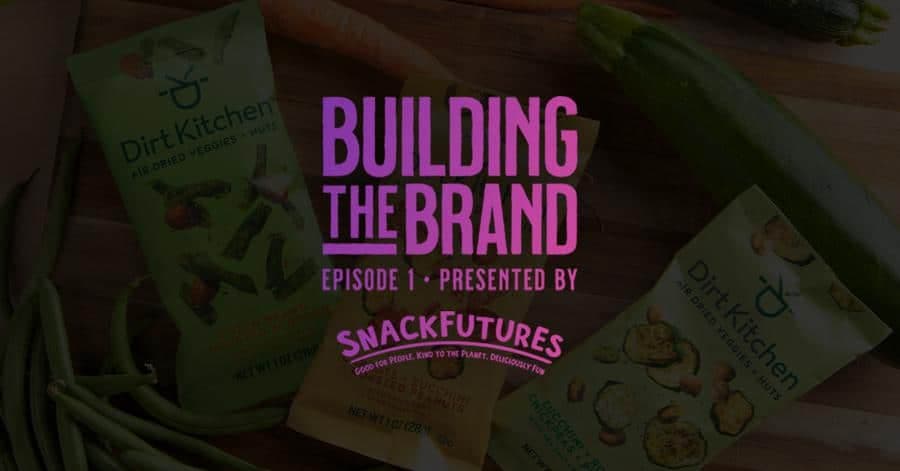
SnackFutures, Mondelez International’s Innovation and Venture Hub, is providing entrepreneurs an in-depth look at their innovation process through its “Building the Brand” series. The series includes 3 video discussions hosted by Taste Radio’s Mike Schneider with SnackFutures experts on what they learned from creating well-being brands in an incubator environment.
In Season 1 Episode 1 we get our hands dirty talking about product formulation, learning in retail vs. D2C, building experiments in ecommerce, and validating what you think are your differentiation points. Featured experts include Katrina Borisjuk, the Marketing Director of SnackFutures Innovation at Mondelez International and the Dirt Kitchen Snacks Lead, and Deb Vicchiarelli, the President of Spark Starter Studio.
Watch the full Building the Brand series and then join the experts on Tuesday, December 1st for virtual roundtables
Transcript
Note: Transcripts are automatically generated and may contain inaccuracies and spelling errors.
Speaker 1 [00:07] How do you create a snacking world that is good for people, kind to the planet, and deliciously fun? Make veggies snackably delicious. Let us tell you the story of Dirt Kitchen snacks. Everyone knows veggies are good for them, and they want more, but time, taste, and convenience get in the way. To us, that was no longer acceptable, and the opportunity was clear. Priority number one was using real recognizable veggies. We galvanized our passionate culinary and R&D teams, found partners that were doing cool things in the veggie space, and landed on the promise of air drying veggies to lock in their goodness and tossing them with unique blends of herbs and spices to create an irresistibly crispy, crunchy snacking experience. Our creation, Dirt Kitchen snacks. It was now time to bring other veggie lovers into the process to help co-create a brand world they'd be proud to be a part of, or what we call in real life learning, which means going into consumers' world to learn in real life, real time, what they think about the product, the promise, the packaging, how they might shop for it, even the name. We launched in a handful of Los Angeles retailers to learn what we needed to keep, improve, or change altogether. To build this brand, we went beyond the store, building an Instagram following, working with influencers, and setting up at farmers' markets to get firsthand real-time feedback. When COVID hit, we quickly pivoted to e-commerce, which allowed us to reach more consumers and get more learning. Now, we've fine tuned a few things and are moving full steam ahead to make this irresistible veggie experience accessible to snackers everywhere. Dig into Dirt Kitchen snacks. At SnackFutures, we push the boundaries of what's possible. Visit us at www.snackfutures.com to learn more.
Mike Schneider [02:19] Welcome to SnackFutures Presents Building the Brand where we explore the lessons learned building innovative, better for you foods. I'm Mike Schneider, the CMO of Nosh and a co-host of the Taste Radio podcast, and today, I'm joined by Katrina Borisjuk and Deb Vicchiarelli. Katrina Borisjuk is the marketing director of SnackFutures Innovation at Mondelez International and also Dirt Kitchen snacks lead, and Deb Vicchiarelli is the president of Spark Starter Studio. Today we're gonna discuss the brand Dirt Kitchen, an innovative new snacking platform using vegetables, but first, let's meet our experts, starting with Katrina.
Speaker 3 [02:54] Hi everyone, I'm so excited to be here today, um. So as Mike mentioned, I'm a marketing director at Mondelez International. I spent 12 years in base business and marketing, kind of traditional CPG world, and then I've had the distinct pleasure over the last 2 years of being a part of SnackFutures, our innovation hub. It's been a wonderful opportunity for me to merge. My personal passions and my professional passions. So I also have titled myself Chief Well-being Warrior on our team. I have a personal passion for helping people live healthier lives. It is my professional passion as well, and I'm thrilled to be essentially at this point an entrepreneur. So launching a startup well-being brand within a big company. And it's been a phenomenal experience so far. It's been great getting to engage with the startup community over the past couple of years, learning what it's like to start something from scratch, learning from you guys, also sharing learnings back, and it has been a wonderful journey, a ton of learning, really hard and also really fun. So I'm excited to talk about Dirt Kitchen Snacks today.
Speaker 4 [04:02] Hi, I'm Deb Vicchiarelli. As you said, I'm the president of Spark Starter Studio. We are growth hackers. Um, we are very fortunate to partner with folks like Katrina at Mondelez to help them crystallize their really big consumer problems and then help them find the perfect intersection of margin and delight for their consumers, um, and we are so grateful to have been a part of Dirt Kitchen Snacks. This is, um, a beautiful case study.
Mike Schneider [04:30] Deb, I think a lot of brands in the audience would like to just know a little bit about what growth hacking is.
Speaker 4 [04:36] Yeah, so growth hacking means uh not advocating for any single product, advocating for the solutions that are right for the consumers and right for your business at the same time. Um, sometimes that means traditional research, sometimes that means cutting edge digital work, uh, it's hacking the problem until you find the solution.
Mike Schneider [04:59] We've said the, we've said the words dirt kitchen snacks several times, but what is, for the, maybe for the people who aren't familiar, what is dirt kitchen snacks?
Speaker 3 [05:08] Dirt Kitchen Snacks is a plant-based snacking brand. We are on a mission to make real vegetables irresistibly snackable. So we've got two product lineups within the brand. We have air dried veggies and nuts, which are Flavor forward inspired by culinary dishes that that feature veggies and nuts, and then we have a line of air dried veggie crisps that are really real veggie pieces and in some cases whole veggies like a grape tomato simply seasoned with extra virgin olive oil, sea salt, and sometimes pepper. All of them attempting to basically make real vegetables an exciting snack and something that you really want to snack on. So they're crispy, they're crunchy, they're delicious, and it's really just a wonderful brand and bundle, and I cannot wait to get it out into stores as we're starting to do now so that all of you can taste it.
Mike Schneider [06:03] Easy cross right into the box. Why veggies? Why now?
Speaker 3 [06:07] Uh, so we, um, so a little bit on Snack Future's background. So we were founded in order to bring innovation into white spaces for the company. So really to go into places that the base brands in the company are not playing, and well-being, obviously a big place for us to grow, um, and in particular savory because our portfolio is skewed more to the sweet side. And we actually set out to develop a savory snack for the afternoon snacking occasion for health-oriented consumers, so You know, we started in the kind of plant-based space. We were exploring a lot of different ways into plant-based snacking. So as we started talking to consumers, we realized there are a couple things about afternoon snacking that are really, really important. It is an occasion where, you know, think about that mid-afternoon break from work. You are hungry. You need some fuel to get. Through the day, but you also have emotional needs for that snack. You want a mood uplift, you've got maybe a craving that you want to satisfy. It's like looking for that crunch, looking for that salt hit, whatever it is. And again, with well-being oriented consumers, they are trying to avoid sugar in general. So that pushed us again into savory as a huge opportunity. And then as we started talking to consumers, we realized that there was a big consumer problem that we could focus on solving as our North Star. And that is that people are, they love veggies. They, they really believe veggies are a, a way to help them achieve their health goals, but Veggies are challenging. They're, they're not the easiest to bring on the go. They require refrigeration. They require some prep, maybe some culinary know-how to make them a little more exciting on a day to day basis, and that they're really, from a logistical logistical standpoint, just not a super practical snack and also not something people are even really thinking about snacking on because again they're not. On their own, going to maybe provide that exciting snack that they're looking for for that afternoon mood uplift. So this became really the thing that we were focused on solving. It's like, OK, you're looking for an afternoon snack, you have needs on that occasion. Veggies right now are having a pretty hard time meeting those needs. So how can we make real veggies snackable? And that's what we started focusing on.
Speaker 4 [08:23] Yeah, and that really was an epiphany. It was a different crystallization of the problem, because a lot of people were starting to play with veggies, and they were trying to make veggies more delicious. What we understood that I think maybe not everybody in the market did at the time is veggies are delicious. It wasn't our job to make veggies delicious. It was our job to make veggies snackable. And that gave us a whole different premise to launch the brand from.
Mike Schneider [08:52] So maybe this is an obvious question, but what are some of the challenges of making veggies snackable?
Speaker 3 [08:59] So first and foremost, real veggies was key for us, and it was about making real veggies snackable. And for this, you know, more health oriented consumer, they, they want to eat real food. So it was about preserving the real flavor and integrity of the vegetable, but then we had to make it. Um, you know, texture was key. So air drying was a way that we discovered could really preserve that veggie flavor and veggie goodness while also bringing forward a wonderful crispy, crunchy texture that's really key for that afternoon snack occasion. And then, you know, applying some culinary know-how again, it's, we believe that veggies are wonderful as they are, but if you think about what do you do with veggies in your kitchen. There is a little bit of culinary know-how that goes into sort of bringing out the best of the veggies, and we wanted to be able to do that in a snack as well.
Mike Schneider [09:51] And what about sourcing vegetables? Are you just getting the, you know, the finest, freshest, best looking vegetables, and uh using them to create a air drying them to create a new snack, or I mean, what, what's the process look like for sourcing and uh uh creating um dirt kitchen snacks?
Speaker 3 [10:08] Yeah, there was actually a lot of partnership with our procurement team as well as our veggie suppliers to, we, oh my God, we looked at dozens and dozens of carrots as an example, like how can we find a carrot that's cut just the right way, the right thickness, and then dried at the right rate and temperature to deliver that crunch that we were looking for. It It really was a challenge. Um, so I would say our, our partners were rock stars and working with us and figuring out how we could find the right veggie pieces that we were looking for to deliver the snack experience that we were looking for.
Mike Schneider [10:44] One of the bigger trends of 2020 has been upcycling at SnackFutures, uh, you talk about rescued. Something rescued veggies in this case. What's that all about?
Speaker 3 [10:56] Yeah, so sustainability is a huge focus of ours in SnackFutures, and the idea of rescuing and food not going to waste is a big part of how we can help make an impact around sustainability and help make an impact, um, in this case on veggies not going to waste. So we partner with With Full Harvest, who is our partner who connects us to the veggies that are in this case either, you know, not perfect, they're not meeting retail standards, they're a little bit off color, maybe a little bit overripe, or are surplus, and we make them superstars in our air dried veggie crisps. So we're excited. To be doing that, um, you know, it's definitely something that's growing. I think we're going to start to see more and more out in the marketplace, and we're just, we're excited about and passionate about veggies and helping those who grow the veggies, in this case, the farmers, find a place for veggies that would otherwise go to waste.
Mike Schneider [11:57] Can you talk to us a little bit about The development of dirt kitchen snacks, and maybe some of the, the vegetables that you tested into, what worked, what didn't, maybe some of the form factors that you tested, and, and, and what did you learn in the process?
Speaker 3 [12:11] Oh. We started with many form factors actually and again kind of learned our way to the fact that consumers are really looking for real veggies. I mean, we had some pretty creative snack forms that we were putting real veggies onto other snacks into other snacks into different snack formats, and it came down to it, what the consumer was really looking for was, I want a way to snack on real veggies so I can get more veggies in my life more easily. Um, and so that it was actually kind of funny because I do think the air dried veggies and nuts was the first lineup that we came in with, and it was probably the simplest thing by far that we evaluated with consumers, and at the end of the day we were like, well, that's what they want to eat, so that's what we're going to do.
Speaker 4 [12:56] Yeah, I mean, they really gave us the positioning. We just kept listening to what they were saying as we put food in front of them, they would pick up the air dried veggies and nuts, and literally verbatim would say, I never knew veggies could be this delicious. This would solve my veggie problem. It just listening to them became really, really obvious what the solution was.
Speaker 3 [13:19] So yeah, just adding on to that, I mean, one of the cool places that we did do some learning was at a farmer's market, and this is something that, you know, a lot of people in the startup community are like, well, duh, of course you're going to go to a farmer's market, but this is not something I've ever had the opportunity to do in a big company. So it was actually my dream to bring my brand to a farmer's market because I wanted to talk to people who were trying my product for the first time and learn from that. And so we did. We went to the Marina del Rey Farmers' Market right down the street from where we were at Nosh Live last year. And spent a few weeks sampling dirt kitchen snacks and talking to people and listening to them, and that was really it. They were like, oh my, these, these are so delicious, and I'm so they're surprisingly delicious. I can't believe veggie snacks would taste I've never tasted veggies like this before. I would bring these high. I would love to bring these on an airplane. And so we started understanding more about the brand and what it would mean to people and how it could fit into their life. And that really was some of the deeper learnings we got that helped to inform the brand and the brand that we built and why we built it the way that we did.
Mike Schneider [14:22] Dirt kitchen snacks, dirt award. Earth, vegetables grow in the dirt, obviously. Talk to us a little bit about where the, the origin of that name and, and what it, how you build a platform based on dirt kitchen.
Speaker 3 [14:36] One of our agency partners, Bulletproof, who was a big part of our early innovation team creating this brand, came up with that name, and it was based off of exactly what you're saying. You know, we were pairing together veggies and culinary expertise to make real veggies snackably delicious, and that was one of the names they came up with. I will fully admit to you, I was immediately like, oh gosh, I don't know, it's a little provocative. It's a little scary. But it really is what we're doing, and they also came up with the line, we believe the best things in life come from the dirt, which is on the back of our packaging, and that line, often when someone does have immediately a negative reaction to dirt kitchen, then that line sort of Turns them onto it. They're like, oh, OK, I get it. But it does, it does, you know, it is a little bit provocative, and there are definitely some folks that are like, Oh, I don't want dirt in my kitchen. That said, we have found pretty universally that the consumer we had in mind when we designed this brand gets it and they love it. And as We've started doing our learning out in the market and engaging with influencers and retailers and such. People really do love it. So it's, oh,
Mike Schneider [15:45] hold on, hold on, before you, you just, you, you, we have to unpack this a little bit. I mean, you, you said some of the magic words, the consumer. Who was that initial consumer that you, you were trying to connect with, with, with their kitchen with these snacks?
Speaker 3 [15:59] Yeah, so we call them proactive health seekers. It really is a consumer for whom their own personal well-being is a core value. It's sort of first and foremost in their mind all the time. All the decisions they make about how they live their life, how they spend their free time, what they eat, what they don't eat, sort of go. Through that lens of is this, is this promoting my well-being in the short term as well as the long term? Um, we have some folks on the team that actually fit into that consumer definition, so it's admittedly pretty easy to put ourselves in that consumer's shoes. Um, but it's definitely You know, not everyone fits into that consumer definition. And so there are many folks that I've had to, you know, pitch this brand to or talk about the bundle to who don't, and they are the ones that tend to have a more negative reaction to the name Dirt Kitchen.
Mike Schneider [16:48] And in terms of um you know when you're choosing influencers, you talked to a little bit about influencers, um, what sort of lifestyle, uh, does the influencer have that you're trying to, you know, sort of purvey through the brand?
Speaker 4 [17:00] And that was actually, yeah, you go. That was actually kind of fun because we had a lot of hypotheses about which influencers would be the best for this brand, and we tested broadly. We tried culinary influencers, we tried health influencers, we had Olympic athletes. We had lifestyle and shockingly, it was the lifestyle influencer that data proved had the most interactive and influence to positively bring people to the brand. It's funny when you were talking about Target. Katrina had a beautiful narrative. She knew who narratively the target was. We targeted 128 different digital definitions until we found exactly the right like model market to find them online.
Mike Schneider [17:50] I would love to see that matrix, um, talk to me about, you know, what some of your hypotheses were, and maybe, we always like to know, you know, were we right with our hypotheses, and, and I, I personally always ask, what were some of the surprises, because whenever you build a brand, inevitably, something, you know, there's some kind of use that isn't exactly what you thought it would be, and sometimes it, you know, sometimes it opens up a new opportunity for growth, and sometimes it's, it's the core that, that uses your product in a way that you didn't expect.
Speaker 4 [18:20] Here's the cool thing about hypothesis. If you build enough of them, you're never wrong, right? And I think that was the beauty of this team. Like, we weren't trying to prove something was right. We were trying to find the right solution. And Katrina has this phenomenal intuition, um, and insatiable curiosity. And so she had a long list of hypotheses. Other folks on the team added in theirs, and we were just really disciplined about going through hypothesis after hypothesis until we really found the strongest engagement and the lovers of the business. The lucky thing is, there are lots of them.
Mike Schneider [19:00] So you build this brand Dirt Kitchen Snacks, and, you know, with great brand pillars and a great message around it. As you were explaining to influencers, did you have to kind of feed them the story, or was just, you know, giving them the product uh enough to get them to advocate for you? And how did that, how did that all happen?
Speaker 3 [19:18] I'll start, um, and then maybe double that on. Um, yeah, I mean, I think we absolutely wanted to see the story, um, and I would even just going back to the problem we knew we were solving and the consumer that we were focusing on when we developed the brand, um. We really wanted to find those advocates, right? We wanted to find the people that we had in mind when we designed it and then delight them and delight them to the point where they would then do the talking for us. And one of the beautiful things about the problem that we're solving is that this desire to eat more veggies is not only a problem of the super health oriented consumer. We started to learn that it's actually a much broader problem. We actually did a survey and some of our earlier communication, and we went out and asked online, you know, are you trying to get more veggies in your life? And 91% of the people in our survey said, yes, I'm trying to get more veggies in my life. So we knew that the problem was broader than just this consumer that we were focusing on, and our hope was that if we solved the problem for that consumer, they would then advocate for us. And so again, as we engaged influencers, we tried to find folks who we thought would fit in. Um, and start to just seed with them again. It's, it's, we learned our way to snackably delicious veggies. Um, we, we told a bunch of stories early on, and that was the one that got the most traction, and so that's where we're now focusing the story.
Speaker 4 [20:46] Yeah, I, I, I'll build a little bit that, uh, sometimes it kind of, it's better to be lucky than good, you know, and one of our, our regional markets that we were focused on to learn some, some things you can only learn in market was LA. And so we had done a, a good bit of digital advertising in LA trying to generate some awareness for some of those in-store tests. And it happens that a lot of influencers live in LA. And they were so engaged by just the story, the thought that you could get deliciously snackable veggies that they came to us and they were saying, hey, I'd, I'd like to try a box. And so one of the, the best strategies for us was just the unboxing. Um, our phenomenal PR agency sent lots of boxes to lots of those self-identified and other influencers that they identified in LA and. Uh, we got a lot of just grassroots support for a very authentic story. The other thing that happened wasn't, it wasn't only influencers who kind of came to us, distributors, uh, some, some really nice grocery retailers came to us proactively, uh, cause it was really a novel idea. It's the fact that you could have snackably delicious veggies was authentic, the brand was authentic, the brand was real, and people wanted to be a part.
Mike Schneider [22:08] Let's talk a little bit about some of the critical elements of the learning process to get where you are today, um, specifically addressing things like, uh, like route to market.
Speaker 3 [22:18] Yeah, so I'll start. So we engaged, um, Sparkstarter Studio and Deb and her team, um, because we Again, at the beginning of Snack Futures, wanted to be learning in different ways, wanted to do what we call transactional learning, so really learning by selling real food to real people, and we wanted to see if we could learn in e-commerce first and foremost. And Deb and her team had expertise in doing transactional learning through e-commerce, but also a broad kind of learning toolkit that would help us. So we decided to bring her and her
Mike Schneider [22:50] team. I mean Deb has a matrix of 128 cells at least, so.
Speaker 3 [22:55] Many, many matrices, um, so we decided to bring them in really for the whole learning process, and some of that was more traditional sort of focus group oriented research, and then it was all the way through, um, doing e-commerce transactional learning and our, our, our initial route to market was actually not exactly what we planned. We actually started out on Amazon. I'll let Deb talk a little bit about that.
Speaker 4 [23:18] Yeah, for a, for a multitude of reasons, Amazon was the fastest way for us to be able to actually do transactional learning, which, despite kind of its buzzword status, just really is a pretty simple concept. It's, will consumers trade their money for your solution, right? And that transactional learning can happen. Almost anywhere, anywhere that there's the ability to be that transfer of goods, um, and for us, Amazon was easy and quick to get into, um, and despite it's kind of sometimes lack of data, it's not as the most transparent channel you can have. Um, it was a, a good channel for us to see that our message was great. But we had a real barrier in believability around taste, right? We could bring lots of people to the page, but we couldn't get that click to buy. We had to get rid of the taste barrier, um, and so we quickly iterated, um, it was like the Mondele team has been a dream to work with because you find the problem and they don't go, oh, that's not a problem. They go, yeah, we, we can fix that problem. Um, and so they built really quickly for us, um, a new trial pack, a really low penny price, a small count, but it took away the risk. If all we had to do with our ads, and our ads were doing that was make people say, oh my gosh, that's a great solution. I want to try it. Yeah, and for that price there's no risk. Um, we, we were able pretty quickly through Amazon to prove that that this was viable as long as we could overcome that taste question.
Mike Schneider [24:58] And was any of the messaging around, please give us a review if you like the trial?
Speaker 4 [25:06] You know, and I think everybody in your audience that's ever tried that is gonna empathize here, yes, but that is like one of the hardest things to do, right? You have to get to the tipping point. Um, you gotta get a lot of people to try it so you can get those few brave people to review it, and then everybody jumps in and starts talking about how wonderful it is. But yeah, that's, um, that's the whole chicken and egg thing, right? Who's gonna try it without the review and who's gonna review it without.
Mike Schneider [25:32] So for the brands who don't maybe have as many bologna sandwiches in the refrigerator as Snack Futures, so to speak, the resources, uh, how, you know, how do you step into Amazon with, you know, segments, and, and what are some of the levers that you pull as a growth hacker when you're trying to, you know, when you're trying to overcome that whole taste barrier?
Speaker 4 [25:55] Yeah, so Katrina talked about it, um, you know, they were doing all the right things. They went to farmers' markets, uh, we did the unboxing with the influencers who really were saying this stuff is delicious, like it's shockingly delicious, you've got to try it, um, and our ads, we kept refining. That message and our photography, quite frankly, um, until we found a photography that was convincing, that really did convince people this would taste delicious. Shockingly, it wasn't what you would expect, you know, I come, coming from the old advertising, uh, I guess era, you know, we tried a lot of bite and smile until we figured out it was just the veggies. Um, you know, the, the gorgeous veggies themselves really did a lot.
Mike Schneider [26:39] How focused do you need to be on an audience? How much different creative does it take to keep an audience interested? How often do you need to refresh? Those are some of the things that I think about as a marketer, and, uh, tell us a little bit about some of, some of those learnings there, because I know everyone's like chomping at the bit, oh, they're talking about Amazon, uh, they've got a new product, and, and I do too, and I, I, I might wanna, I, I, I, I might need an insight or two here.
Speaker 4 [27:02] Yeah, so, you do have to keep your audience engaged. Um, you don't want to wear them out for sure, right? We did find a level of, of posting and advertising that was too much. Uh, really, it's about how resonant your story is, right? The more novel, the more remarkable, simply meaning, hey, it's worth talking about your story is. The less frequency you need, um, people will provide that frequency themselves by telling other people about it, and we definitely benefited from that, but finding the story doesn't mean being perfect. Finding the story means trying a lot of stuff that's good enough and seeing what sparks.
Mike Schneider [27:45] So going back to route to market, you, you went into Amazon, you learned some things on Amazon. What, what did you learn and what happened after that?
Speaker 3 [27:54] Yeah, so essentially what we learned in Amazon was we had a viable proposition and we decided the next step would be to go into brick and mortar. So we had sort of designed the pack and the price pack architecture and even the graphics with the intention of starting an e-commerce, but ultimately we wanted to build a brand and scale a brand in an omni-channel way. So the next thing to do would be to prove shelf viability at brick. Mortar. Um, we also, that's actually when we brought in the veggie crisps into the brand. So we started with the veggies and nuts, and then we were in parallel developing the veggie crisps and said, OK, let's, let's see if we can bring this as a brand with two product formats into retail and see if it's viable there. So we did pivot into brick and mortar. We started in Los Angeles in a small set of stores, mostly specialty grocery, um. And we wanted to prove that we could generate the velocities that we needed and and have the retailer, well, first off, have the retailer say yes, I want this, and then generate the velocities that we needed and then have them reordering. So that would be um really good learning and also sort of signs that we were viable. Um, and also we had a bunch of learning we wanted to do around shelf placement and where in the store, and should the brand be together, should it be separated. What's the optimal price point? Um, again, how do we sort of engage influencers out in the real world and can influencers send people into the store to buy food? So we had all these sort of brick and mortar questions that we wanted to answer. And so we started in LA. We got off to a great start, and then literally 32, 2.5 weeks in, the world started to turn upside down with COVID, and we have basically 4 weeks of Good data, and then after that, it was just mayhem. COVID data, COVID, no, I mean, stores were closed. It just, after the 4 weeks, we're like, OK, we're not even gonna really pay much attention to the brick and mortar data after that. But that's actually when we decided to pivot back to e-commerce and go into DSC because we had more learning we wanted to do. We had product because we had made a bunch of product for this brick and mortar learning, um, journey. And we had things that we wanted to learn that we hadn't had a chance to learn yet because the world turned upside down. So then we found ourselves back in DOC and this time on dirt kitchennacks.com, which was phenomenal, and that's where really the fun started and I get to talk about hypotheses, um, because I partnered with Deb to learn a ton, um, in the last like 8 weeks of D2C.
Speaker 4 [30:28] Yeah, she, she came with at least 15 different hypotheses that she wanted hypothesize hypothesis. I'm not sure what the plurals, but 15 of them that she wanted to prove in a really short order. Um, and, and D2C transactional learning is phenomenal because it lets you observe. Single variables with laser focus to get way deep in consumer behavior. So we did AB tests we did regional splits, we mirrored the site. We took out a single variable from a site in that campaign, um, we were able to find some really very kind of. Laser-focused optimizations that really positioned the brand in a, in a way to be ready for incubation that it wouldn't have if we hadn't had that opportunity.
Mike Schneider [31:17] Comparing D2C to Amazon, what kind of data were you able to get from D2C that you couldn't get through Amazon?
Speaker 4 [31:26] Yeah, so, um, D2C lets you watch the consumer from the minute you've engaged them with an ad to When they're ready to repeat, so we were able to watch single consumers and what moved them or target groups and what moved them and what we impact that would cause repeat or wouldn't cause, you know, we were able to see how we could deepen that relationship so that not only could we get a transaction, but that we could build. A partnership, a relationship with the consumer, that would yield real equity long term.
Mike Schneider [32:09] And in terms of acquisition, retention and loyalty, are you still in sort of the acquisition game at this point, trying to figure out who your loyal customers are, or are you, you know, in full loyalty and maybe even win back mode at this point?
Speaker 3 [32:23] Oh, we are absolutely in acquisition mode. So everything that we've done so far, we've done it really small scale. Um, again, it was like 15 stores in LA when we did D2C, you know, we had made a batch of product and that was it. So we scaled our media by Kind of knowing, we only have this much product to sell and we want it to last this many weeks, and there are all these learnings we wanna do. So we really were not in kind of grow mode at all. Now we're starting to enter grow mode. So now we are back in stock on the website, literally as of this week. Um, we're starting to scale into stores in the greater Los Angeles area again and Now we're stepping up, so we've proved, we think, what works at small scale, and now we'll start to put money behind it and have a bigger media buy and have more distribution presence. And so yes, we of course hope to maintain the loyalty of the consumers that we've touched so far and who've bought us so far, but we're absolutely in acquisition mode as we start to incubate this brand.
Mike Schneider [33:21] And the pre-launch learnings and the Amazon learnings, and presumably some of the retail learnings as well, did those, were those what you use as the seed and did, did those transfer to the direct to consumer, consumer?
Speaker 4 [33:35] One of the things that makes this a classic case study is that everything we did built on the last thing, you know, entering the market in Amazon really proved a lot about price tech architecture and how we could overcome trial barriers, being in store, in market, talking with consumers. taught us a lot about messaging and what really built equity and what was critical to say and what just kind of got in the way and then moving into D2C taught us that not every region was the same and so for incubation, regional strategies might be better and give you better return on your ad spend the national strategies. So everything has taken us a little further to give a better solution to consumers and a better result to the company.
Mike Schneider [34:22] How have you tested things like price point and how do you know you're at the right price point?
Speaker 4 [34:27] Katrina, can you say A B testing?
Speaker 3 [34:31] Absolutely my favorite. Yeah, I mean, I would say so. Indeed I came to Deb with, as she said, um, hypotheses. I really had business questions, so taking a step back, you know, what, what's my optimal price point? Um, going back to your question earlier about, you know, rescued veggies, it's how should I be thinking about rescued veggies in my storytelling? Should it be my brand DNA? Should it be what I'm anchoring the entire brand on? Oh my God,
Mike Schneider [34:56] what's the answer? I want to know.
Speaker 3 [34:58] Well, we're going to talk about it with our AP testing. So. So yeah, so I came with big questions and then literally came to Deb and said, OK, here are my questions. How can we now use D2C to answer these questions? And she helped build experiments to validate or invalidate our hypotheses, and they were. And so, yeah, price point was AB testing. We built two different versions of the website and put them at two different price points and sent the consumer, you know, we put advertising out into Instagram and sent people randomly to one or the other, and we measured the data, and then we did it again. Um, on the rescued thing, we built a version of the website where rescued was part of the bundle, and we built a second one where it wasn't part of the bundle. Um, and what we learned is that rescued is, is very interesting to consumers. It drives interest, it drives more people to the website. It does not drive higher willingness to pay right now. So it is a product attribute that we're very excited about and talking about as such, but at this point, not something that we would say, you know, should be what the brand is all about. What's what's most motivating to consumers is snackably delicious veggies, and so that's what the brand is all about.
Mike Schneider [36:12] And, and Deb, people like Katrina and, and me, we have a lot of questions, and we want to run a lot of experiments, but how do you know how many experiments is too many experiments? How do you know, you know, how many you should run at a time and how to get uh a key learning that you can, that you can work with?
Speaker 4 [36:32] Yeah, so the limit really is, I think the human attention span, um, what you can, you know, if you have unlimited resources, you can do unlimited sales, um, but you usually don't have to, right? Usually business owners like Katrina who've done a phenomenal amount of work up front, getting to know the consumer and understand why they're doing what they're doing, have pretty good hunches. So, and I think that's true about most of our startup clients as well. So you take what are your highest probability hunches and you test those things getting against each other. You start with your most critical, you ask yourself, OK, which of these hunches has the biggest potential to make or break my brand? And you test that hunch until you get an answer. Sometimes, like we did with pricing, you, you take your hunch, and you think you've got the right answer. And then Katrina says to you, yeah, but what if I'm not right? What if we went higher than that or lower than that? So you break it, right? And you see if it was right. You see if you can't go somewhere else. And sometimes the answer surprises you, and you do even better than you thought you could. There are never too many hypothesis. It's a matter of prioritizing your hypotheseses so that you answer the most important ones first, um, and that you can have the mind span, the intellectual capacity to really listen to what you're doing and, and understand what the results are saying.
Mike Schneider [38:02] So there aren't too many experiments, it's just about hierarchically setting up the experiment, uh, the experiments that you can learn the most important things first, and then continuously be always learning. Always be testing.
Speaker 4 [38:16] Yeah, I, I would recommend even in the most successful brands are always testing, because Things are always changing. Heck, what have we seen in the last 6 months? Like, consumers are in such a different place now than we ever thought they possibly could be. So run what's working, but run a really low funded sell, couple 100 bucks about something that you think might make the consumer happier or might spark a different target that you haven't talked to before. It doesn't cost you much except brainpower and sometimes you get the best business growth out of it.
Mike Schneider [38:53] So it, it doesn't cost a lot to get, to get learnings, is what you're saying.
Speaker 4 [38:57] Yeah, and, and what Katrina said about our spending levels was absolutely right. Um, in fact, we would counsel sometimes not to spend that much, right? What you need. Is a research sample. What we weren't trying to do was sell as much product as we possibly could. It becomes Katrina's job to explain that to the people in her company. We're not trying to sell as much as we could. We could in fact sell more, but that's not our objective right now. Our objective is to learn what's the best way to sell more and then spend the money when we know we'll get a good return.
Mike Schneider [39:34] And how do you know that a learning is worth spending on, and if, you know, let's say you get a couple of good, uh, have a couple of good experiments, you know, high, uh high return on investment, do you just kind of, you know, start pouring buckets of money on that experiment?
Speaker 3 [39:54] I think You do the experiments to get your offering to where it needs to be, to delight consumers. So, Whether it's, you know, a small handful of experiments, a lot of experiments, you know, sometimes you do an experiment and then it brings up a whole new set of experiments because you learned something you didn't expect to learn and you need to form new hypotheses and go on a different learning journey. I think you do that until you have a proposition that you believe can delight your consumer. Enough to go and to start pouring money onto it. It's not about getting it perfect, and I think that's the thing that we, coming from the big company model, have really embraced as a team. It's, it's progress over perfection. It's what we, it's minimum minimally viable proposition, but what I like to call minimally lovable proposition. Because we're selling food and food is so intimate and it's so important in your life and it really needs to be lovable, so get it to lovable and then pour the money onto it. And
Mike Schneider [40:55] so the product and the packaging and things like that and value propositions, messaging, all that stuff's very malleable at this point because you're, you're in constant testing mode. So it's not just. An experiment that, you know, is a marketing experiment, it could be, there could be, you know, different sorts of messaging or product or, and, and how many variables are you trying to control for at one time in an experiment.
Speaker 3 [41:18] I taking scientific methods to it, you know, it's like you kind of want to isolate variables as the best you can, but it's, it's the real world and it's really hard to do that. So, you know, I think as best you can, you want to isolate variables so that you can make sure you're learning what you think you're learning and taking out the noise as best you can. But again, it's, it's marketing and it's, it's art and science, and I think you need to, you need to do the science, but you also need to love the art and have the intuition. Be willing to make the call and move forward when you feel like it's time to go. And in this case, I think we could have easily done more experiments. We could have easily kept, um, you know, doing this and refining our way to every little thing, but we kind of got to the point where we're like, all right, we feel like we're ready to go. Like this is all working. We think it's working really well. It's holding together. Of course we'll continue to learn as we start scaling, um, but it's really, you know, It's really just time to go.
Speaker 4 [42:15] I'll second what Katrina said about single variable, so that the driver of your learning is what you think it is. Each experiment really needs to be as clean as possible with the single variable, but that doesn't mean that you can only be testing one hypothesis in a time period or with one set of spending. So an experiment, there can be several experiments on one piece of learning. So while we were running messaging, does AB sell AAD versus B ad work? We were also running an experiment about flavors, looking at what flavors were purchased on the back end to optimize the mix. So you can be running more than one experiment at a time, but each experiment should be focused on a single answer.
Mike Schneider [43:04] Yeah, I think this is why. It's so many companies, you know, that have a Katrina or a Mike, they have, uh, you know, you have a Deb who is there to help set up the experiments, cause we don't always ask the questions, uh, with single variables in mind, and I, I have Jackie, she's the one who helped set up those experiments on the Bevna and the Nash side.
Speaker 4 [43:24] But it will tell you it takes a team. Like, experiments didn't only come out of me. Sometimes Katrina said, Well, what if we did it this way? Or sometimes, you know, the data guys in the back room came back and said, you're both crazy, set it up this way, or this this technology you don't even know exists. Let's. Do that, um, and, and the supply guys had great ideas too. The, the beautiful thing about Dirt Kitchen is it was a team that was dedicated to finding a solution, not a team that cared about their function. It was really the best of a collaborative group.
Mike Schneider [43:58] Well, Katrina and Deb, it's been great having you here today. Uh, tell me a little bit about where Dirt Kitchen is heading in the next, I don't know, the next 6 months to 1 year.
Speaker 3 [44:07] Oh, that's a big loaded question. If we could only predict the future. Um, we are starting our rollout in the Greater Los Angeles area literally as we speak, um, building up our stores and our distribution, and, um, that will be our kind of single focused objective over the next year or two is growing distribution, growing awareness, engaging more. Consumers, bringing more people into our tribe of veggie lovers, hopefully having them love our story and tell our story to their friends and family and grow the brand from there. And it's really gonna be our, our razor sharp focus over the next several months, just bringing our snackably delicious veggies to more people in the US.
Mike Schneider [44:48] Thanks for watching Snack Futures Presents Building the brand. I wanted to thank Katrina and Deb for being here, and we'll see you next time.
Speaker 1 [44:58] How do you create a snacking world that is good for people, kind to the planet, and deliciously fun? Make veggies snackably delicious. At Snack Futures, we push the boundaries of what's possible. Visit us at www.snackfutures.com to learn more.