Search across the BevNET CPG Media network including BevNET, Nosh, Brewbound, Taste Radio, Nombase and CPG Jobs.
NOSH Pitch Slam Volume 9: Semi-Finals
Six food brands were selected from a field of 12 for Thursday’s final round of NOSH’s Pitch Slam 9 presented by 301 Inc., the virtual pitch competition.
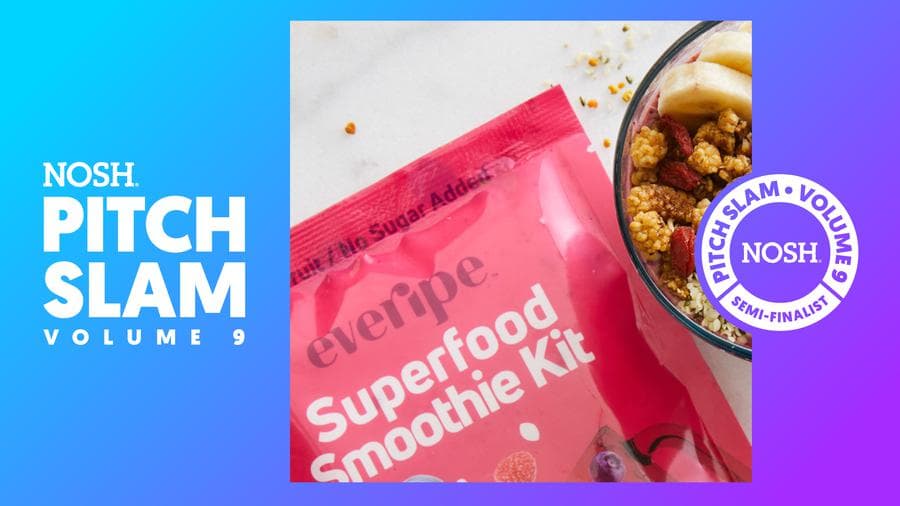
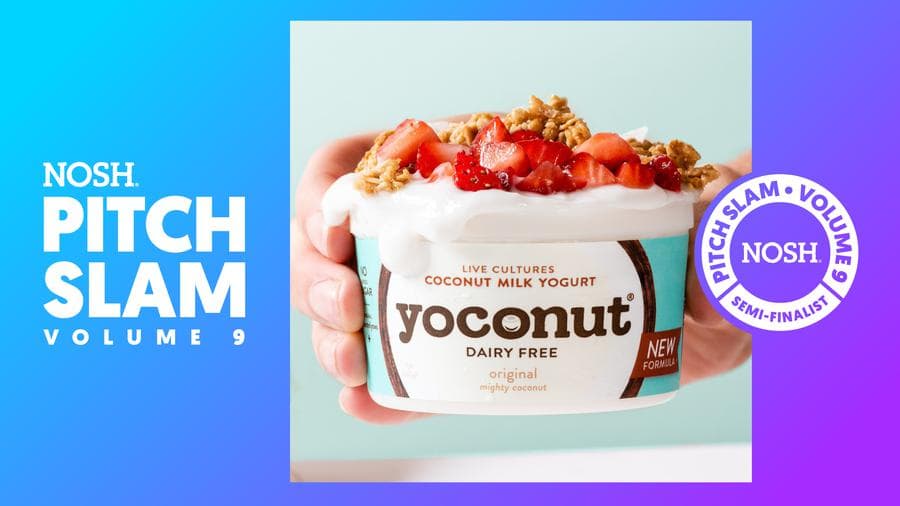
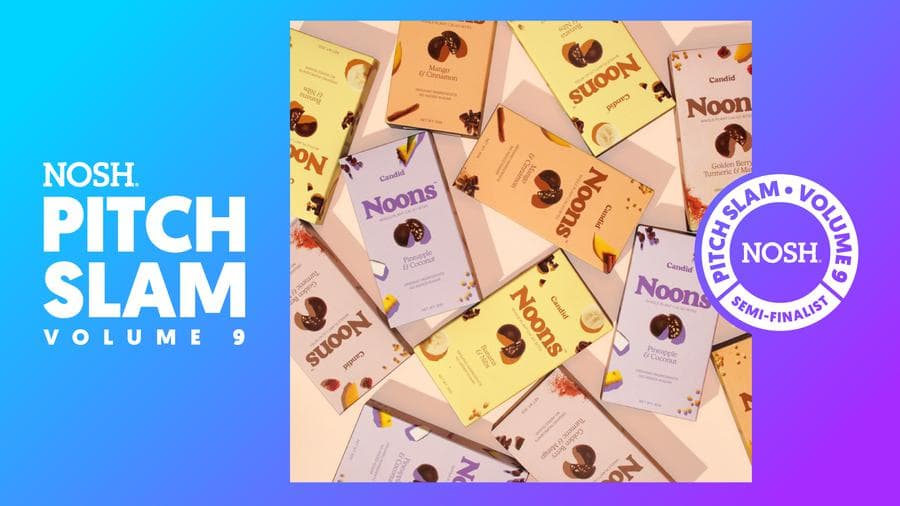
Representatives from 12 Tides, AMG Snacks, AYO Foods, Candid, Elite Sweets, Everipe, Fila Manila, Kindroot, Smooth Pops, Yo Pitts! Foods, Yoconut Dairy Free and Waves Caribbean all faced off virtually in the semifinal round on Tuesday afternoon. Rewatch the full semifinal round of pitches.
Transcript
Note: Transcripts are automatically generated and may contain inaccuracies and spelling errors.
Ray Latif [00:08] Hello and thanks for tuning in to the semi-final round of NOSH's Pitch Slam 9 competition. I'm Ray Latif, the editor and producer of Bevnet's Taste Radio podcast, the number one podcast for the food and beverage industry. Sponsored by 301 Inc. the venture capital arm of General Mills, the NOSH Pitch Slam gives 12 early-stage and promising brands the opportunity to present their business plans and products to a panel of expert judges in the audience watching on the live stream. The winner of the two day competition will receive $10,000 in an ad package and join a short list of brands that have triumphed in the competition, including Beccon Ice Cream, Saborly, No Brainer, and Bronx Hot Sauce. Let's talk about the rules for the semifinal round. Each of the 12 brands will have 2 minutes to present and receive 2 to 3 minutes of immediate feedback from the judging panel. The judges have already sampled all of the products. After all the brands are presented, the judges will pick 5 brands to move on to the final round, which takes place on Thursday. The 6 finalists will be chosen by audience vote at the end of today's semifinal round. We're going to show a list of all the participants and a number next to the brand name. Live stream viewers will have an opportunity to vote by texting the number corresponding to your favorite brand to a phone number that we'll provide later on. You can also call the phone number to vote. You'll have a half an hour after the end of the competition to vote for that favorite brand. It's 30 minutes after the last person has has given their pitch and received feedback to vote for your favorite brand. All right, let's meet our panel of esteemed judges. Starting out, we have Alex Hendricks, who is the marketing manager for 301 Inc. In this role, she supports the full 301 Inc. portfolio cross-brand strategy, innovation, and consumer insights, and also hosts the 301 Inc. podcast The Indispensables, where she interviews emerging brand founders. Next up is Aaron Cabre, who is a staff reporter for Nosh and is the newest full-time addition to the Nosh team, having joined the vertical in November. For the past 2 years, Aaron served as the editorial assistant across all 3 of Bevnet's properties, including Bevnet and Brewbound. Next up is Lizzie Ackerman, who is the co-founder of Birch Benders, the number one natural pancake and waffle mix brand and the fastest growing waffle mix brand in the US. Excuse me, the fastest waffle brand in the US. The brand is available in over 15,000 retail locations nationwide, including Walmart, Costco, Target, Whole Foods, Sprouts, Kroger, and more. With seven first to market launches over the past five years, Lizzie and the Birch Benders team have built a reputation for creating innovative, delicious, clean label, and functional products. In October, the brand was acquired by Sovos Brands. Last but certainly not least is Arpond Ray, a principal and the chief operating officer of Coefficient Capital, which makes early growth investments in digitally powered consumer brands. Prior to joining Coefficient, Arpon worked at private equity firm Centerview, GCM G Grosvenor, where he worked in consumer and technology private equity. He was also an investment banker at Wells Fargo Securities, serving global consumer goods firms including Heinz, Dole, and others. Absolutely delighted to have this amazing judging panel with us today and really excited to hear their feedback and advice for our entrepreneurs that are about to pitch. Speaking of the entrepreneurs about to pitch, I think it's time to get started. All right. First up, our first semi-finalist of the Pitch Lam is Perteet Spencer, the co-founder of AO Foods. Peritet, how are you?
Speaker 2 [03:48] I'm doing great, thank you so much for having me. Thank
Ray Latif [03:51] you so much for joining us today. I'm really excited to hear your pitch. Are you ready to go?
Speaker 2 [03:56] I am ready to go.
Ray Latif [03:58] Fantastic. Your 2 minutes begin now.
Speaker 2 [04:01] Good morning everyone. My name is Pritte Spencer, and I'm the co-founder of AYO Foods. AYO exists to celebrate the incredible ingredients and flavors of West Africa and actually means joy, so I'm incredibly joyful to be able to share a quick bit of our story with you today, which actually begins well before our launch this past July. AYO was inspired by the dishes of my Liberian family that are often a focal point of some of our happiest times together, but our decision to launch now was really led by the strong growth of specialty items and then the $23 billion frozen entree market, which is largely led by ethnic food. Our passion, market momentum, and growing consumer interest in West Africa led us to launch Ayo. Our chapter begins with 3 of our family favorites, jollof rice. This is a widely debated dish around which West African country has the best. So I'd encourage you to hashtag jollof Wars if you want to have a little bit of fun. Uh, cassava leaf soup is our family favorite and really spot slice the leaves of the yucca plant, which often go unused in other cultures. And then we have our egusi seed soup, which features the protein-rich seeds of the uggui melon. So you can see they're really similar to a pumpkin seed. We're off to a really strong start with distribution and Whole Foods stores across the South and a growing body of local dependents where we're based in Chicago, and were recently named Best New Frozen Food in the Next D Awards. Given we launched in the midst of a pandemic, winning this pitch slam would be a tremendous help in building broader awareness for the brand as we work to scale. But in the meantime, we invite you to find your IO today. Thank you.
Ray Latif [05:53] Uh, great presentation, great pitch. Uh, let's get the judges to offer some feedback on that pitch and brand. Uh, let's start with our pond. Um, you know, we've seen, uh, frozen food, uh, the frozen food category really emerge as an important A category for the food industry, you know, what do you think of IO Foods and what's it bringing to the table? Yeah, I thought it was a it was a great pitch, and you know, it's definitely addressing, I think, a meaningful white space in the market. I like the point that the ethnic penetration of the frozen food aisle is pretty strong, so it's definitely an interesting place to tap into. I think the biggest challenge with Frozen, just generally speaking, is, is it can be challenging for brand discovery and for a new emerging brand to really um kind of connect the consumers given, givens behind the frozen shelf and so I think that's one challenge I definitely um think it'll be interesting I want to tap into and building kind of brand awareness, um, in my view. Along those lines, Alex, you know, packaging is really important in being able to stand out on the shelf. It's even more difficult when you're behind a freezer door. You know, what do you think of Iowa's packaging and, you know, how they're trying to entice trial and purchase?
Speaker 3 [07:12] Yeah, so I, I would echo what Arpan said. I think, um, for this category in particular, the branding is really important, and I think I, um, I found the packaging and the colors to be extremely joyful, um, which is something that you don't often find in Frozen when it tends to be kind of boring, uh, brands that we've seen for a long time. So, so I really do appreciate, um, the, the kind of joy and, and the color that you bring. I think one thing I, I would just recommend or, or think through is how you're going to educate people on, particularly the taste factor, because these are ingredients that people may not be familiar with. And so I love the authenticity of the founder story and why you brought this to life. Um, but just thinking through how to play up the, the taste factor will be very important.
Ray Latif [07:56] Yeah, let's talk about taste for a second, Erin. I hear millennials love ethnic food brands and are very willing to experiment with, you know, flavors they're not necessarily familiar with. When you tried these products, what did you think?
Speaker 4 [08:09] I thought they were delicious. Um, um, and I really didn't know what to expect. I'm from New Hampshire and we have a very limited array of ethnic cuisine up here, to be honest with you. So, um, there's obviously a lot of, um, things I haven't tried. So I was really excited to try out something new and I, I really enjoyed the flavors. And I will say with, um, the soup product, I kind of was expecting like more of a soup consistency, but it was, um, kind of like a rice and chicken, so that was unexpected, but I mean, nevertheless, it was really good. So.
Ray Latif [08:41] Lizzie, uh, you get the last word here. Um, you know, Petite launching, uh, I mentioned launching during the pandemic is, is pretty difficult. Um, you know, you with Birch Benders have run into some challenges growing the brand, as have any food or beverage entrepreneur, as has any food or beverage entrepreneur. Um, you know, what are some thoughts on how she can persevere, um, given her strategy and given your, uh, the pitch that you heard today? Um, I love the pitch first of all, and I, and I love the product. Um, as we are in this pandemic, and this is probably like not what you would expect me to say, but um, I, I, I just want to make sure for you that you, um, are pricing it, that you're making money, um, and I'm just saying that because I, I have experience in Frozen 2, and it's always, it's easy to go down in price, um. And, but people are buying frozen food a lot right now. So, one thing I would just be super mindful of as you continue to grow is that your margins are strong. Um, it's just so important and it's easy to be pushed by retailers to go lower, but when you have a super differentiated product like you do, something that's first to market, something that doesn't really have anything you can really compare it to, you can set that price point. We've done that and it's worked out pretty well for us. Um, so just something to think about, um, as, as you continue to grow. All right, outstanding. Uh, that's a great start to the competition. Uh, let's keep it going with our second semi-finalist for the round, who is Pat Schnettler, the founder of 12 Tides. Pat, how are you?
Speaker 5 [10:07] Hey Ray, I'm good.
Ray Latif [10:09] Great to see you. Thank you so much for joining us today. Are you ready to give your pitch? Let's do it. All right, my friend, your 2 minutes begin now.
Speaker 5 [10:17] All right. Hey everyone, I'm Pat, the founder of 12 Tides. At 12 Tides, we source organic kelp from regenerative ocean farms and make tasty and ocean-friendly snacks. I started 12 Tides to reimagine the relationship with our oceans, and before 12 Tides, I spent a number of years in the old school seafood industry and sort of large scale commercial fishing and aquaculture, and I saw a lot of the bad things going on in our oceans, things like overfishing, pollution, and coastline destruction, and I wanted to find a way to change that dynamic and specifically to find foods that we can produce in the ocean that are as good for the ocean as they are for us. And so we started working with organic kelp farmers in the US. Why kelp? Kelp is a regenerative crop that removes carbon from the oceans 10 times more efficiently than any terrestrial crops could. It's also a zero input crop, which means no pesticides, no fertilizers, no arable land, and no fresh water, and it does all that while producing really nutrient-dense food for us. Uh, and so we work directly with kelp farmers here in the US, um, get the kelp straight from them, and, and there's no middlemen. And we created our first product which are these organic puffed kelp chips. And they were really made for the mindful snacker that wants tasty and craveable snacks without the refined grains and added sugar from brands that align with their values towards sustainability. Um, our snacks bring an umami-filled crunch to everyday snacking. They're plant-based, gluten-free, have no added sugar, and are baked and never fried. We've got three flavors right now, sea salt, everything, and chili, and the SRP on our 2 ounce bag is 499. As an ocean positive brand, we felt that single-use plastic packaging was a little counter to our mission, so we developed a fully composable bio-based pouch made up of wood pulp, cornstarch, and craft paper. And we're ocean activists at heart here at 12 Tides as we grow, we're supporting regenerative ocean farming and ocean restoration projects throughout the world through our partners at Sea Trees. Thank you so much again for having us and keep helping Earth.
Ray Latif [12:20] Well done. Well done, Pat. All right, you know, um, great presentation, great mission about sustainability. Um, it really at the end of the day comes down to taste though, doesn't it? Alex, uh, you know, what do you think of these kelp chips?
Speaker 3 [12:35] Fullander, I had never tried kelp chips before or heard of kelp, so this was very eye-opening for me. Um, and I think that's, that's one piece of feedback I have is that they actually taste very good. Um, and I could see them being a, a swap for other mindful snacks, but I think there needs to be a little bit more on the front of the pack around what the regenerative agriculture, um, mission really is and the brand benefit. Um, because I had to kind of flip it over to really understand what your entire mission is, um, and so, so I think you have all the right things. It's really how do you communicate that on the front of pack to get people, um, to, to wanna try them.
Ray Latif [13:13] Yeah, Erin, you know, you've written a lot about mission-based brands in the food industry and the beverage industry, and you know I'd love to hear your perspective on, you know, how 12 Tides is coming to the market with, with their mission and their products and trying to, you know, intertwine taste, sustainability, and value all in one package.
Speaker 4 [13:34] Yeah, like I said, I've written a lot about sustainability, especially recently. And um I think with this product, um, I kind of echo what Alex said that putting that kind of mission and um more information about how sustainable the product is right on the front of the pack because Consumers more and more are looking for mission-driven brands, brands focused around sustainability. So as much as you can communicate that to consumers in a simple way, but an effective way, it will be really helpful because more and more people are looking for those kinds of products right now.
Ray Latif [14:07] Lizzie, you know, this is something that's not familiar, kelp as an ingredient, um, you know, as Alex mentioned, she'd never even heard of kelp. I mean, this is something that is going to be an interesting sell to the everyday consumer. You know, what are some ways that you think that Pat and his team can enhance that education beyond front of pack and teach people about, you know, what the product is and what the mission is in a way that's really that will really resonate with the everyday consumer. Oh shoot, I wanted to talk more about front of pack. Um, OK, well, um, I, you know, um, my big thing is, is I, the word kelp, I, I'm familiar with kelp. It's not something you should traditionally think of as, you know, a super delicious, but your product is, um, so I'm sorry to go back to front of pack, but I feel like there's more you can do to make. For taste appeal like on, on the front of this package, like there is a lot of real estate there that's being spent on like the tides and the like, but you're not the image of the product it's pretty small. Um, if you could, I, I think you'd make that bigger and and make it like draw more attention to it and make it um just more exciting, um. And I think you're gonna have to drive a lot of trials, so you'll probably have to do a lot of CPRs in the beginning. Um, you'll probably have to do a lot of social media marketing and begin to educate people, which will be a fun challenge, um, but I definitely think you're onto something, and, um, yeah, I, I, I think it's super cool. Congrats. Arpan, we only got a little bit of time left, but I'd love to hear your perspective on, you know, ingredient-focused brands, ingredient centric brands, um, and, you know, what you think of the opportunity that 12 Tides is bringing to market. Yeah, I think that's a, that's a great question. I think we've all seen a lot of rise of emerging brands that really lean on one ingredient. I think the bigger opportunity in 12 Tides is probably the the idea of ocean positive snacking. I'll probably lean on that being the platform for the brand rather than kelp just given, um, you know, what the other panelists just spoke about. It's like kelp, you know, and the taste connotations and, you know, it might be a bigger barrier to, to push against. But the idea of ocean positive snacking and, and what's in the back of the pack in terms of Your input crop, I think that's an incredible concept to really push on and do some digital storytelling and get a good press around it because I think there's a really interesting story around it, and then more people and building awareness around that. I think that's a really compelling opportunity. All right, great feedback, great presentation. All right, let's move on to our next guest for the, our next semi-finalist for this round, that is Patrick Prince, who's the owner of Waves Caribbean. Patrick, how are you?
Speaker 6 [16:54] Hello guys, I'm doing well.
Ray Latif [16:56] Great to see you. Back to back Pats. But you, do you go by Pat or Patrick? I
Speaker 6 [17:00] go by Patrick.
Ray Latif [17:01] Patrick, it is then, uh, Waves Caribbean. I'm really excited to hear your presentation. Are you ready?
Speaker 6 [17:06] Yes, I am.
Ray Latif [17:07] Fantastic. Your 2 minutes begin now.
Speaker 6 [17:10] Perfect. Well, my name is Patrick Prince. I'm the founder of Waves Caribbean. Um, the way that we started, um, my parents are from Jamaica and, or one parent's from Jamaica and one's from Trinidad. I wanted to create a fusion. Of the things I grew up on and got hooked on at an early age. And what we were able to do was make it non-GMO, vegan, gluten-free, all-natural, dairy-free, and a clean label. Um, my father has health concerns and what I wanted to do was try to make it a little bit more affordable and effective for other people going through the same illness. And going through that, what we discovered is that we were able to help our community by doing our jerk turkey Foundation and helping with each bottle and each store's participant with us. We were able to create a better and effective way of going through it. So first we have Caribbean ketchup. Our jerk, our original jerk. Our Scotch bonnet chili sauce. Our traditional take on our barbecue jerk. Our natural curry sauce. And with these products we were able to make it quick and efficient, especially in the time of the pandemic. Everybody's kind of wanting new, interesting foods. We were able to produce that in a better package than you see now. And then in 2021, we'll be launching. Our, our take on hibiscus drink, which is a non-sweetened sorrel soda. OK. And then our take on ginger beer. And then last, we are coming out with the same grubs for our um sauces too, and they're gonna be um kosher as well. Thank you for your time.
Ray Latif [19:03] All right, well done, Patrick. Thank you so much. Uh, all right. Since, uh, Lizzie, you want to talk about front of pack, uh, last time, I'm wondering if you want to talk about front of pack this time. You know, I love when I can see a brand or a product and I pretty much immediately know what that is. Do you get that same feeling from Waves Caribbean? Yeah, you know, um, you do something, I, you don't see your logo very much, and that's, and that's not necessarily a bad thing. Um, you've got to look and it's consistent, um, but the brand is a little bit hidden, um. You know what I mean? Like you're looking like I see this is a Caribbean ketchup, but like, where, where are you guys? Um, so I'm, that's one thing I wonder about is, is whether you want to, um, make your, make your logo a little bigger on the package. Um, but it's really fun and it's poppy. Um, it's, uh, But uh and and you know, it's, it's a similar story right now with like you, I, I was having trouble finding your website, like don't, don't hide behind what you are, you know, um, so I feel like you can go a little bit more like brand forward, especially as you're innovating so much. Yeah, let's talk about the product lineup. You know, Arpan sauces, there's just, you know, it feels like there's a, there's a lot of soft sauce brands already in market, a lot of new ones coming to market, you know, do you think that Wave's Caribbean has what it takes to stand out in a crowded and continuing to continually competitive category? I think there's a really incredible kind of opportunity that you're looking at, and what I do like about waves is, is that if you think the packaging has, you know, super authentic and is super colorful and can be iconic. I think we're going to see like a rise of fragmentation in sauces, and people are going to look for expertise on a certain vertical and specific ethnic verticals. I don't think people are going to go to a platform and kind of go to, you know, Caribbean sauces. I think having really owning Caribbean, owning sauces and having a very iconic Um, you know, packaging around that, where you build that kind of credibility and expertise.
Speaker 3 [21:15] I think
Ray Latif [21:16] that's the opportunity. Um,
Speaker 3 [21:18] so I think
Ray Latif [21:19] I'd, you know,
Speaker 3 [21:20] instead of focusing on
Ray Latif [21:21] beverages and other categories, really, you double down your focus on sauces and, and seek to build that credibility. Alex, uh, did you get to try, uh, any of the Waves Caribbean products, and if so, you know, what do you think of the flavor and, you know, how do you use them?
Speaker 3 [21:40] Uh, yeah, so I, I did. I want to echo what Lizzie said where, um, or actually I think Ray, it was you that was extremely telegraphic, which I really, really appreciate, particularly when you're talking about foods from different cultures. Um, I knew exactly what I was getting, and so I think that is very helpful. Um, I thought that the flavors were bold and unique, um, without being so far outside of my comfort zone that I actually do think it's something that you can use pretty frequently. Um, I would echo what what Arpo said about doubling down in a category. Brands rarely get, um, get multiple categories right out of the gate with a lot of success. Um, so I, I would say just given the, the probably the amount of dollars you have right now to really think about how. Are you gonna drive trial and awareness for your sauces and then you can become kind of a Caribbean multi-category brand, right? and that's where you can bring in kind of your hibiscus and your ginger beer um, I just, I was all in on, on all of your products and then you mentioned that and I think that can just be a little bit um of a hindrance moving forward.
Ray Latif [22:46] Erin, you get the last word. Suppose that Patrick in Waves Caribbean makes it to the finals. What are some of the things that really resonated with you from his pitch, and what are some of the things you want to hear more of?
Speaker 4 [23:01] Um, I think unfortunately and unfortunately I didn't get to try the product now these days, who knows? Um, but, um, yeah, I really liked, um, the pitch, and I think that it's a product that I personally haven't really gotten to know or in a category of food that I haven't really ventured into. And I will say also it wasn't part of your pitch, but I really enjoyed your internet internet presence. Um, I thought it was, um, Very, very humorous and very lively. And I think that's, um, as I already mentioned in the beginning, I'm a millennial, so I think that's something that you can definitely leverage to capture people's attention. Um, people my age, I'm 25. If you, if you want to do that, then that website and that social media presence is definitely going to be important.
Ray Latif [23:51] All right, let's move on to our 4 semifinalists for this round. That's Alisa Poscapova, who is the founder of Kindroot. Alisa, how are you? I'm doing well. How are you? I'm doing pretty good. I hope I didn't butcher your last name too badly.
Speaker 3 [24:05] No, no, no, that was very, very close. I'm actually impressed.
Ray Latif [24:07] Oh, good, good to hear that. All right, and I'm really excited to hear your presentation. Are you ready?
Speaker 3 [24:13] Yeah, absolutely. My name is Alisa. I'm the founder of Kindroot, and we make adaptogenic functional lozenges, and we're the first in the markets to do that. The story of Kindroot really is rooted in the fact that I have asthma and I've eaten a lot of lozenges in my life. And you know, I just kept on buying them and one day when I was at Walgreens, it really dawned on me that as I was looking at the category I was seeing Ricola and Vicks, and there really hasn't been a lot of innovation in the category. A lot of them had irritating ingredients like menthol or soy. And I also felt that from the branding perspective, they really didn't connect to me. It was really more of a functional purchase. It wasn't emotional. I didn't really care which brand I was grabbing. So I decided to really rethink the lozenge and reinvent it. And so I launched a line of 4 different functional blends. There's one for sleep, one for mood, one for glow with collagen, and then also one for focus. And what I felt like differentiated the lozenge from a gummy. Or another supplement or chew is that it stays in your mouth, you know, between 5 and 6 minutes. So I felt like there was an opportunity to bring in, bring in a sensory experience and really play with the flavor. So each one of our flavors is actually rooted in the principle of aromatherapy. So, for example, as you're putting in a snooze lozenge and you're starting to taste and inhale lavender vanilla, it soothes you, and then melatonin kicks in and kind of helps you um snooze away. And then of course the, you know, ingredients are really important, so our lozenges are gluten-free, gluten-free. They're made with organic ingredients. They're also low sugar, and even though our packaging is really cute and irreverent, everything is lab tested and verified. So on that end, we also make sure that we take all of that very seriously. Um, I think because the brand, um, really connects with the millennial consumer and the packaging and the, you know, the product is shelf stable and light, we've been able to transcend, um, different distribution channels. So you can find us in specialty like Urban Outfitters and Anthropology, as well as traditional natural grocery like Air One. And then we also have really good distribution in spas and wellness studios. So kind of catching that wellness consumers wherever they are. Um, and I'm currently working on a new flavor for Immunity that we'll be launching in a couple of weeks, as well as new sampling formats and different trial packs for Kindroot as well, and continuing to expand distribution both in the US and internationally.
Ray Latif [26:35] All right, well done, Alisa. Uh, let's start with Alex. I believe it was plants and aromatherapy in a smooth little lozenge. Uh, how do you feel about that tagline? Is that what you're getting from Kindroot?
Speaker 3 [26:48] Yeah, I actually, so without even trying the product when I just first looked at it, I was, I, my immediate reaction was, oh, a lozenge, that's a new format that I was not, I have not yet seen, and I think that's really the benefit that you bring is a portable option that isn't quite as dense as an actual food product or something else that, you know, you have to really do the thought process ahead of time. So I really liked that aspect of it and hearing. More of your omni-channel approach, I think is really smart, uh, getting into Urban Outfitters and some of these other channels. Um, and, and my last thing was on the, uh, immunity piece. That was actually the only one that I was thinking, where is this one? Um, because just where with where we are with COVID right now, that is something that I think consumers right away. So I can actually see that kind of being your lead horse, just the way that, that, uh, the current environment is. But overall, I, I thought it was great and quite tasty.
Ray Latif [27:44] Lizzie, uh, let's follow up on Alex's comments. Uh, go to market strategy, retail strategy, um, so critical is it for an early stage brand. Um, you know, what do you think of Alisa's approach and what she's doing with Kindroot to get her product in more places? I, I, so I love the alternative channels like the Urban Outfitters, yeah, very cool. Um, you mentioned international, that made me go, oh, no, don't do that. I don't think you need to worry. I, it's hard enough to penetrate this country that I would focus on the big, the big accounts like the, the Walmart and, and crushing Amazon. I can see you doing really well there. I'm not sure what your presence is, but um. I think your packaging looks remarkably like, it looks really good. I mean, it does not look like a startup packaging like this is my first attempt. So kudos to you. Um, I think you could really crush it on e-commerce, but I would focus on the big retailers as well, like the, the Walmarts, the Whole Foods, maybe even the Costco's, if you have the capacity, I would not put any time into international. It is, it is very complicated and you shouldn't put any of your energy in that, in my opinion. Erin, is this the type of brand or product that you would be attracted to? I mean, is this something where you're looking for a lozenge that does more for you, that has a functional benefit to it?
Speaker 4 [29:07] Yeah, absolutely. And that's a really interesting point you made in your pitch. So like this category is just not something that's seen any kind of innovation at all. Like when you think of lossom, if you think of products that came out decades ago, you're not thinking of anything modern. And I think with so many products coming out now that added functionality is something that will immediately get consumers to grab it off the shelf, that and the beautiful packaging. So,
Ray Latif [29:30] yeah,
Speaker 4 [29:30] I think it's a, it's a really great product.
Ray Latif [29:32] Arpan, uh, you know, this is something where, uh, you know, it's not necessarily a food product that we've seen before in this in this pitch slam, um, but from the other judges, from what we're hearing from the other judges, they're really attracted to bringing something that's disruptive to a category that just hasn't seen this kind of disruption before. As an investor, is that the kind of thing that you love to see in pitches that you want to see in pitches? Yeah, definitely. Um, I think that's a great question because we're definitely always looking for, for category creators. I think that's where as an investor, uh, we get most excited about that opportunity. So. Uh, and also just categories that just haven't seen a lot of innovation. That's usually, you know, the recipe for, for a really big brand opportunity. Um, so I think that's all great. I think you're attacking a really interesting opportunity. Uh, the question that I had that, you know, uh, was really around efficacy and, and around lozenges as a form factor, like what's the, what's the reason for it being kind of a, an opportunity and just having maybe some science to back that, um, would be, I think, you know, even more compelling. All right, well, uh, if Alisa makes it to the finals, perhaps you'll hear more about that efficacy and any science behind the brand. But until then, great work, Alisa, and let's move on to our 5th brand in the semifinals. Let's start with Tom Pitts. Let's not start with Tom Pitts. It is Tom Pitts, the owner of Yo Pitts! Foods. Tom, how are you? Great, great, great to be here. Thank you. Great to see you. Let's hear about Yo Pitts! You ready to go? I'm ready to go. All right, your 2 minutes begin now. Great. Thank you for having me, everyone. Uh, my name is Tom Pitts. I'm the founder and creator of Yo Pitts! Foods. We're an all-natural condiment line. We have 12 flavors, 3 ketchups and 9 mustards. It comes in a nice glass jar. We have, it's very recognizable. We have the flavors range from sweet. Too hot to satisfy even the pickiest eaters. And I know sometimes in this category with spreads and it actually fits in marinades and dips. People use it for several um uses. It's a bit of a Crowded market, however, the all-natural and the range of flavors that we have, we've been getting great feedback uh from the all-natural food stores, uh, we did a great deal of um Distribution and the Taste New York. We're based here in New York. Uh, we started, um, when I was on another venture doing research at some farms upstate New York, so everything is bottled and made right here in New York and that's where we came about to have all the Taste of New York's carry-out products. It's even great for um we do corporate events, so we do gift baskets and it's the retailers really like it because it's shelf stable and it's priced reasonably for everyone from to have a gourmet dinner party or for that backyard barbecue, so. As, as I was saying, even the breweries, we've, uh, we've branched into the breweries and wineries because it can go from that fine dinner to that nice ale, pale ale or hearty red beer that you wanna have. Thank you very much. All right, well done, Tom. Arpan, let's start with you. I saw you nodding talking when Tom was talking about Yo Pitts! having the opportunity to be available in a gourmet dining setting or in a for a backyard barbecue. Do you see this kind of versatility in the brand? I do, I do. We're previously invested in Sir Kensington's and I think had a very similar kind of appeal across different kind of end uses, whether it's gourmet, it's a casual, and I think that's very important condiments. So I'm a big fan of that. I think, and I thought the flavors were, you know, very great. I mean, I loved it. I loved the habanero mustard. I thought it was delicious and very unique, so. Um, I would almost maybe be more focused on a couple of SKUs that you're really passionate about and, and focus your energies on those, um, that you see more of a white space because condiments can be a little bit of an increasingly, uh, you know, competitive category. Alex, I'd love to hear from you about the pitch, um, you know, what we saw in terms of the condiments, mustards and ketchups, uh, it seems to be really interesting stuff. um, from a business perspective, you know, were you interested to hear more about one particular aspect of the brand than another?
Speaker 3 [34:15] I think my first reaction was when you said 12 skews, and I thought that is a lot of skews. And I think overall, mustard and ketchup can absolutely bring some, you can bring some different benefits to that for sure. I think where I wanted to hear a little bit more was how you're thinking about going into traditional retail, and if, to Arpan's point, you have a couple of maybe lead horse skews where you're saying you've got to take these two mustards and this ketchup and start to build out from there. Um, because I just, I think with 12, that's quite a lot, and how incremental are each of those different SKUs going to be. Um, so, so overall, I was extremely impressed with how, how much you had, um, and now I think it's a question of which ones are your leads and how do you wanna, um, grow with those specific lead horses.
Ray Latif [35:10] Lizzie, did you get to try any of the Yopit's products, um, and you know, would you bring them to a backyard barbecue or a fine dinner perhaps? Would you have them with, with a side of your waffles? Um, I, I can't wait to try them. They didn't get to me in time, but I will. Um, but, uh, just on, it, it's, it's really fun. I think you, I think there's definitely, I'm going to echo what other people have said, but you, you, um, I, I think you can think about what skews are the most important, but then I also think you should think about like the hierarchy of importance of, of what's on your packaging, like what Like, what do you want to articulate, like most clearly? I, I, I, I think you have to lead with the differentiation as much as possible. I'm not sure you're doing that like fully yet, but it's fun and, and I'm, I, I can't wait to try it. Um, but 12 skews, as others have said, that's a lot of skews. Erin, I'd love to get your thoughts on the packaging. I was about to ask you that and um you know, how the packaging, whether the packaging resonates with you, whether you're enticed to try the brand, uh, and if so, what are some of the parts that stand out? If not, you know, what are some of the parts that need to perhaps improve upon?
Speaker 4 [36:24] Yeah, it definitely stood out to me. I think that, uh, and it's great packaging, but one thing I maybe would add, especially with, um, I think it was the hot ketchup or I think there's an opportunity to even add more information about like what makes it hot, like you have ghost peppers in it. Like, I wasn't aware that it was that hot and that it had ghost peppers in it, so I turned it over and read the ingredients. So, um, And you have like the Scoville level, I think, uh, which is something that I think people are interested in, especially, um, because there's that YouTube show that everybody loves hot sauce and, um, like where the celebrities eat the chicken wings. I forget what it's called. But, um, so people are more aware of that. So I think if you put that on the front of the pack, people are going to be interested to know the level of hot that it is.
Ray Latif [37:09] Great feedback, great presentation, Tom. Well done. Let's get to our 6th semi-finalists for this round, who is Amanda Gilman, the founder and CEO of AMG Snacks. Amanda, how are you?
Speaker 3 [37:19] Great and excited to be here.
Ray Latif [37:21] Uh, we're excited to have you. Are you ready to present? I am. Fantastic. Your 2 minutes begin now.
Speaker 3 [37:28] Hi, my name is Amanda Gillman, and I'm the founder of AMG Snacks, an all-natural snack food company dedicated to creating delicious on the go snack products. Imagine being at your desk for 8 hours and it's 3 p.m. in the middle of trying to make sense of a screen filled with numbers. You run out to grab a quick pick me up snack bar, only to get back to your desk, take a bite, and feel pain in your jaw. This is me 10 years ago as I sat on the trading floor of an investment bank. Like millions of other Americans, I have TMJ, which is a jaw disorder that causes pain and discomfort when irritated. I was always searching for a great textured, clean ingredient preportioned snack to keep on my desk or grab on the way to client meetings, and when I couldn't find exactly what I needed, I turned to my kitchen. I began making energy bites with a short list of high quality, all natural ingredients. These bites are packed with healthy fats, fiber, and protein. This bite-sized snack option was just what I needed to get me through those long days on the training floor. Soon the whole floor was stopping by my desk to grab a bite, and I knew I was onto something great. This side passion turned Into a full-time hustle when I left the banking world to launch AMG Snacks with the goal of providing clean ingredients, better textured and portioned snack alternatives to consumers. We currently offer our bites in 6 flavors and in a resealable pouch so you can control consumption and then toss in your bag or keep on your desk or home office these days. Our bites are shelf stable, unprocessed, non-GMO certified, vegan, and gluten-free, checking all those buzzword boxes, but most importantly, they are tasty without any sneaky ingredients. Even during the pandemic, we are continuing to grow at a fast pace, and I am motivated. By the reviews and feedback from our customers. People love our products. With the population shifting to a healthier lifestyle and focusing on nutritious products, AMG Snacks sees an opportunity, and our goal is to become a household snack food brand. Thank you for having me.
Ray Latif [39:29] And thank you for that great presentation. Well done, Amanda. Uh, Lizzie, Amanda talked a lot about um the reason that she created the brand and how it resonated with some of her colleagues as well. How important was that to her pitch for you? Um, very important. No, it totally resonated with me. Um, it kind of made the whole, um, the product and the story come alive, like hearing it from you. I think you can go deeper on that too in your packaging because, like I, I love your story. It's really authentic and that's so important, and the product's great too. That's also very important. Um, so I, I like wonder how you can like Yeah, how you can pull other people in even more with the packaging. Packaging is good, but I feel like you, your story is even, uh, it's even deeper and it could be expressed better, maybe. Arpan, I saw you nodding when Lizzie was talking about taste, and Amanda mentioned tastes without all the hidden ingredients, great taste without, you know, all those hidden ingredients. Did you feel that? I mean, did you feel like this is the kind of product that's going to resonate with a broad number of consumers given that it doesn't have a lot of the potentially, I guess. harsh flavors that can come with uh high quality ingredients. Yeah, definitely. I think I was very impressed by the taste and then the nutritionals and third, the ingredient list. I thought it was very clean. Everything in the ingredient panel kind of had its own purpose, so I think it's going to have wide appeal for those consumers looking for that. Um, snacking is obviously a big occasion, so I think really getting the right placements and being in the right parts of the stores and really trying to build. Um, category leadership of energy bytes. I mean, I think a lot of people are, you know, in the category, but there's no, you know, category leaders immersed. I think, um, that's the, that's the opportunity and big fan of the, the nutritional ingredients. Let's talk a bit more about the category. Erin, uh, you know, we've seen so many, uh, energy bite products come to market, uh, energy snack products come to market, um, considering the category, uh, you know, what are some of the things that, uh, you think that AMG Snacks is doing well, uh, what are some of the things that, uh, you think they might need to watch out for as they grow?
Speaker 4 [41:55] Yeah, it's definitely, um, as we said, it's, there's really no category leaders for energy bits, but there's definitely a lot of people in the category. And I think, um, I liked with your, um, espresso flavor that there's that that functionality there, and I think that the flavors are really great. I mean, how can you go wrong with chocolate peanut butter, but I think any, any place for functionality that you can kind of, um, especially at front of pack show that. The functionality of a product or an added functionality would probably be your best um shot at differentiating yourself in uh a credit category.
Ray Latif [42:30] Alex, you know, from a packaging perspective, you know, piggybacking on what Aaron was talking about, you know, it, it doesn't take very, or it doesn't have, you know, customers don't have a lot of time to decide what they're going to buy, and they're using that packaging as the reason for picking up the product and potentially buying it. What are some of the things that you think AMG Snacks has done well? What are some of the things that they need to improve upon when it comes to their packaging?
Speaker 3 [42:59] Yeah, I would say I actually, I loved the packaging. I love the window. I think that's really important, particularly for formats that people aren't as familiar with. So what is this energy bite going to actually look like? I think that's really important. I liked having the ingredients on the front because they're so few you can actually do that in a nice way and it's not overwhelming. Um, and I think for, um, the energy piece, I would just probe a little bit on what makes it an energy bite, like what's, what's really my reason to believe, um, because that's, that's kind of a loaded, uh, statement. And so just think through that. Um, the only other thing I would say is I actually think this would be a great offer. Offering for a bulk size as you're thinking about having um people having it at their desk, I wonder if 6 is actually even enough um or if you could do like a bag of 20 and you go through a Costco or some sort of um larger panel um where you could actually have an even bigger package display to to call out all the benefits that you have.
Ray Latif [44:05] All right, great feedback, great advice once again. Uh, thank you so much, Amanda. All right, moving on to our next semi-finalist, that's Jake De Leon, who is the founder of Fila Manila. Jake, how are you? Hey Ray, good to see you again. Great to see you as well. Excited to hear about Fila Manila. Are you ready to pitch? I guess so. Let's do it. Your 2 minutes begin now. All right. Hi everyone. My name is Jake Deon. I'm the founder of Fila Manila, and I happen to be a first generation Filipino American as well. Uh, Fila Manila, our mission is to ignite Filipino cuisine and culture. Culture. Now, many people don't know, but Filipinos represent the 2nd largest Asian ethnic group in the US, and in some parts of the US they compromise 20% of the US healthcare workforce, including members of my own family. So it's kind of likely at some point in your life, Filipino has impacted who you are. But I get to take a step back and just say, what is Filipino food? A lot of people say it's familiar flavors of Southeast Asia with unique influences from Europe and the Americas. But to my family and I, it's comfort food and it means love. Now, funny enough, there are a lot of culinary thought leaders like the New York Times and the late. Great Anthony Bourdain that always said that Filipino food is on the cusp of breakthrough. Now at Fila Manila, we hope to be part of that breakthrough, starting with the launch of our simmer sauces. Now our simmer sauces, they're easy, affordable, and delicious shortcuts to preparing home cooked Filipino meals in the comfort and safety of your kitchen. Simply combine our simmer sauce with protein and the veggies of choice and simmer until it's cooked. It's that easy. It's a one pot meal solution that feeds a hungry family or a group of friends, uh, but there are a lot of uses, more than what we suggest, which are, which we do through recipes on our website filamannola.com. They're all clean label, no artificial ingredients, no sugar added, gluten-free, dairy-free, and vegan to fit many dietary needs, and they're also very authentic with family-inspired recipes and very Filipino ingredients like coconut vinegar. Uh, I'm excited to announce that we're going to launch this month through our direct to consumer online store and at our retail with Whole Foods Market. Simmer sauce is our first step towards igniting Filipino cuisine, but there's a world of amazing Filipino condiments, pasta sauces, and even ice cream flavors that we hope to innovate and build towards our mission. If we're going on to the next round, I'd love to share more about this and how we plan to grow that business. Thank you. All right, well done, Jake. Uh, Alex, let's start with you. Um, I don't think I've seen too many, if any, Filipino-American focused brands. Uh, have you and, um, you know, if so, or if not, you know, what do you think of the opportunity for Fila Manila?
Speaker 3 [46:48] Uh, I have not, and I loved it. I think it's all of your pitch around the stat, the statistics around Filipino Americans, I think that was spot on. There's absolutely a market opportunity. Um, I think that, and I've said this on, on other, some of the other pitches, there's some education that will probably need to happen around what to expect, um, and just one thing to think about is the names of each of your SKUs. Um, when I see, I'm gonna, I'm gonna say it's CareCare, I, I might be butchering that's why I apologize, um, but I don't know what that means exactly, and I really. Have to dive in a little deeper to understand that it's a peanut based sauce and so are there some ways you can maybe play with your packaging or your communications to just make it a little more clear around here's what you should expect from this product, um, because I, I actually love the logo I love the name, I love that kind of branding. I think it's, it's great and it pops, um, so it's really that, that, uh, articulation of the product.
Ray Latif [47:50] Lizzie, uh, Jake talked a bit about uh the opportunity to grow into a platform brand, uh, something that uh you guys have done with Birch benders, expanding into different uh types of products beyond just pancake and waffle mixes. Um, Is that important for you to hear? Is it important for you to identify as an entrepreneur thinking early, thinking early on about what the brand can be and become? Oh my gosh, yes, absolutely, the most important. Um, and I, and I think it's like the best thing to, to start thinking early about what you, where you want to go though, um, you all, you want to make sure you win in one category before you go to the next as tempting as an entrepreneur is, as it is to, uh, jump to a million things, like, believe me, I understand, um, but you want to make sure you win in, in this simmer sauce. Category first. Um, one thing I, another thing I was, uh, so yes, I would definitely encourage you to keep thinking about where you want to go. Um, one other thing for you to think about is, do you want, and, and this is sort of a price and informed thing is, do you want to continue to sell it in these jars or what about like compostable pouches that might reduce your cogs a lot, um, so you could lower the price so it could be a little more accessible, just something to ponder. That's great advice. Um, Arpan, uh, you know, again we've seen, uh, other sauce brands, other sort of condiment brands, uh, in the competition today. Um, Jake talked about, uh, Filamilla as very much a Filipino-American focused brand. Um, is that too specific? Is that, is it just right when it comes to when it comes to specificity? for a consumer that's looking for a new or innovative type of sauce. Yeah, it's a good question. I think I learned a lot about how big that market is today in the US in terms of population that was something new to me, and I think where I think the bigger opportunity might be, and I think what's really interesting about Filipino cuisine is that it's a confluence of so many different cuisines. It's really unique in that way in terms of it having Spanish influences, American influences, European influences, Asian influences. I think that might be maybe the bigger kind of brand opportunity. Um, and I would also echo kind of what Lizzie said about maybe thinking about different types of packaging alternatives. My initial concern when I was looking at it is like I would be afraid of this brand getting slotted into the ethnic aisle and being one of many different jars of ethnic sauces, and I think that's a little bit of a crowded category, and, but if you can kind of rethink packaging, think of maybe more single uses, maybe making the price point, maybe more addressable for, for someone like a new time consumer. Um, and think of the brand being a little bit more holistic, a little more broader, um, in terms of being a Filipino confluence of different cuisines, um, I think that could be an interesting opportunity or next iteration of the brand. Erin, you'll get the last word. I hope you got to try these products. They look really delicious. Well, to me anyway. Did you, and what are your thoughts on the taste?
Speaker 4 [50:59] I did try it. Um, I tried the, uh, called Doretto flavor, uh, for dinner last night, and it was really good. And what I liked particularly is that, you know, when I first got them, I'm like, OK, how, how am I gonna prepare this? What am I gonna make this with? And then you turn it over and it actually gives you pretty clear. Was to make it and suggestions to make it, which I think is something that's really important. Um, and I really liked because if you're bringing consumers that maybe haven't experienced Filipino food, they're not going to know how to prepare it. So I think that it's really important that you guys laid that out there on the packaging, different ways that you can make dinner with it pretty easily.
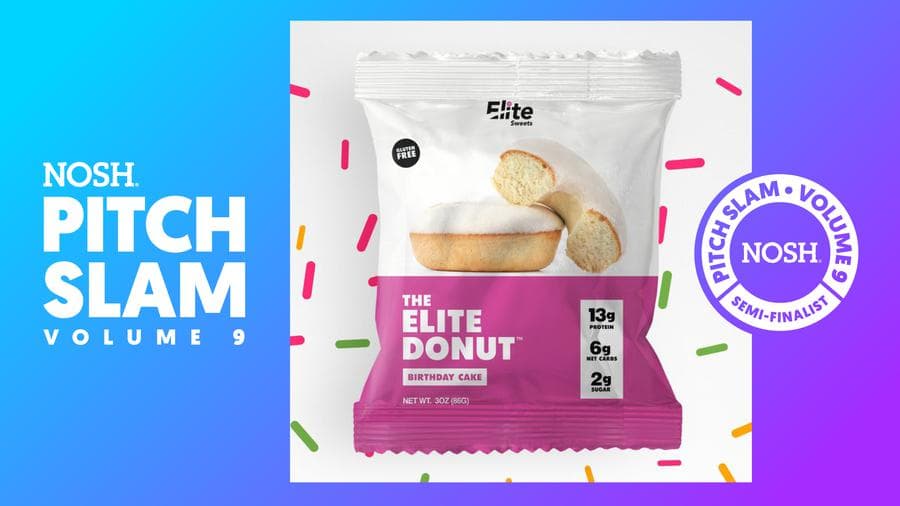
Ray Latif [51:34] Fantastic. Well, I'll have to go to the office and and pick up a jar. I hope some are left, Aaron. All right, Jake, well done. Great presentation. Let's move on to our next semifinalist for this round, who is Amin Bahari, who is the CEO of Elite Suites. Amin, how are you? Doing well. How about yourself, Ray? I'm doing pretty great. Elite Suites. Love the name. Are you ready to pitch? Yes sir. All right, your 2 minutes begin now. Good afternoon. My name is Amin Buhari, and I'm the co-founder and CEO of Elite Suites headquartered out of Austin, Texas. At Elite Suites, we are redefining the way people think about sweets with our healthier alternatives to traditional sweets. Our original product is Elite Doughnut displayed here on the screen. Each doughnut is packed with 12 to 13 g of protein. It's gluten-free, keto-friendly, soy-free, and only contains 1 g of sugar. Our doughnuts are available in 3 delicious flavors the birthday cake, the chocolate, and the cinnamon sugar picture here. The inspiration for Elite Suites goes back to my days in high school. My twin brother and co-founder and I come from a family with diabetes and obesity and was on the verge of it ourselves. At 16, I was 340 pounds and knew that was not the life I wanted to live. That's when I began my weight loss journey where I lost 140 pounds through a high protein keto diet, and my brother lost about 100 pounds. Although we lost the weight, we never lost our love for sweets, and with no healthy alternative to our favorite sweet, the doughnut, we decided to make it ourselves. Thus, Elite Sweets was born. Since inception, we have been hard at work perfecting our Elite doughnuts to make them as delicious and convenient as a traditional doughnut without all of the guilt. In our 1st 15 months, we have sold over $1 million. worth of doughnuts directly through our own site with about 10% of the revenue coming from wholesale from stores like GNCs, local nutrition shops, and health food stores. We just launched on Amazon last week where we are now the number one selling new product in the doughnuts category. Our plan is to continue to grow our community of elite fans and online presence and to make Elite Suites a household name. Our doughnuts are individually packaged and sold for 399 cents at retail.
Speaker 3 [53:40] We do not yet have distribution but are looking for partners to help us expand
Ray Latif [53:43] our retail footprint in 2021. At Elite
Speaker 3 [53:46] Sweets, we are redefining
Ray Latif [53:48] America's sweet tooth. Thank you guys for your time. All right, uh, pretty comprehensive, uh, in just 2 minutes or just under 2 minutes. I mean, well done. Um, Alex, uh, in terms of the pitch itself and the presentation, uh, what were you most, uh, interested in hearing about? Um, again, Amin laid out quite a bit.
Speaker 3 [54:09] I, I have a background in um keto consumer research, so I'm actually very familiar with this consumer, and I would say just right off the bat, I was extremely impressed with the product, the actual nutritional content, the ingredients, and then the taste because typically you don't get all of that, right? There's a significant taste trade-off and I just, I think that product is quite excellent. I did wanna hear a little bit more about pricing because I think this consumer is willing to pay more, um, but I'm curious how you think you'll price it in retail because I could see you being slotted next to Entance, right, and having a, a real comparison there and I, I liked the individual packaging. I think that's important particularly for a weight loss consumer, um, but I just wanted to know a little bit more about that, about how you're thinking about that. Um, so that's, that's probably just one piece of feedback for the, the, the finals potentially.
Ray Latif [54:57] Lizzie, Alex brings up an interesting point and given your history in disrupting the pancake mix aisle and finding your brand or getting your brand slotted next to traditional brands that have been out there and selling a skew that is very much protein focused, you know, what do you think of the opportunity for a brand like Elite Sweets and a protein infused doughnut as being your lead product? I think the opportunity is huge. Um, really, really impressed with, uh, the, the taste of the product. It's really good. Um, I, as a consumer, one thing I'm confused about that I think you, you'll have to explain better is the shelf life, like, How long I open it, how long does it last? But how long does it last in retail? So that's just something as a consumer, sorry, and a product person, that's just something I'm curious about. Um, and I'm sure you're already aware of this, but the net carb calculation is confusing since you don't, um, include the allulose. So if I'm looking at the, the like nutrition facts, I'm like, wait, that's 16 g net carbs, but then you have the 10 g of allulose. I'm sure you know that already, but, um. No, I think you're, I think it's really cool. Um, I, I think you still have room to improve in the packaging. You can make it like even more exciting, but this product is awesome. Um, so yeah, you know, congrats. I think there's a ton of runway ahead of you. Erin, uh, you know, based on your experience and your reporting of the industry, are more consumers looking for, uh, indulgent products with a functional component?
Speaker 4 [56:32] Oh, absolutely. Um, that's, that's definitely, uh, what I've been seeing across all, um, indulgent products is everybody's looking for a better free version of it. And I mean, in a lot of those cases they're not always the best tasting, but luckily for you, um, the donuts were delicious, especially the chocolate flavor, so, um, great job on that.
Ray Latif [56:55] Aaron, you're killing me. I still didn't get to, I didn't come on, I didn't get to try these products yet. My mouth is watering over here. Arpan, uh, you know, sometimes when people see an ingredients or a better for you version of a product that is traditionally not either, um, it can be kind of confusing, from a, from a sort of communication perspective. What do you think of Elite Suites in terms of how they're marketing and promoting this brand to a consumer? Yeah, uh, it's a great question. I think that elites kind of in a unique position given the keto focus and, and given that keto is such a big community of folks out there, broader, broadly people following kind of low carb diets. There's probably 25% of Americans following those types of diets. So I think there's a big community out there and there, you know, there's this rise of products out there that are hitting this indulgent, low carb, um, kind of positioning. So I think that Um, I think there's a big opportunity there. I think you have very educated consumers seeking out your product, which is a great kind of tension to have, which is unique, that's not, that's not normally the case. Um, I would have loved to kind of hear a little bit more about the broader product portfolio, vision and the other, uh, opportunities you're looking to focus on, um, because I do think platform is an important consideration given, uh, in, in this type of product category. Right, outstanding. Well done, Amin. Uh, let's move on to our next semi-finalists of the round. That's Chris Kjaer, who is the CEO of Candid. Chris, how are you? Good. How are you? Very good, very good. Did I pronounce your last name correct? Yeah, you got it right. Chris, are you ready to pitch? Yeah, let's do it. All right, your 2 minutes begin now. All right. Uh, hi, everyone. Thank you for the opportunity uh to pitch. My name is Chris Cajander. I am the co-founder and CEO of Candid. We're a Better For You confections and chocolate company. We gave chocolate a makeover. We stripped away, added sugars, emulsifiers, weird ingredients, and instead we used the cacao fruit as our primary sweetener. So it's a whole plant chocolate. We are first to market with this this type of chocolate, and we've applied it to our first product line. Which are news, which I hope you guys all got a chance to try. Uh, we have 5 flavors and a 6th flavor coming out, um, hopefully in the next 3 or 4 months. Uh, we launched Q1 of this year, uh, perfect timing. And we, uh, like some of the other folks have mentioned, we have an omni-channel approach. So we're working with a local DSD in New York. I just got set up and coded with Unify and Cahe to launch with some bigger natural channel retail partners and we are doing, um, like a sort of multi-pronged e-commerce approach, selling on our own site on Amazon and then as well with uh Platforms like Bubble Goods and Pod Foods, we're seeing great initial traction in the market. So I think Arawan and Foxtrot Market would probably be the best sort of evidence of that. We're selling about 1 to 2 cases per skew per week in those accounts, so we're getting some great initial velocity, which we are looking to essentially replicate in bigger chains as we move forward. Um, oh, I'm running out of time. So again, thank you so much for, for your time and I hope I get to talk a little bit more about what we have planned coming up, uh, in the future. All right, nicely done, Chris. Uh, Alex, I tried to reach into my screen to grab one of these boxes because I thought they looked really cool and tasty. Um, did you have that reaction when you saw the, these products? And do you know what noons are? I, I didn't, I didn't know what noons were.
Speaker 3 [1:00:55] I did not know what noons were either. I'm assuming that you trademarked that yourself potentially. Um, I think the packaging is, is beautiful. Um, I think one suggestion would be, and I kind of wrote down you, so you have organic cacao, sustainably sourced, there's a crunch factor. You have the bites format, which is kind of a unique form, um, and then you also have, uh, rather unique flavors. And I think that is a lot for one product to deliver, which is great. You want multiple benefits, but what is kind of your lead horse? Is it the bites format? Is it the crunch factor? Is it the unique flavors? Um, and then on the back you had some language around afternoon snacks. Which I actually really liked because I think many people don't think of chocolate as approachable in the afternoon. Um, so I, I would just encourage you to kind of think about what is, what's that lead thing that's gonna make someone grab it. Um, maybe one or two things, um, and how that, that might come to life.
Ray Latif [1:01:54] Arpan, Chris talked a little bit about some of the early retail wins, some of the velocity that the brand is seeing in the retailers that it's currently in right now. From an investor perspective, are some of those are some of those things really important for you to hear, you know, from an early stage brand to sort of wet your palate for a potential investment later down the line? Yeah, I was, I was very impressed by the kind of initial retail attraction that you've gotten. I think it's for a brand like this and kind of the, the national positioning, I think, you know, the Foxtrot, Erwan, um, you know, the Omnichannel strategy, I think they're all kind of really the, the right things to do. So I think that's that's super impressive and I think we would probably dig into the velocity numbers and try to understand that, um, a little bit better, but I think that's really the right channel partners for you at this stage. That's great, kudos on that. Uh, Erin, you know, this is a product that is an indulgent product, and as I mentioned with the, you know, previous brands, indulgence is really something that people will continue to love now and going forward, perhaps forever, at least I hope so, because if there aren't indulgent products on the market, you know, what, what use is there to eat? Anywho, tell me a little bit about what you thought of these products, um, sort of the usefulness factor, the reason for being for a consumer like yourself.
Speaker 4 [1:03:17] Yeah, I mean, I just going from taste, I mean, they were delicious and a great, a great span of flavors. And on top of that, when, you know, when consumers are looking for a better view indulgence, like the simpler the ingredient list, the better. And I think it's, you turn it over and you can just see everything very clear, very recognizable, um, ingredients, which is great. Um. And I think the use occasion in the afternoon is something that's, that's really smart because a lot of people are thinking of these things as just as desserts, um, so creating a new occasion for, for indulging in chocolate, even if it's better for your chocolate is, is a really smart idea.
Ray Latif [1:03:53] All right, Lizzie, you get the last word. Um, you know, we heard the word omnichannel, um, and we've heard it a few times, um, you know, for this particular brand, for what Chris is bringing to market, is Omnichannel the right way to go, uh, you know, early on at this stage of his brand? Um, It's, it's the right way to go, but you want to make sure you definitely have traction beyond, like, have at least very good strong natural channel traction before you start going, and this is just my opinion, but um, before you start going into conventional, like make sure you've got the packaging and the price point, the price architecture really dialed in before you go too far because um the Walmarts of the world aren't very forgiving if it doesn't sell, um. And the other, the other thing that that's kind of been brought up, but um I, I, I worry about having you both you've got Candid and you've got news. It's really hard to just get brand awareness in the first place, um, but so you're trademarking like this, it's like a sub-brand of Candid, um, I'm, I'm not sure, I'm, I'm just, it's something to think about whether you want to go with both of those, um. Just it's, I like, I, I can empathize and sympathize with how hard it is to just get one brand, um, to, to get good brand awareness is one thing, and you've got two. So, um, just another thing to want to consider. All right, great stuff. Thanks so much, Chris. Let's move on to our next semi-finalist for the round, who is Mulvitza Simmons, the CEO of Smooth Pops. Molvitza, how are you?
Speaker 3 [1:05:29] I'm good.
Ray Latif [1:05:29] How are you? Doing pretty well. Great to see you. Uh, Smooth Pops, you ready to talk about your brand? Yes. All right, your 2 minutes begin now. OK.
Speaker 3 [1:05:41] Hi guys. I'm a millennial who was obsessed with the old school freezer pop all the way through my adulthood. But now as a mom of an active boy who enjoys giving my son healthy, refreshing treats, I was frustrated that a lot of my favorite nostalgic snacks like cereals, candy, and Even cheese puffs grew up with me with better for you options for me and my family, except for Freezer pops until now. My name is Movitsa Simmons and I'm the founder and CEO of Smooth Pops. We're reinventing the classic freezer pop into a better for you snack for, um, that's frozen for everyone. Smooth Pops are made with 100% whole fruit blended like a delicious smoothie with innovative blends like you've never seen before. There are zero preservatives, stabilizers, or additives, and our freezer pops are vegan, gluten-free, and under 50 calories per serving. We don't even use pasteurized juices or concentrates, and so we have this amazing nutrient-dense, creamy sorbet-like texture in our plant-based pops. And the best part is, is that we are only stored and sold fresh and frozen in the ice cream freezer aisle. So no warm, sad shelf flavor freezer pops here. Smooth Pops are also currently sold in units of 6 pops per pack for 7.99 to over 50 retailers and direct to consumer on our website. We are unique in that we are not just a summertime treat or even just for kids. We target millennials looking for better for you options but not willing to sacrifice on taste. Active millennials looking for a guilt-free snack for themselves, their young kids, and their families, as well as Gen Z and lifestyle millennials who gravitate towards nostalgia and fun branding. We are first to market sold exclusively in the ice cream freezer aisle with quality whole ingredients, unique branding and positioning, and, and an engaged target audience. Since last year, we've been growing and we're growing fast. Join me in this journey of reimagining the joy of a nostalgic treat,
Ray Latif [1:07:41] but this time for everyone to enjoy at any age, anytime, as a
Speaker 3 [1:07:46] better for you frozen snack. Let's all live life with a
Ray Latif [1:07:48] pop. Thank
Speaker 3 [1:07:49] you.
Ray Latif [1:07:51] All right, great stuff. Um, reimagining the frozen pop, uh, it's surprising that it hasn't been done before. Um, Lizzie, you know, what are your thoughts on, you know, this sort of opportunity to create a better for you version or just plain better version of a classic frozen treat? I think it's super fun. Um, no, I, I, I love it, um, and it's surprising that it hasn't really been reimagined until now. Um, I, again, I, I I guess I'm like, I've got a little PTSD with my experience in Frozen, so um I just want to make sure that you've got good, like that you're taking care of your margins and you're making money, um, because, you know, frozen freight, it's expensive, um, but I think this is, it's really fun and the packaging is fun and there's, it's really cheerful and vibrant, um, so I, I think you're onto something, uh, but, but seriously, make sure that you're making money in Frozen, like really important. Yeah, really important to make money, period. And I'm sure Arpan, you would agree, you know, it's interesting. Movitza talked about having the frozen pop available, you know, right in that freezer aisle. It's probably a lot less expensive to have it not in the freezer aisle, as Lizzie was alluding to. Does that give you any kind of pause when you're thinking about the opportunity for this brand? Um, it's a good question. I think, uh, as we mentioned before, I think the freezer aisle is very, it's a very challenging category, very challenging part of the store to, to build an emerging brand. Um, but I, I, I think, um, you know, a lot of, you know, being kind of in the ice cream category, broadly speaking, there's been a number of emerging brands there. Um, I think what's most compelling is really the nutritionals. They're, they're fantastic and I think if more people knew that they could have this for 35 calories and super clean ingredient panel, um, that would be very compelling to a lot of different consumers. Um, I would work on a little bit on the packaging. Um, I heard you on how it appeals to a lot of different types of consumers, but there might be a benefit of being a little more specific on the consumer that you're really focused on, whether that's kids or, or maybe finding a brand identity that, that resonates with both with the parents and the kids like me, a brand like Magic Spoon has. Um, I think that was the only kind of missing component to me, um, because everything else I thought was super compelling. Yeah, that's an interesting point, um, Alex, it can be difficult sometimes when you're talking about marketing a sweet product like this or sort of a fun product like this, you know, who is it you're marketing to? Is it parents? Is it kids, um, you know, where is that sweet spot for sweet pops? Excuse me, for Smooth, for Smooth Pops.
Speaker 3 [1:10:36] So I would start with maybe some market sizing, um, and do an exercise around, you know, what is the larger market right now. Um, I think a product that has broad appeal is awesome. Typically they don't start with broad appeal. They start with a very specific target. So I'm even thinking of things like bobo squeeze, um, targeted towards parents of kids, and then it turns out that parents also eat them even up to like 65. So, so really you can have kind of your core target and then different bands after that. Um, I think on the price point, it's actually, I think it's a fair point for where you're at, but when you think about parents and the snack that you're up against, I actually, my, my hunch might be that you, you would have more success with a millennial who's willing to pay up a little bit out of their own pocket, um, for a, for a better for you snack that is, um, a little bit more enjoyable. That's just my, my initial gut reaction.
Ray Latif [1:11:31] Aaron, would you pay a little bit more? We can ask Aaron right now. Would you pay a little bit more for a, for a Smooth Pop over a similar or a competing brand?
Speaker 4 [1:11:42] Yeah, I think I would. Um, and I'm obviously that that group that remembers, you know, the otter pops before that were made of God knows what. So, um, I think that I think that um millennials definitely recognize that and recognize that this is a better free product that's in the same in the same vein, but just much healthier. And I think that's, that's a really, it's a really smart innovation to take that and bring that in, tap into that nostalgia. And I think you could probably even do that more if you want to target younger millennials and even like Gen Z or things like that. If you want to tap into that nostalgia of that product, I think you definitely should, especially on social media, because people will instantly be like, oh, this is a better version. Of, of that product from when I was a kid.
Ray Latif [1:12:28] FD&C Yellow 5 is what you'd find in those previous products, Erin. So great work, Mobitza. Thank you so much for joining us today. Let's move on to the next semifinalist for this round, who is Bonnie Lau, the CEO and founder of Yoconut Dairy Free. Bonnie, how are you? Good. How are you doing, Ray? I'm doing very well, thank you so much for asking. Uh, are you ready to, uh, give your pitch? Yes, absolutely. All right, your 2 minutes will begin now. Great. Hi, I'm Bonnie, CEO and founder of Yoconut Dairy Free. We are the gut health innovator in dairy alternatives. My passion for gut health and dairy-free living was inspired by my grandma, my superhero. And when I lost her due to diabetes, I begin to understand how our gut directly impacts our health, and diabetes is just one of the many diseases that impacts gut health. Yogurt has been viewed as the go to source for gut health support, but the probiotics in today's yogurt just aren't enough. Moreover, they are full of dairy, sugar and fat, and plant-based yogurt aren't cutting it either. Often they use even more sugar, which counterbalances the probiotic effect. This is where yoconut comes in. We have the guts to uproar the industry. Coconuts delivers on taste, texture, and has the probiotic benefits you need. Our current line, our MVP is known for having zero added sugar, whole coconut benefits, potassium, and calcium. And our new line is specifically formulated to include the superstar of all probiotics, LGG. LGG is the most studied and scientifically proven strain to boost immunity, digestion, and vitamin support. And our customers tell us it is the best yogurt they've ever put in their mouth. I've built a company from the ground up, from farmers' market to gaining solid traction in food services, such as Fortune 500 companies, Netflix and Airbnb. We are actively building relationships with retailers. Each 5 ounce cup sells for 329, which is premium but competitive in our sets. Join us in transforming gut health in America deliciously. Thank you. Well done, Bonnie. Um, You know, Erin, we, we see a lot of dairy alternative products come to market, um, see seemingly a new one, I don't know, every week. Um, I'm interested to hear your thoughts on Yoconut and its approach to function being so it's very specific, dairy alternative for gut health.
Speaker 4 [1:15:14] Yeah, I think, as you said, there are so many plant-based yogurts coming out, and, you know, you just go to Target and there's an entire wall of yogurt. So it's hard to stand out. And I think that you want to play into that functionality as much as you can. Um, so I think that's important that that's a differentiator for you guys. Um, and I would almost encourage a little bit more, um. mention of that on on your package. I think you just kind of mentioned the live cultures, but I think if you really want to stand out to consumers, you got to let them know that that's what's differentiating you is how good this is for your gut.
Ray Latif [1:15:47] Arpan along the same lines again, you know, lots of plant-based yogurts, dairy alternative products coming to market. As an investor, I can, I can imagine it's kind of hard to sort of weed through everything and determine what's the right sort of play for you if you're interested in that category. Number 1, are you interested in this category? And number 2, you know, what do you think of Yokonut as standing out within a growing an increasingly competitive set? Yeah, I think that's a great question. Um, yeah, I think plant-based dairy is definitely a category of interest to us, and I do think, um, we're in very early stages of plant-based, uh, in yogurt. So I think as a category, it's definitely one that we're compelled by. I think where we would be most focused is really understanding the unit economics. So I think the price point you've mentioned is, is good. Obviously, a lot of the yogurt categories have lower price point, but, um, but the biggest question is kind of the margins you can make on that. Um, what we've been really challenged with the category are, are just like a lot of people making, you know, low gross margins, if any gross margins in the category, uh, at a reasonable price point. So I think if you're able to figure that out, um, and that's maybe an area I'd probably hit on in the next round if you're able to. Alex, did you get to try the product? I mean, just from the pictures, it looked pretty creamy and delicious. Um, uh, you know, what are your thoughts if you did?
Speaker 3 [1:17:04] I did, and I've tried a lot of dairy-free yogurts, and I thought this was excellent. So, so kudos on the taste. I would echo what Aaron said about bringing your benefits really to the front of the pack. I also found I had to kind of dig for them, particularly for consumers who aren't just aren't as familiar with cultures. They have to kind of take. Jump to gut health. So maybe there's some, some language you can use around that. Um, but I liked, you know, the problem with, with dairy-free alternatives is that you do lose some of the benefits of dairy like the gut health. Um, they do tend to be higher sugars. So you're, you're answering for both of those challenges. So maybe there's just a way to amplify that, um, because I, I, I do think it's very unique.
Ray Latif [1:17:47] Lizzie, you know, Bonnie only had 2 minutes like all of our semi-finalists. I thought there was quite a bit of information in there, but you know from an entrepreneur's perspective, When you are giving that initial pitch to a retailer or an investor about a brand that has a functional component to it, um, what are some of the things that you really need to lean in on, and did they, did you see those, did you hear those in Bonnie's pitch? Um, I think you leaned in on the differentiation better than the packaging leans in on the differentiation, um, but I think you can't assume that anyone knows anything about probiotics. So if I were you and I'm going to like Target and I'm pitching to them, I probably have a slide like explaining, would you say like LLG LGG, like I didn't even, I don't know what that is. Like, you have to assume that the buyer doesn't know probiotics the way that you know it, um, and so you, you, you've got. Kind of come and like give it bullet it out for them. I can tell you like in every meeting wherever, and we always have to do like what is keto, what is paleo, like what is this? Like you kind of have to dumb it down. So you kind of have to assume that of the buyer and you also need to kind of assume that of the consumer. So you've got to kind of make it really clear why you're different, but assume that they don't know much. They know what probiotics are probably, but they don't know what that means, you know, so. You may need to just uh kind of lay it out even more clearly than you currently do. All right, great advice, great feedback. Well done, Bonnie. And we are, wow, time flies. We are down to our last semifinalist for this round, last but certainly not least, it's Kerrie Roberts, who is the co-founder of Everripe. Kerrie, how are you? Fantastic, fantastic is what I like to hear. Are you ready to give your pitch? Absolutely. All right, your 2 minutes begin now. OK, today's final act is Everripe, and my name is Kerrie Roberts, and we're on a mission to make over the pantry, and we're starting with superfood smoothie kits. We take fruits. And they're picked at their peak vitality and then we freeze dry them to lock in nutrition, and after that, we add superfoods for an extra nutrient punch. And all you have to do is blend this up with a cup of ice, a cup of water, and you are good to go. And perhaps best of all for our customers, freeze drying maintains 98% of the nutrients, and that's more than frozen. And because we store in the pantry for months, uh, with Everripe on hand, you're always just 60 seconds away from a real fruit superfood smoothie. And Because of freeze drying, we've got some real operational superpowers as well. Because we don't ship the water, we get to ship for USPS letter rates across the country. So, this is 5 smoothies and it weighs 12 ounces. That gives us a real cost advantage from an e-commerce perspective. And we think that our clean ingredient deck, uh, no sugars, no preservatives, is gonna make a really innovative way to come into the center of store and grocery when we do push into retail. Who we're trying to help, um, we think is a large and underserved market, Middle America, the folks that are overwhelmed and discouraged by diet culture and probably numerous failed attempts to eat well, and they're just looking for whole foods made easy and delicious enough to incorporate into everyday. We have 5 flavors and we're priced under $5
Speaker 3 [1:21:21] and that's an important part for us to make sure that we make superfoods more accessible.
Ray Latif [1:21:27] And
Speaker 3 [1:21:27] last but not least, with 60% of fruits ending up in landfill, we get to make fruits forever ripe, and we're proud of that impact. Thank you.
Ray Latif [1:21:39] All right, well done, Kerrie. Uh, Lizzie, uh, I saw you nodding a few times when Kerrie was talking about, uh, costs and uh better costs in terms of shipping and then certainly with price, uh, um, you know, overall, how do you think she did with the pitch and were those some of the key points that you think that uh really need to shine through in a pitch like hers? I think you did great. I think there are some things that you said that I didn't get from the packaging that I think are important. One was that um that it's like more nutritious than than frozen fruits. I didn't get that from the packaging, but that's pretty cool. Um, Another thing that got me thinking was Could you, and I don't know if you already do this, but you said you get the fruit, the fruits at the when they're at the best state, and then you dried freeze dry them. Um, but could you also work with like ugly fruits that are also nutritious, but they're ugly? Do you do that? And if you do that, could you articulate that because I feel like, you know, that's a big movement that people are going to get into and that that would be another point of differentiation that would be really cool. Um, so that one got me thinking, um, but overall, really, really compelling. Alex, Kerry talked about the opportunity for Everripe to shine in middle America, among middle American consumers. Um, do you agree with that, uh, sort of approach and that angle in terms of who they should be going after?
Speaker 3 [1:23:04] Uh, I do. I think I totally agree that there are a lot of very overwhelmed people who just don't even know they're hearing keto, they're hearing vegan, they're hearing all sorts of things, and they just don't really know the first way to start. So I think you're absolutely onto something. The 499 price point, I do think for Middle America. is gonna be a little bit challenging, particularly for people who are just entering this so thinking through what is your marketing and um and coupon strategy or like first shipment free whatever that is for for trial purposes um could be could be very compelling and get people um kind of routinized in this behavior.
Ray Latif [1:23:44] Erin, uh, you know, it's interesting because we've seen a different, a few different ways for entrepreneurs to tackle this smoothie category. I'll just call it a category. Um, in terms of Everri's approach, you know, what do you think about how they've differentiated themselves from other approaches that we've seen?
Speaker 4 [1:24:04] I think the freeze dried fruit is a really great differentiator, especially now, um, you know, in the age of pantry loading, having that shelf stable option to just reach into your pantry and grab something that's pretty much all you need for smoothie except water and ice, that's gonna be really important, especially going into next year, cause I'm sure that shopping behavior will continue. So I think it's really important to have that, that shelf stability.
Ray Latif [1:24:28] Arpan, you get the last word of the entire competition. Um, Everripe, uh, you know, we heard about how they are going to market, who they're targeting as for consumers, what's inside the package. Um, what are some of the things that you think that Kerry needs to, um, really bring to the forefront, if she is to make it to the next round? Yeah, I was a big fan of the premise of Everripe, you know, that coefficient really focused on brands that have a competitive advantage to sell online or build a digital business. I was very impressed kind of with the shelf stability, how easy it is to ship. I think that's really compelling. I wish the price point was a little lower. I think that's the biggest opportunity is if you can deliver a smoothie for a consumer, you know, at a lower price point, that would be really exciting and hopefully there's maybe a roadmap to get there. Um, but I thought, you know, everything was really interesting. I think there's a huge opportunity, um, if, but if we can kind of lower the price point a little bit, I think it'd be even more compelling. Outstanding. All right, great job, Carrie, and great job to all the 12 semi-finalists today. If I could slam my hands together as hard as I could for this in my microphone, I would, but I'm not going to do that for everyone's sake right now. But just know that this was a great competition. You all deserve a lot of, uh, just a lot of recognition for what you've brought to the table and what you've brought to market. So congratulations. Thank you so much to all of our judges. They're going to have a hard time, I believe, picking 5 brands to move on to the finals, with the audience vote being the 6th. All right, now we're going to show that audience voting list. You'll see a number that corresponds to each of the brands that participated. If you want to vote for your favorite brand, please do just text or call the number that you see with the brand that corresponds again to your favorite one. And you'll have voted and you will have chosen one of the brands that moves on. Hopefully you will have chosen one of the brands that moves on to the finals. All right, I'm going to announce all six finalists in just about a half an hour. You have a half an hour to vote from now until you have about a half an hour to vote, so please do so. Until then, I'm Ray Latif signing off for our amazing team at Bevnet and Nosh, our incredible judging panel. We will see you on Thursday for the final round of the Nosh Pitch Slam 9 competition. Thanks so much for watching.
Related Videos
Pitch Slam Volume 9 - Semi-Finals - Everipe
In the Semi-Final round of Pitch Slam Vol. 9, Everipe presented their line of superfood smoothie kits to our panel of judges.
Pitch Slam Volume 9 - Semi-Finals - Yoconut
In the Semi-Final round of Pitch Slam Vol.9, Yoconut presents their line of dairy-free probiotic coconut milk yogurt.
Pitch Slam Volume 9 - Semi-Finals - Smooth Pops
In the 9th edition of Pitch Slam, Smooth Pops presents their healthier version of frozen pops during the semi-final round.
Pitch Slam Volume 9 - Semi-Finals - Candid
In this edition of Pitch Slam Volume 9, Candid presents their Noons line of clean-label and ethically sourced chocolate bars.
Pitch Slam Volume 9 - Semi-Finals - Elite Foods
In this 9th edition of our Pitch Slam, Elite Sweets pitches their line of better-for-you donut snacks.